Categories
Central and Eastern Europe Europe Poland

Trujillo

Stories and Photos from my travels to Trujillo, Peru.

Destination 》South AmericaPeru

Year Visited: 2006 – April

I visited Peru during April 2006. As I was working fulltime at that time, I had only a week to explore such a vast country with a diversity of landscapes and cultures. Though I spent most time in Lima, the capital and the largest city of Peru, during weekend, I took a bus to Trujillo, a city in coastal northwestern Peru and the capital of La Libertad. This was a site of the great prehistoric Moche and Chimu cultures before the Inca conquest and subsequent expansion.

Trujillo is a moderately large city in Northwestern Peru, very close to the Pacific Coast. Trujillo is also known as the “City of Everlasting Spring”, is considered the “Capital of the Marinera”, a traditional dance in Peru, “Cradle of the Peruvian Paso horse”, as well as the “Capital of Culture of Peru”.

Pictures below are from few days of exploring Trujillo.
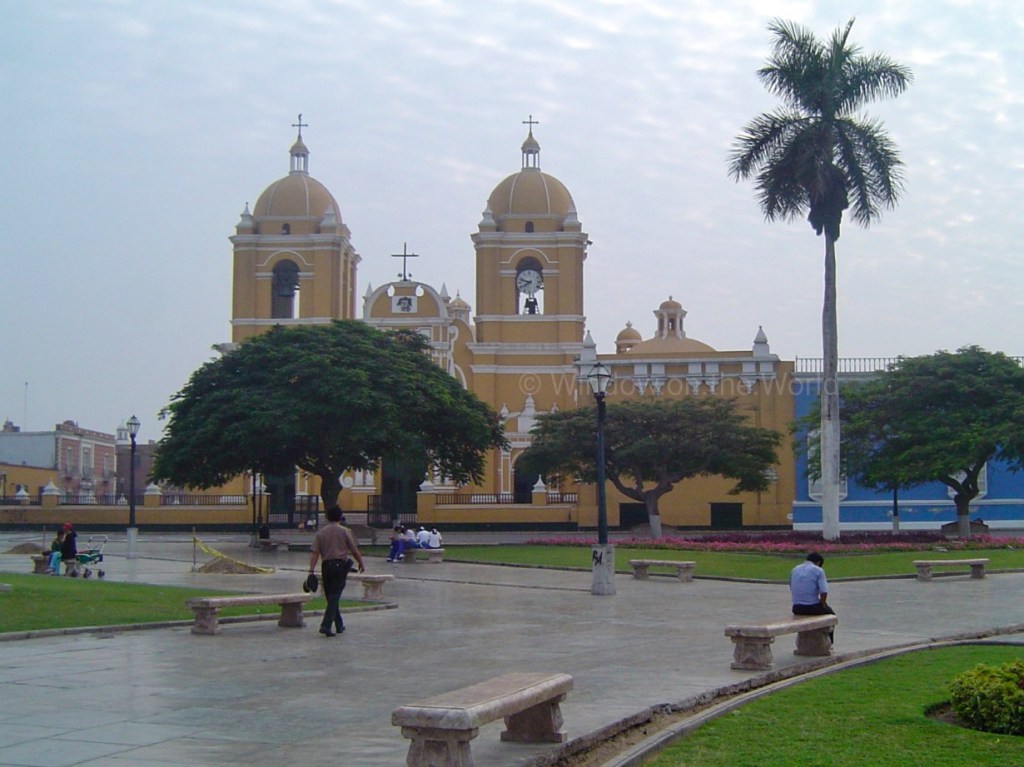
Trujillo Cathedral (constructed 1647–1666) located on Plaza de Armas of Trujillo, the main square where the Spanish foundation of Trujillo was made.
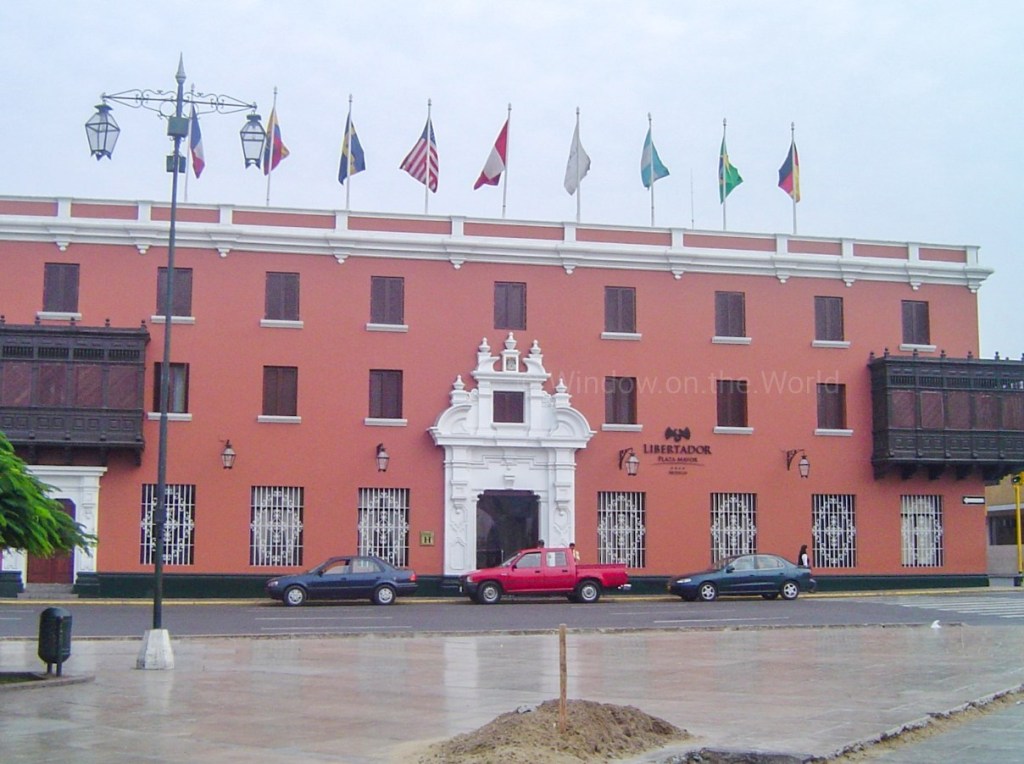
Old Colonial building now housing Hotel Costa del Sol Trujillo Centro.
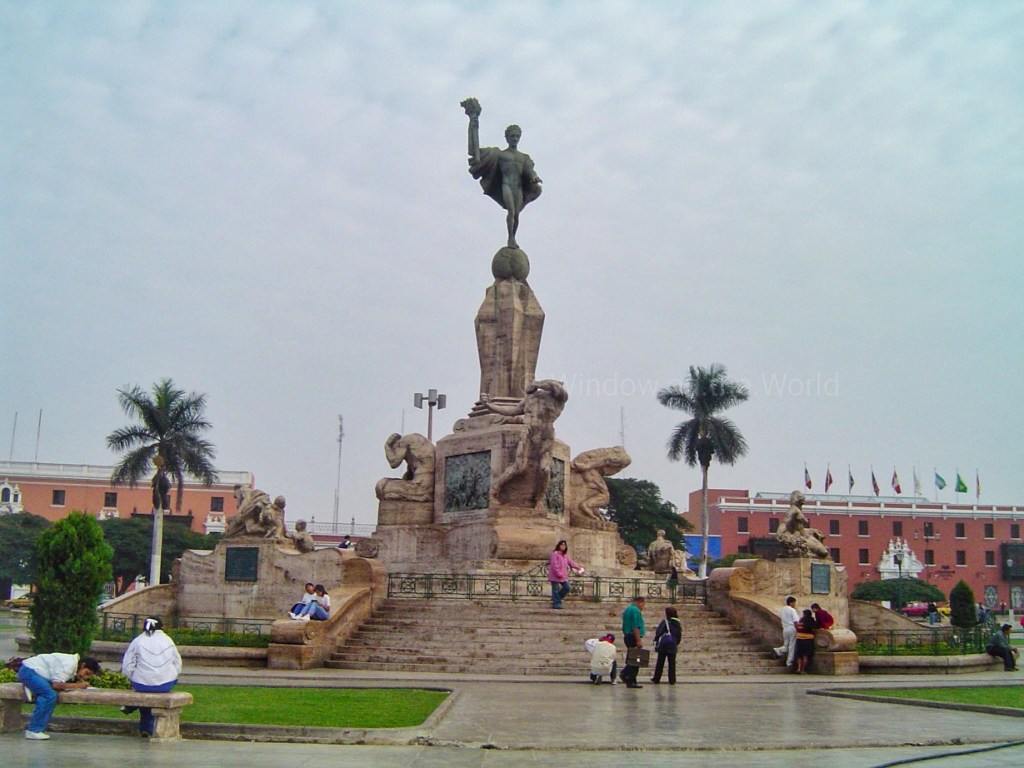
The Freedom Monument, located in the center of the Plaza de Armas of Trujillo.
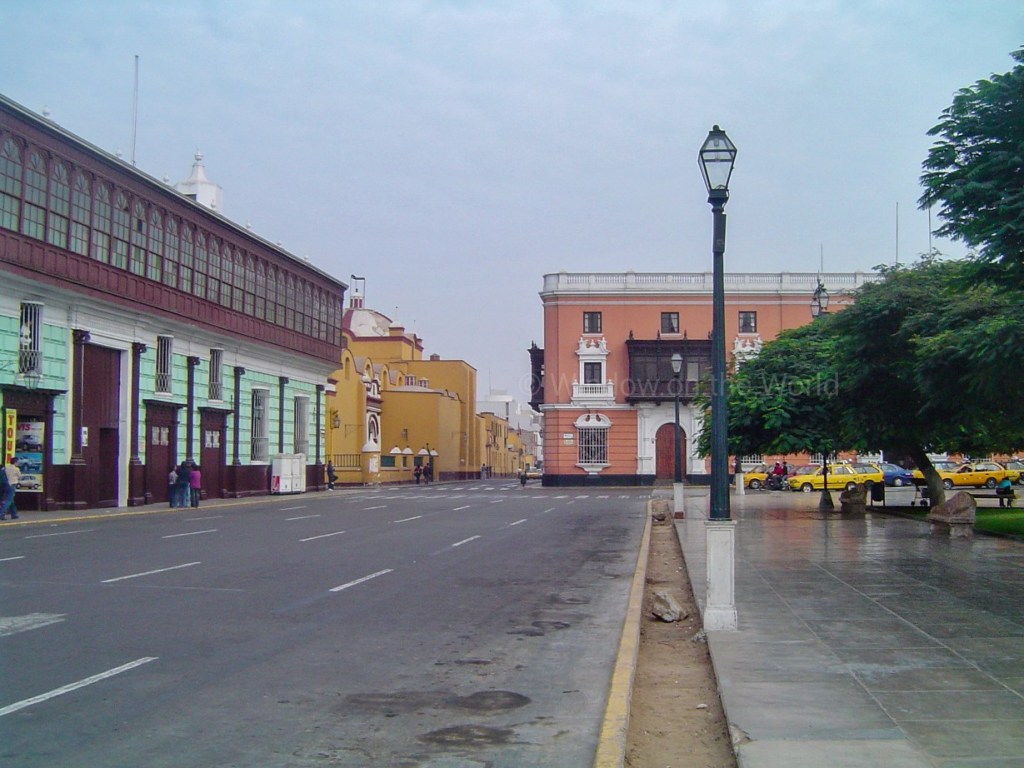
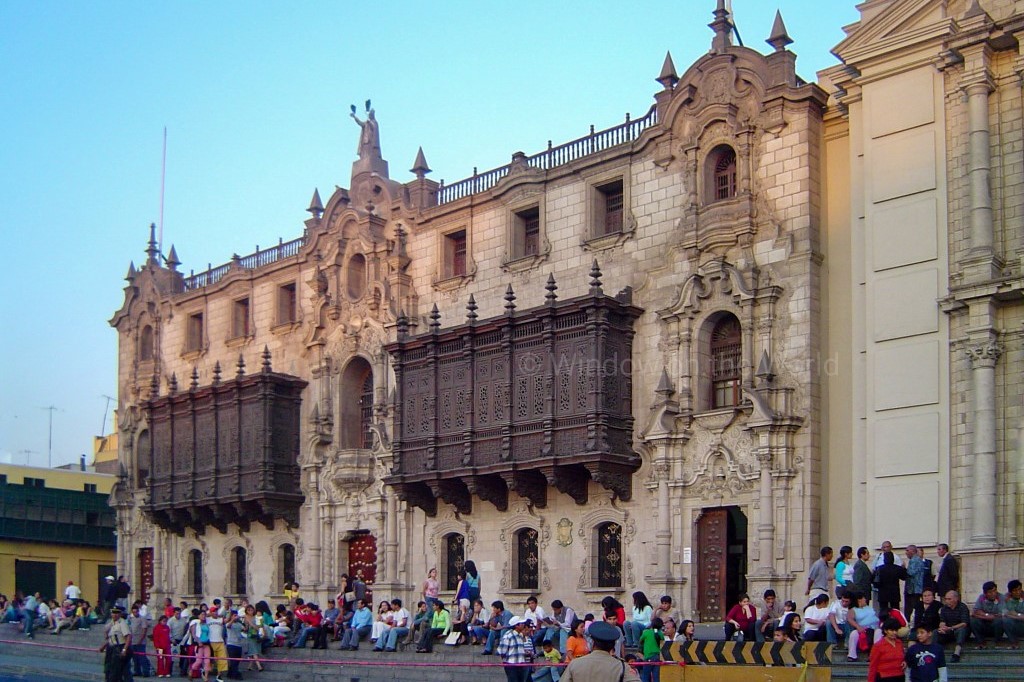
Streets of Plaza de Armas, the main square of Trujillo. Like the buildings in Lima’s Old town, Trujillo’s buildings also have beautiful Balconies.
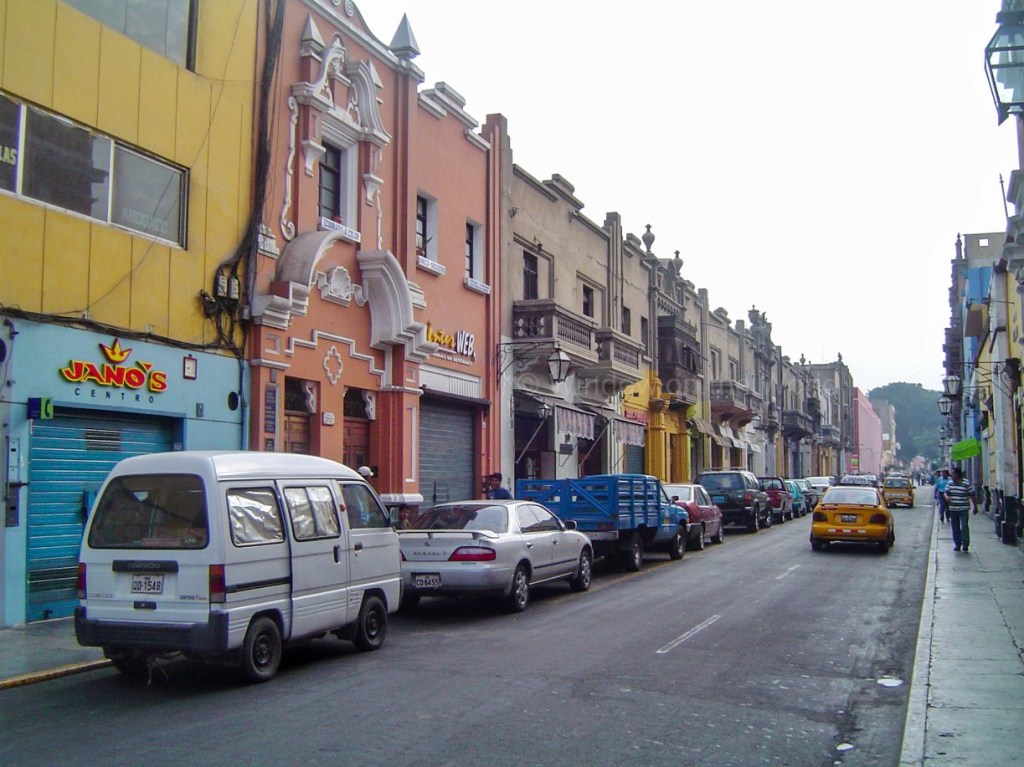
One of the side street of Trujillo at early morning hours, so most shops are closed.
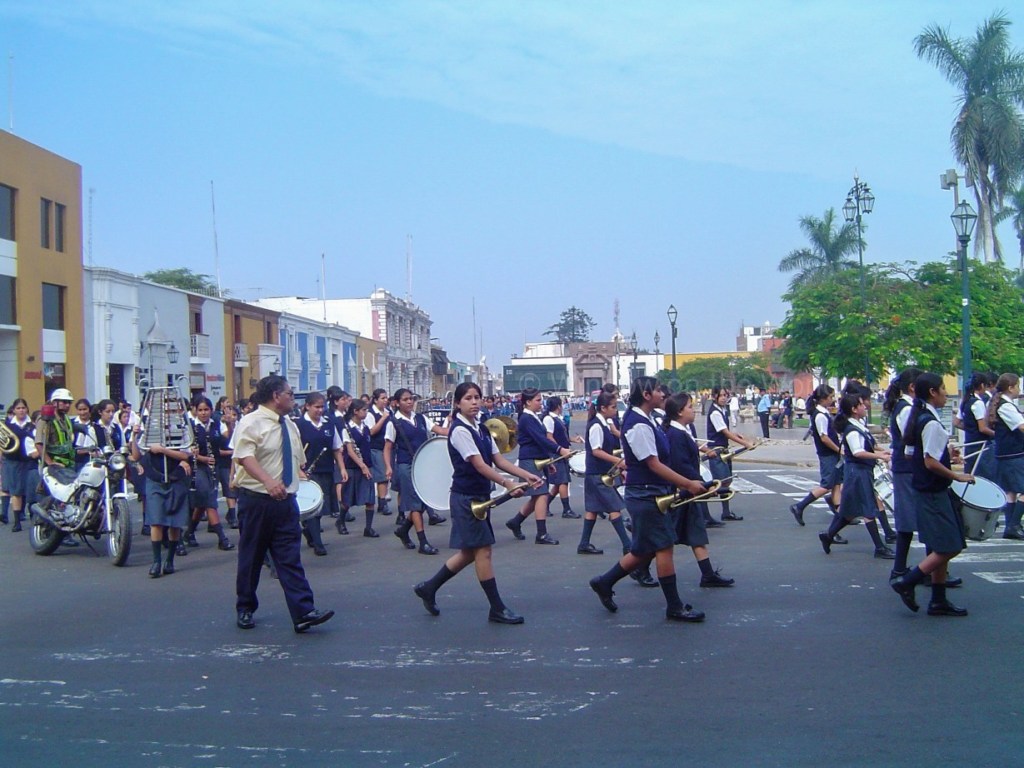
Local school band marching throgh the Plaza de Armas, the main square of the city.

While in Trujillo, I visited Chan Chan, the largest city of the pre-Columbian era in South America and the largest adobe (mud brick) city in the world. Chan Chan is located in the mouth of the Moche Valley and was the capital of the historical empire of the Chimor from 800 to 1470, when they were defeated and incorporated into the Inca Empire, fifty years before the arrival of the Spanish in the region. The entire complex spanned over more than 20km² and it is estimated to had over 60,000 inhabitants at the top of its glory. Chan Chan is protected under UNESCO World Heritage site since 1986.

Whenever the king of Chan Chan died, his first wife (wife/sister) got drugged after which a ritual was performed that involved cutting her heart out as a sacrifice. The remainder of his 90+ wives got poisoned without ritual. All of them were buried together in the palace and covered with sand. Because the palace would transform into a mausoleum, his successor needed to build his own palace. Over the centuries, nine of these royal palaces or ‘ciudadelas’ have been built, resulting in the vastness of the complex of Chan Chan.
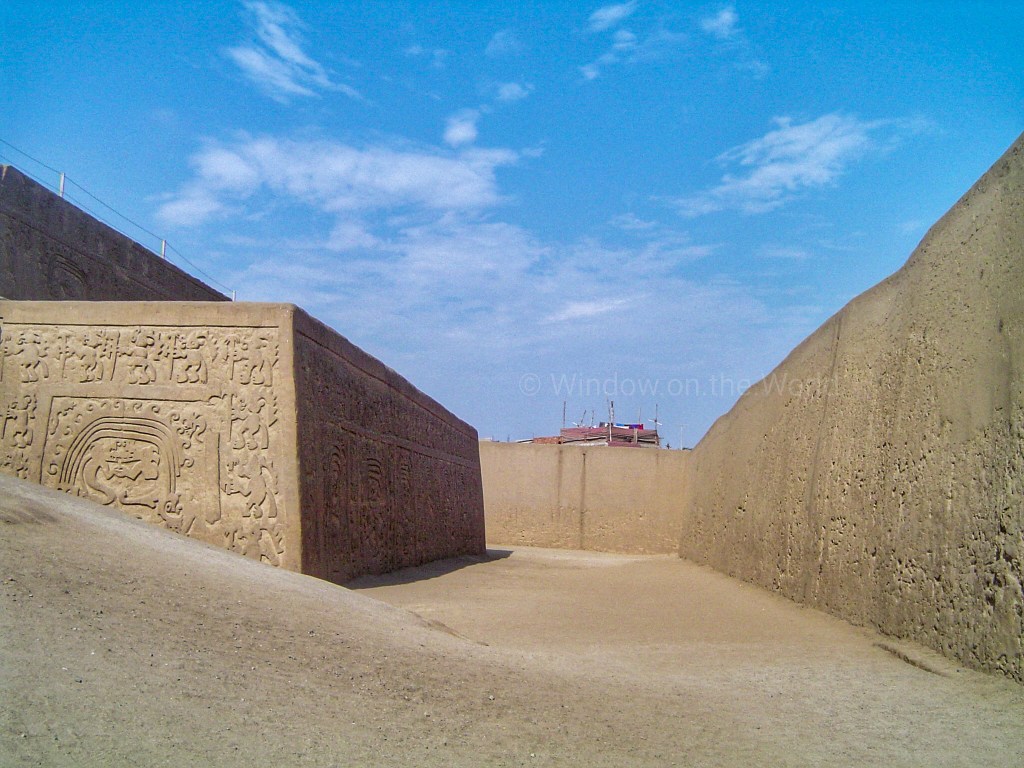
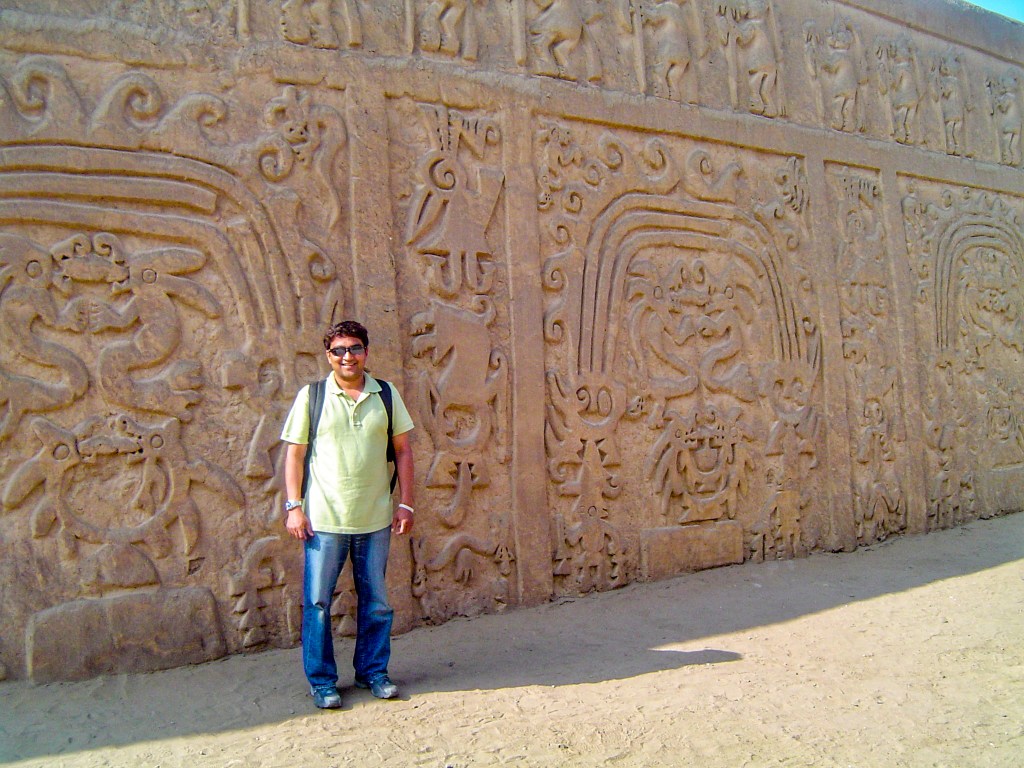
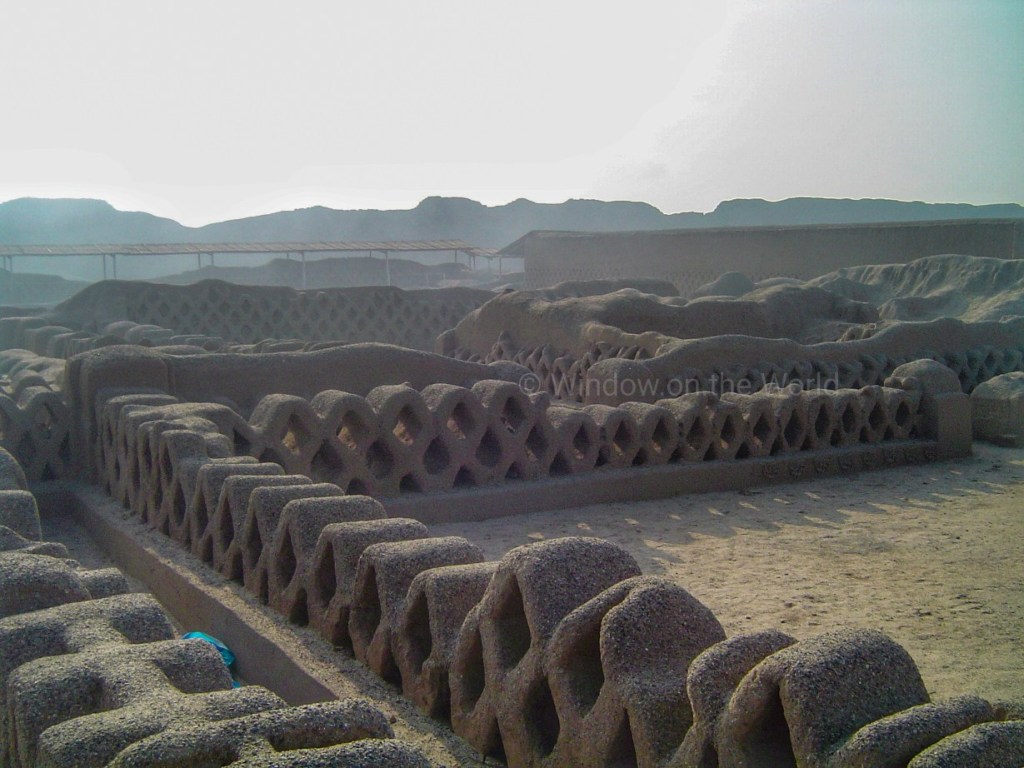
The complex is made of several walled citadels, many cities within a city. Each one has its own single entrance and leads down a corridor that opens into other passageways lining walls and buildings. Featuring some marvelous rectangular architecture: such as inner patios, residences, administrative buildings, temples, platforms and storehouses.
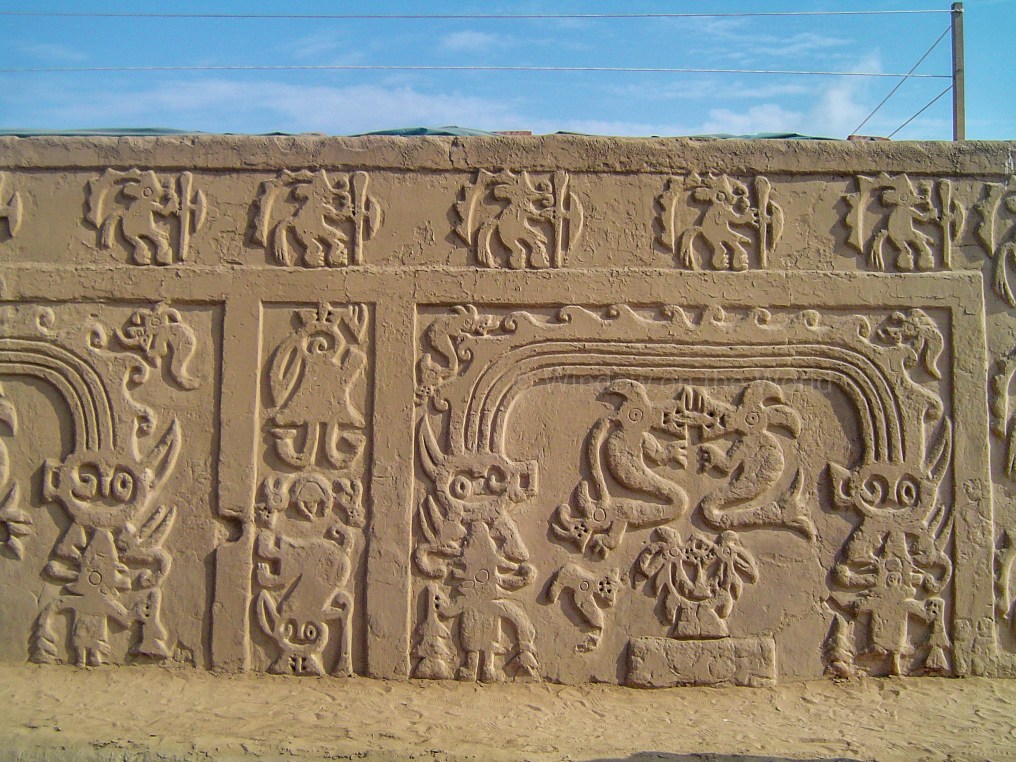
The walls of citadels are decorated with elaborate haut-relief friezes done in geometric and animal figures, some of which are hundreds of feet long.
Adobe detail at Chan Chan, a Panel of warriors detail of wall,
The entire complex spanned over more than 20km² and it is estimated to have over 60,000 inhabitants at the top of its glory.
Pelicans in Chan Chan. Some friezes are being hardened with a solution of distilled water and cactus juice.
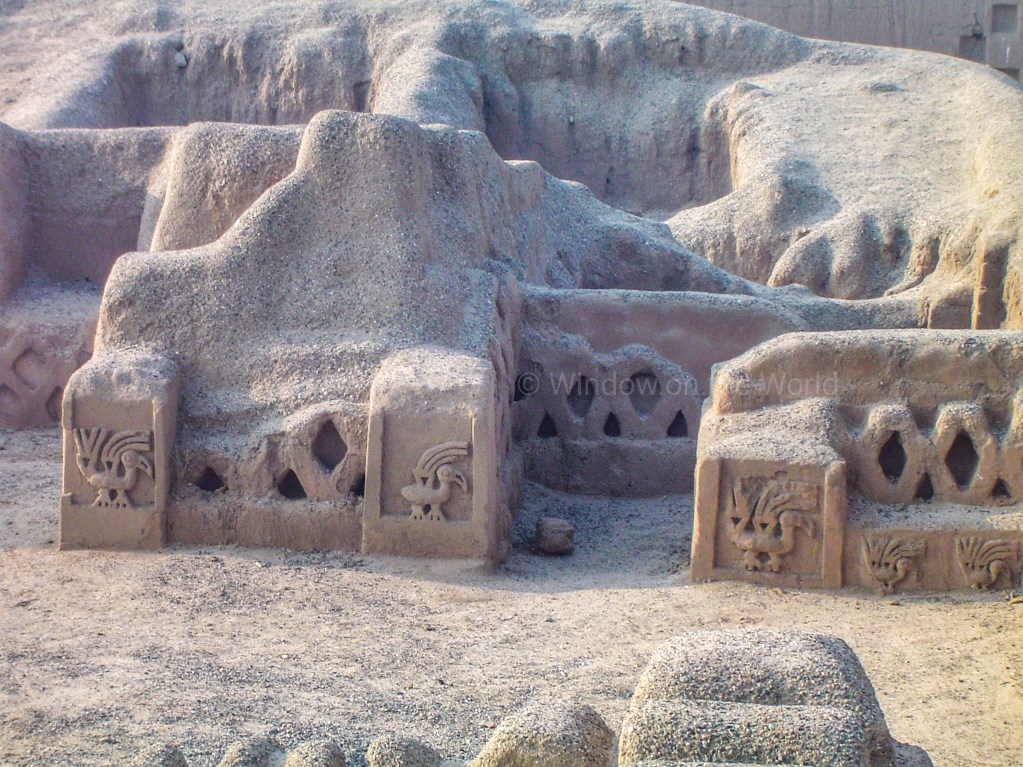
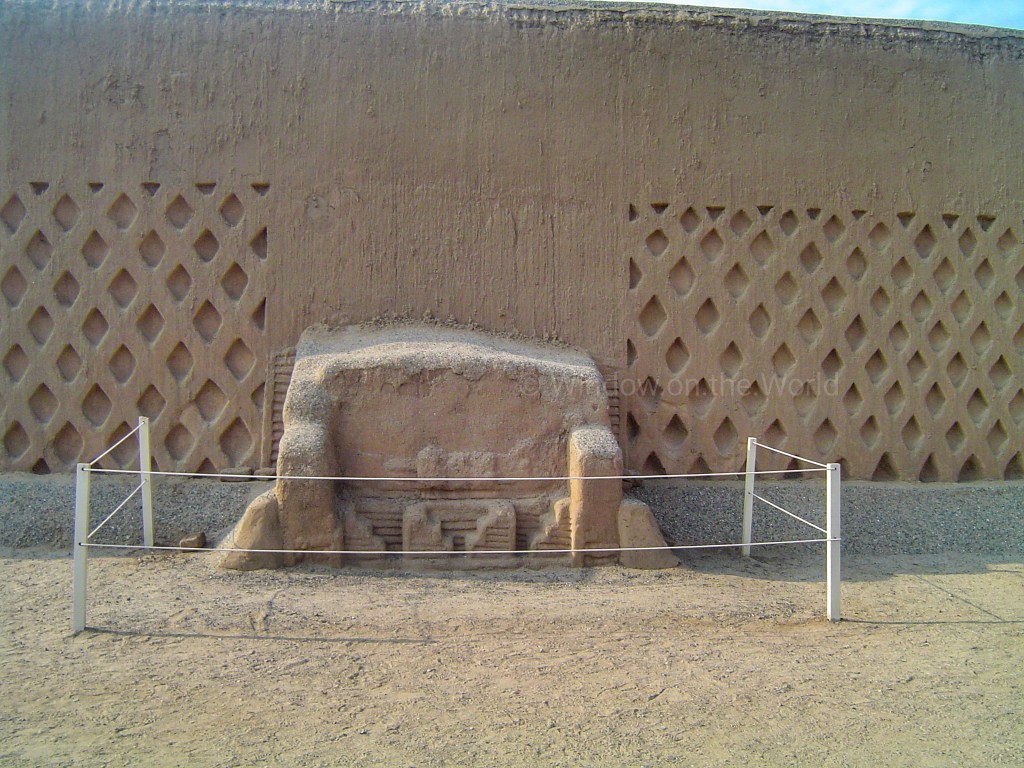
A throne of a Chimor King.
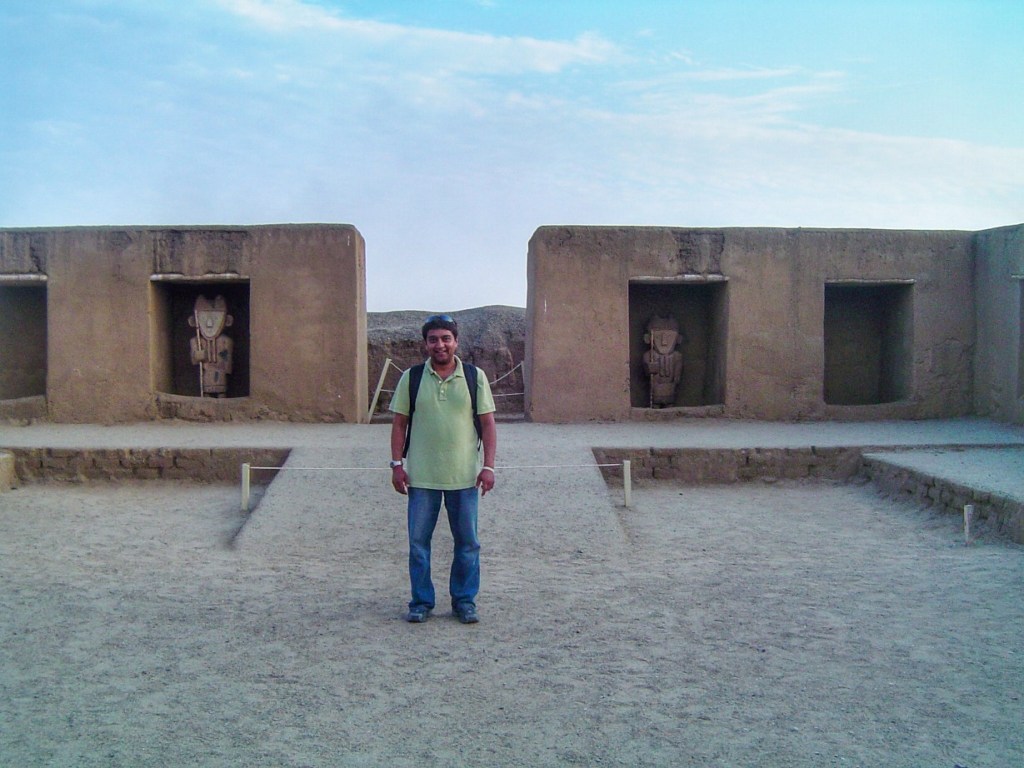
Temples with Idols of Chimor God.

While in Trujillo, I also visited the Temples of the Sun & Moon, together known as the Temples of Moche. These two pyramid-like adobe structures were constructed by the mysterious Moche people, who ruled the northern coast of Peru between A.D. 100 and 800.

The Huacas del Sol y de la Luna (Temples of the Sun and the Moon) were constructed from millions handmade adobe bricks by the Moche people. Successive generations added new platforms on top of the existing structures, such that each one grew higher and higher.
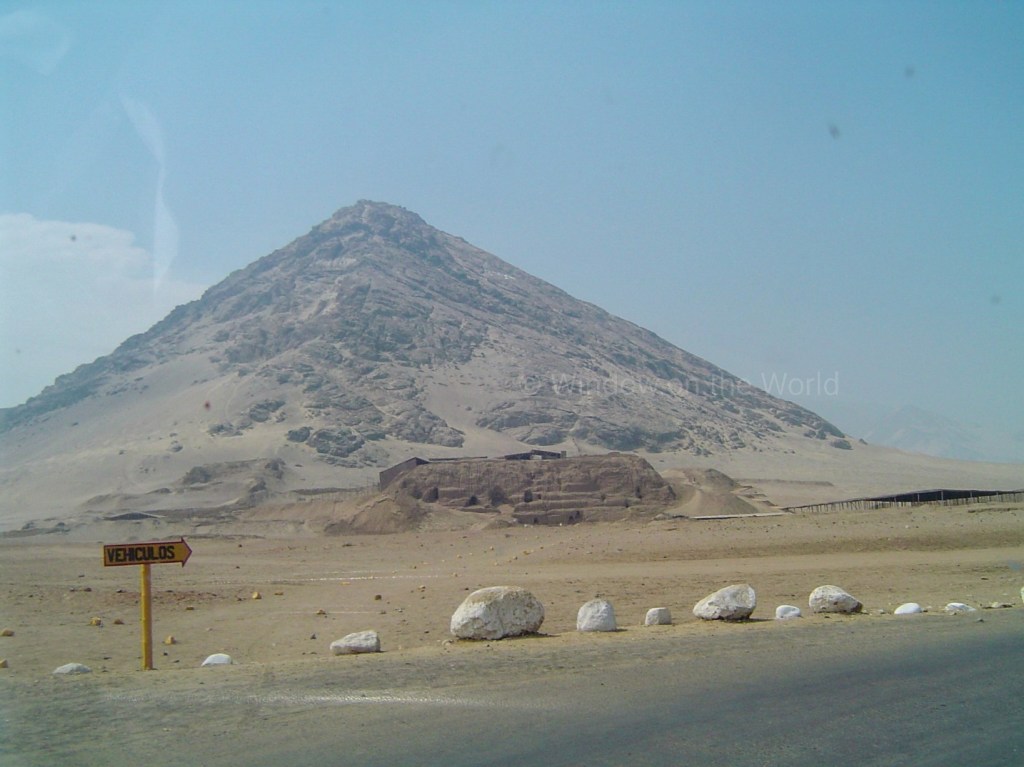
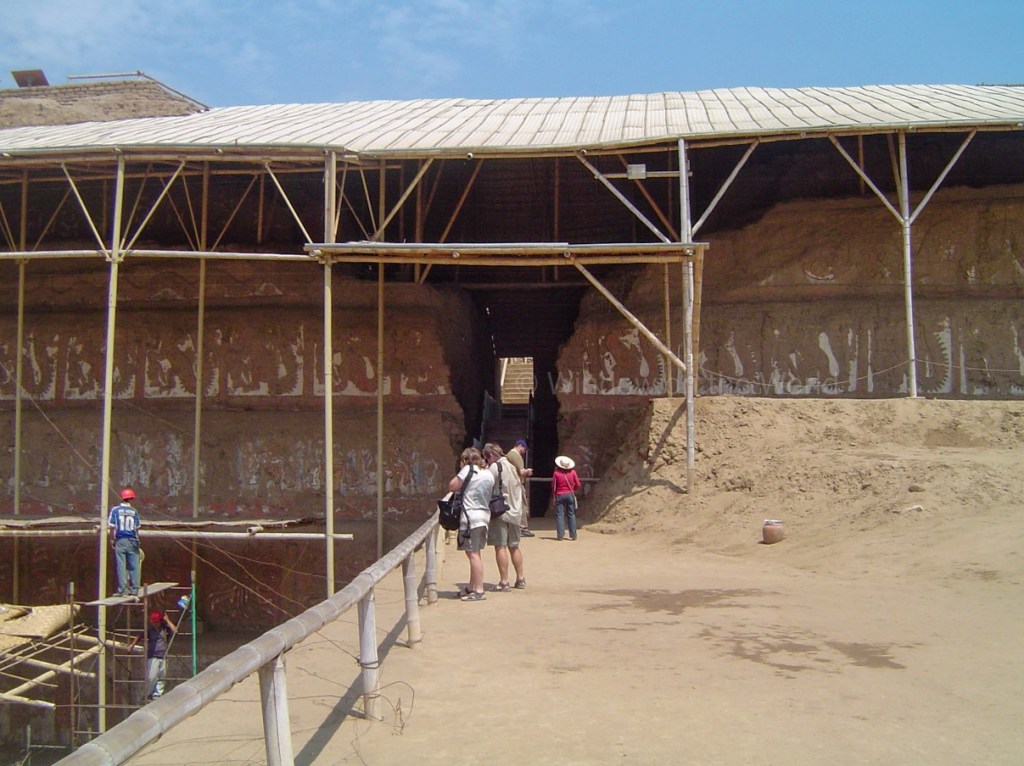
The Huaca de la Lune (Temple of the Moon) is a complex of buildings, consisting of three main pyramidal platforms and four large plazas.
One of the entrance to Huaca de la Luna.
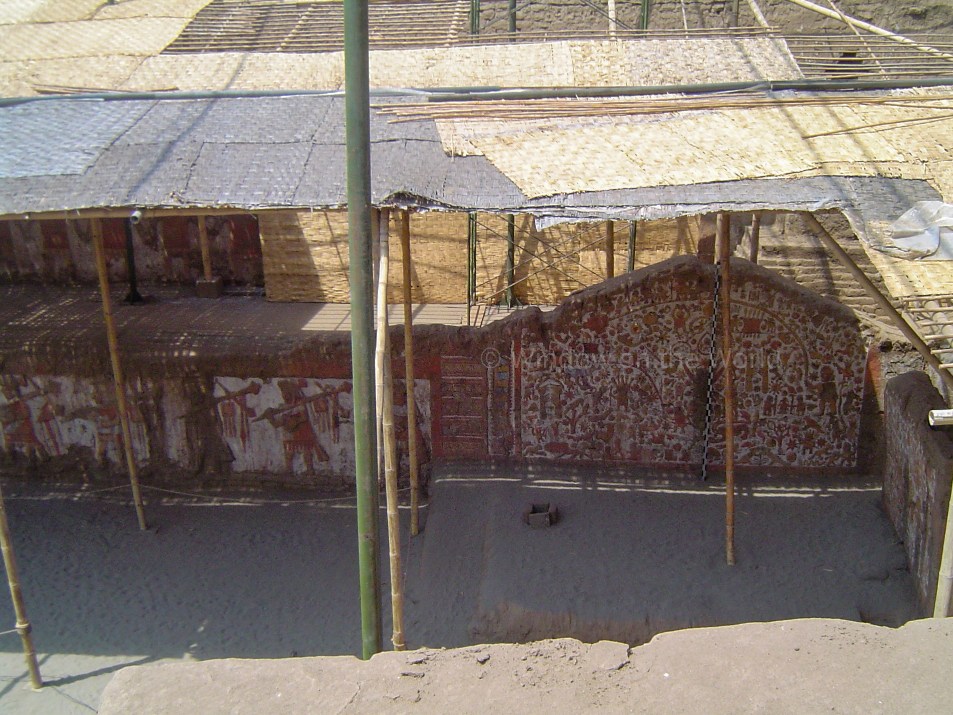
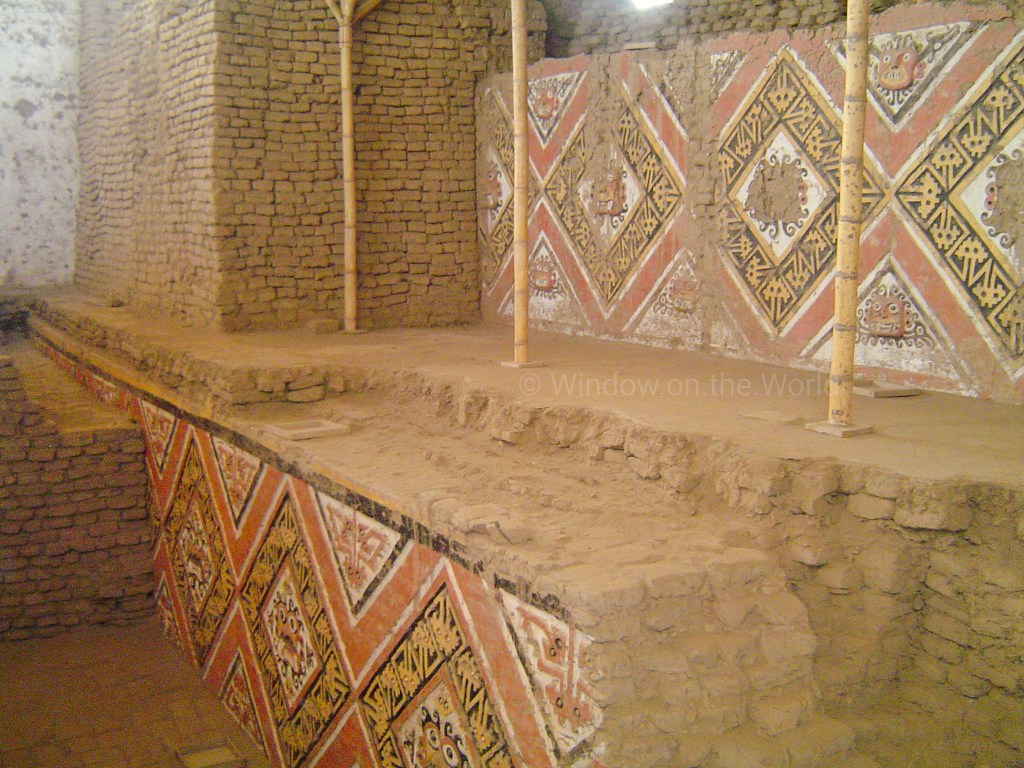
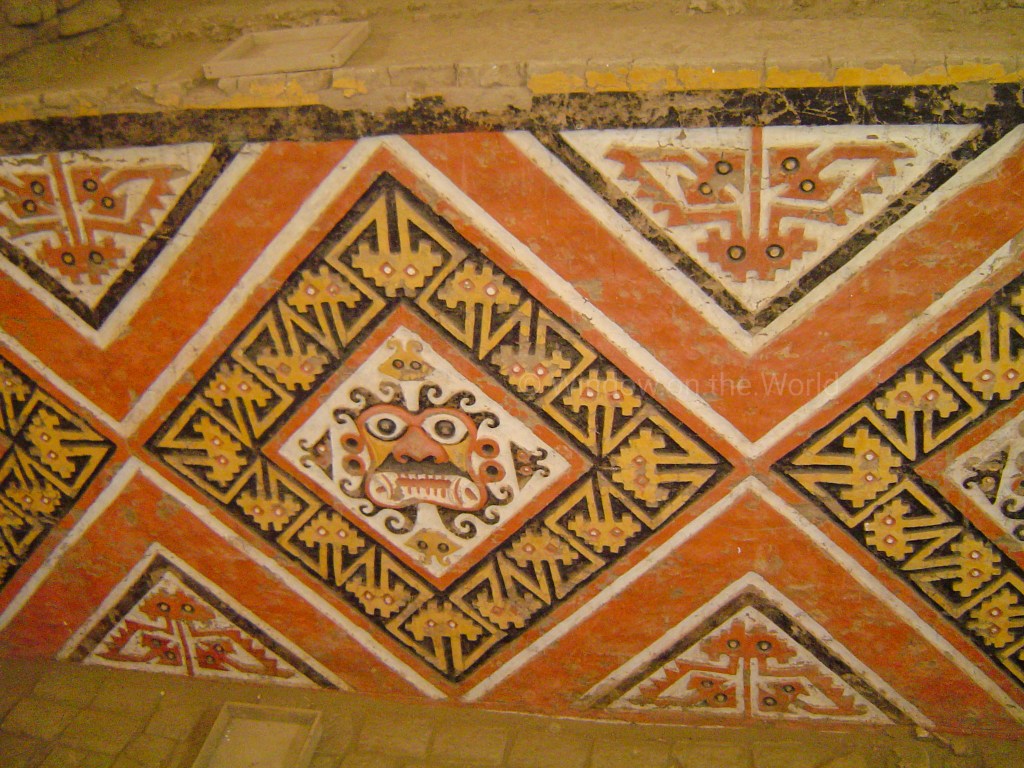
In many places the brick walls were coated with mud, upon which artists created relief designs using vivid colors. The designs were strictly controlled by the Moche priests.
The Huaca de la Luna is a ceremonial and religious structure. It includes religious designs and has several altars, some of which were used for human sacrifice.
Ai Apaec, the chief god of the Moche. Ai Apaec was worshipped as the creator god, protector of the Moche, a provider of water, food and military triumphs. Ai Apaec means ‘maker’ in the Mochica language.
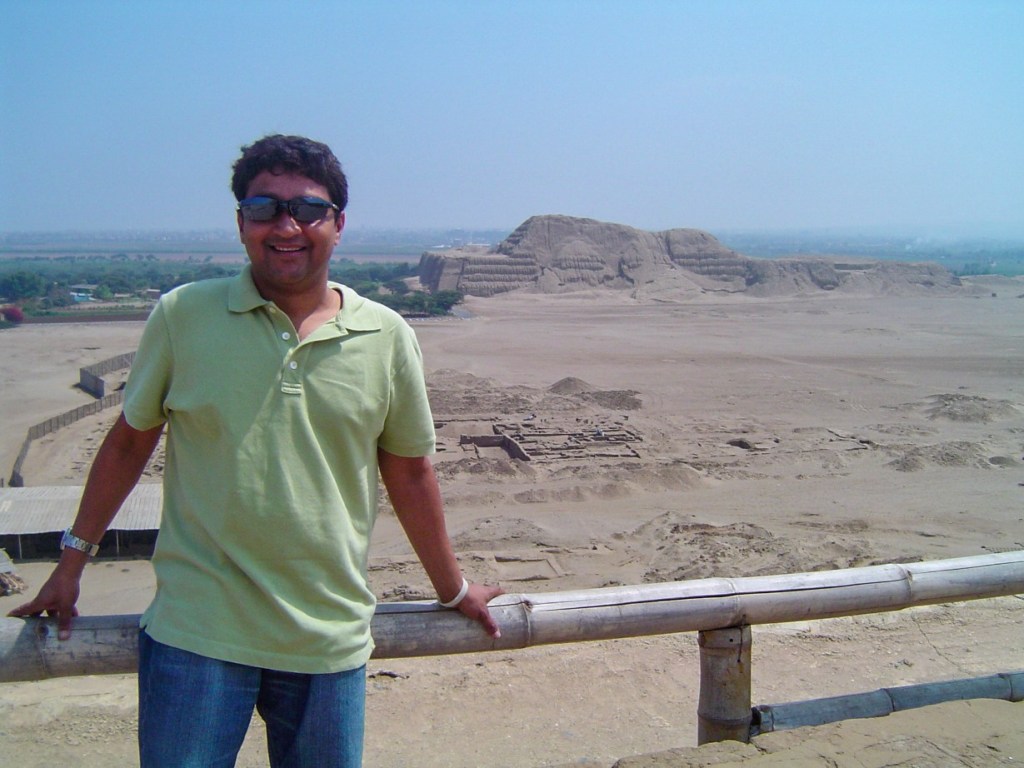
Huaca del Sol from Huaca de la Luna, with the partially excavated Moche city in between. These massive monuments, and the now-buried remains of the city that lies between them, formed the capital of the Moche culture for hundreds of years.
The Huaca del Sol (Temple of the Sun), also known as the Capuxaida, is believed to be the largest adobe building in the Americas, comprising approximately 140 million mud bricks. Despite its name, it’s actually thought to have had a more political and administrative function.
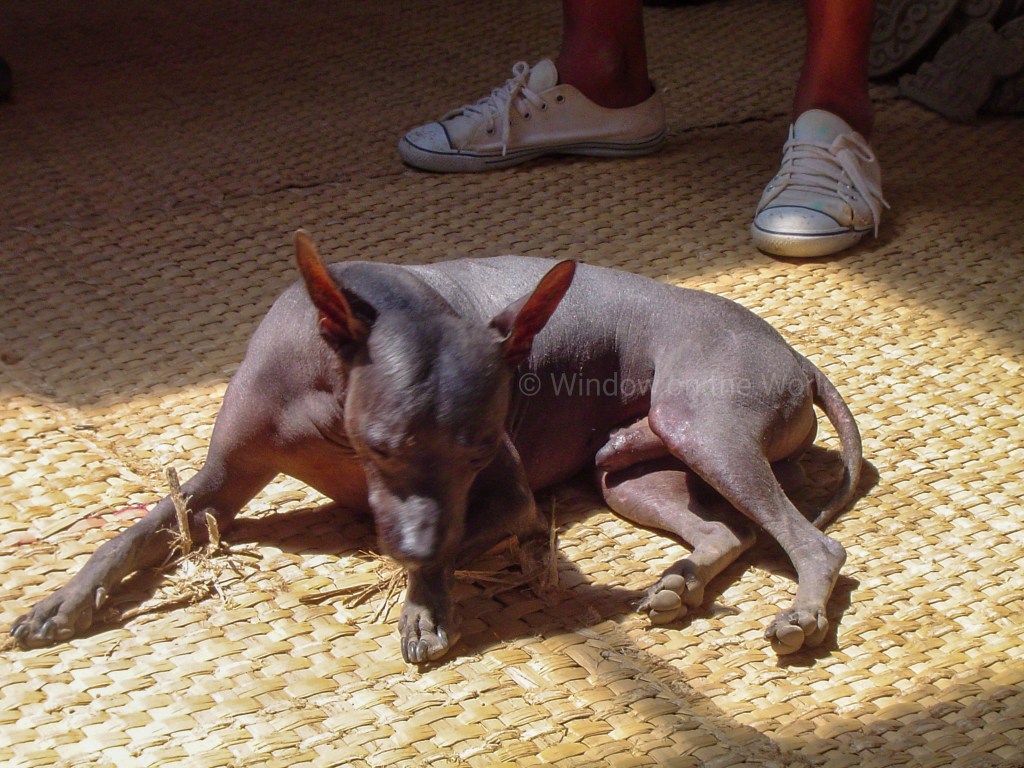
A Peruvian hairless dog helps guard the Temples of Moche. This breed is thought to have been around before the Incas and served as a lap dog.

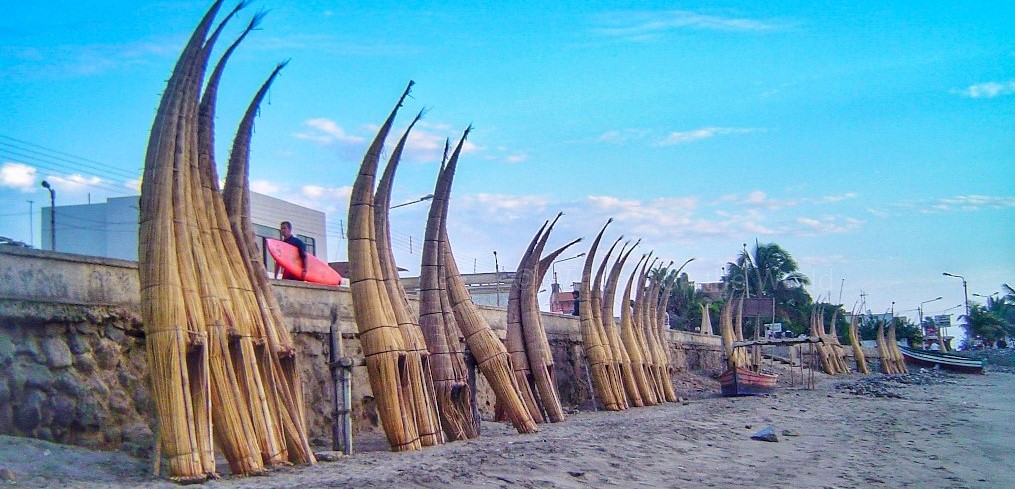
After a hot day of visiting cultural sites near Trujillo, in the evening we went to Huanchaco, a popular beach resort city, popular for its surf breaks, its caballitos de totora and its ceviche. Huanchaco is the birthplace of the seafood dish ceviche. Oral histories suggest ceviche was prepared with lemons from Simbal (yunga village nearby), with chilli from the Moche River valley and seaweed extracted from the sea.
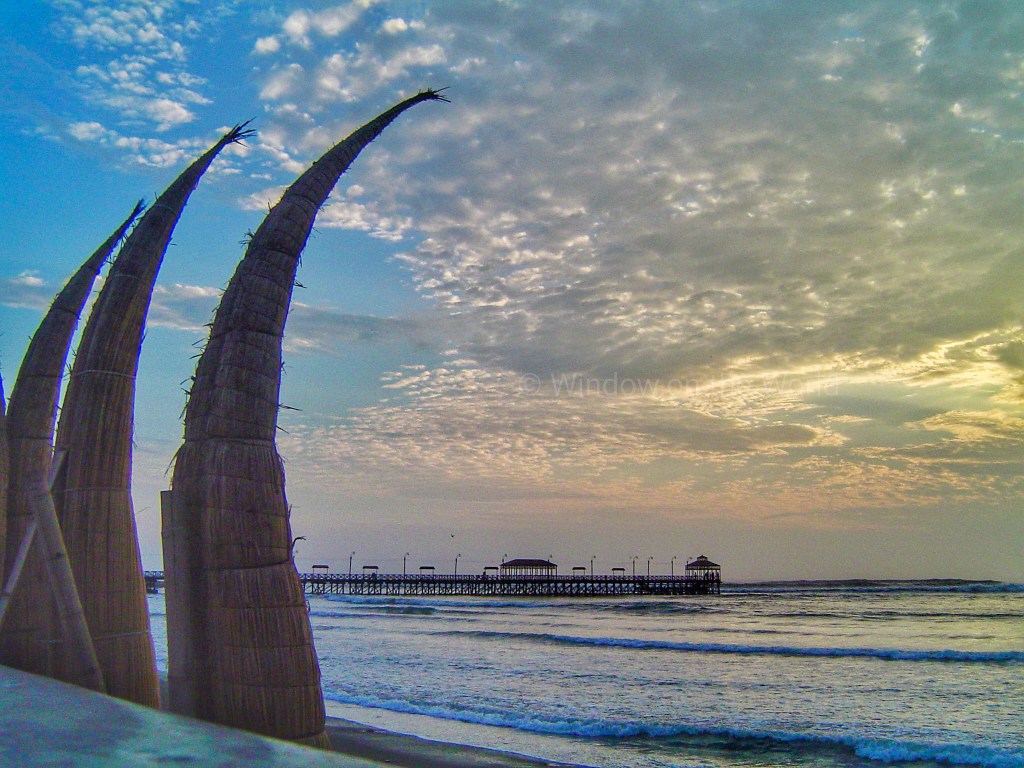
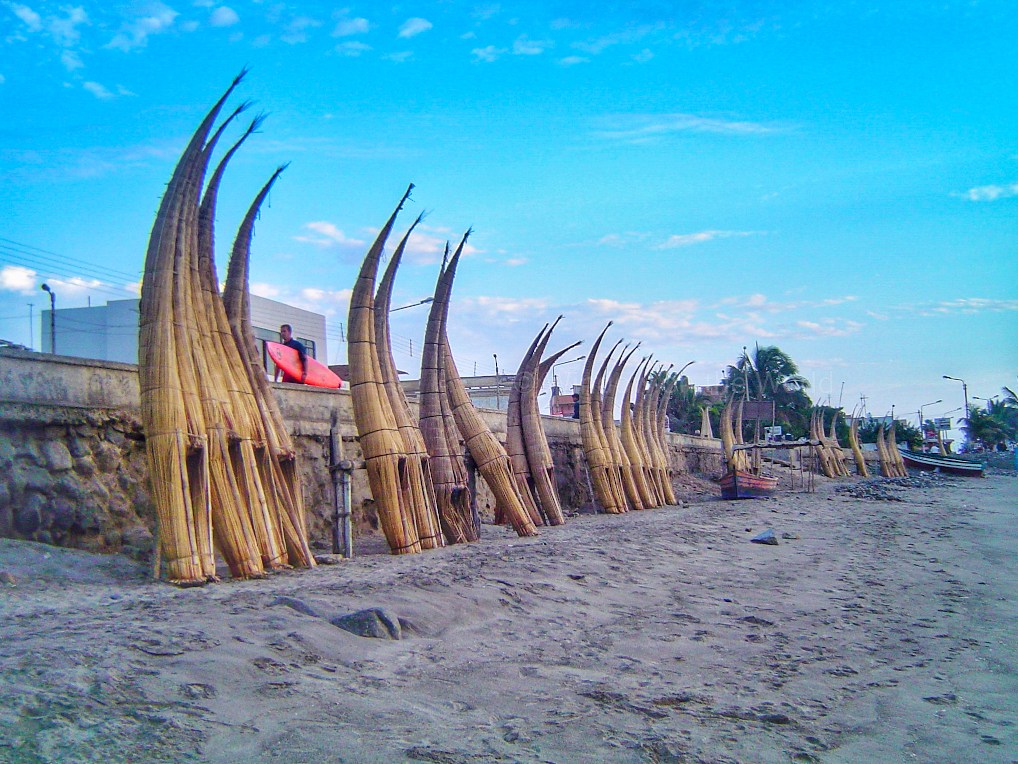
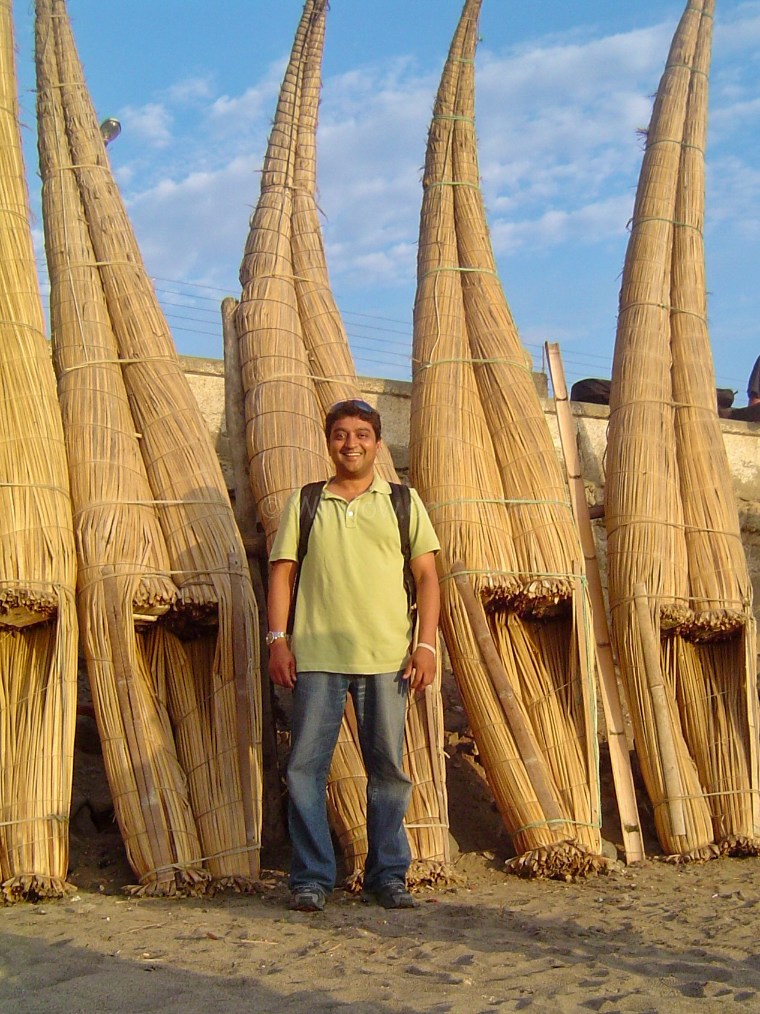
Caballitos de totora, reed watercraft used by fishermen in Peru for the past 3000 years. Named for the way they are ridden, straddled (‘little reed horses’ in English).
Caballitos de totora, Fishermen use them to transport their nets and collect fish in their inner cavity.
Fishermen in the port town of Huanchaco and in many other locations still use these vessels to this day, riding the waves back into shore, and suggesting some of the first forms of wave riding. There is currently a minor debate in the surfing world as to whether or not this constitutes the first form of surfing.
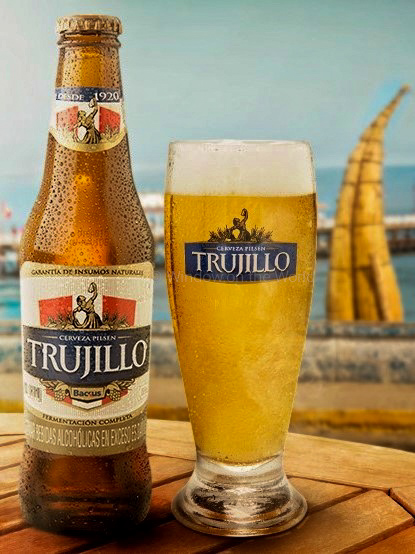
Enjoying chilled Cerveza Trujillo at the Trujillo Beach.

Before arriving in Trujillo, I spent few days in Lima, the capital and the largest city of Peru, considered to be the political, cultural, financial and commercial center of the country.
After a week in Peru, I flew back to Dallas, Texas, my home at that tine.

Window on The World's avatar

By Window on The World

In May 2017, 23 days before I was going to complete 50 years, grabbed an opportunity and took an early retirement.. Picked up a backpack and traveling ever since.. Love to travel around the world, experience different culture, local cuisine & drinks .. and take pictures.. so far been to 108 countries and still counting...

Leave a comment