I visited Germany multiple times between 1998 and 2011 for business trips as my ex-employer’s world headquarter is in Waldorf, 10 KM south of Heidelberg. During my visit to Germany in 2011, I decided to take a road trip to Wroclaw, Poland, driving through former East Germany, visiting Erfurt, Leipzig, Meissen, and Dresden.
Dresden is the capital city of Saxony and the third largest city in the former Eastern Germany after Berlin and Leipzig. The name of the city as well as the names of most of its boroughs and rivers are of Slavic origin.
Dresden has a long history as the capital and royal residence for the Electors and Kings of Saxony, who for centuries furnished the city with cultural and artistic splendor. Before World War II, Dresden was called “the Florence on the Elbe” and was considered one of the world’s most beautiful cities owing to its architecture and art treasures. Towards the end of the World War II, however, the city center was almost completely destroyed by the controversial American and British bombing, and killed approximately 25,000 people. After the war, restoration work has helped to reconstruct parts of the historic inner city.
I arrived in Dresden in late evening and had to leave for work very earl morning, so all pictures below are from an evening in this beautiful city. I would definitely like to come back and spend more time in this picturesque city.
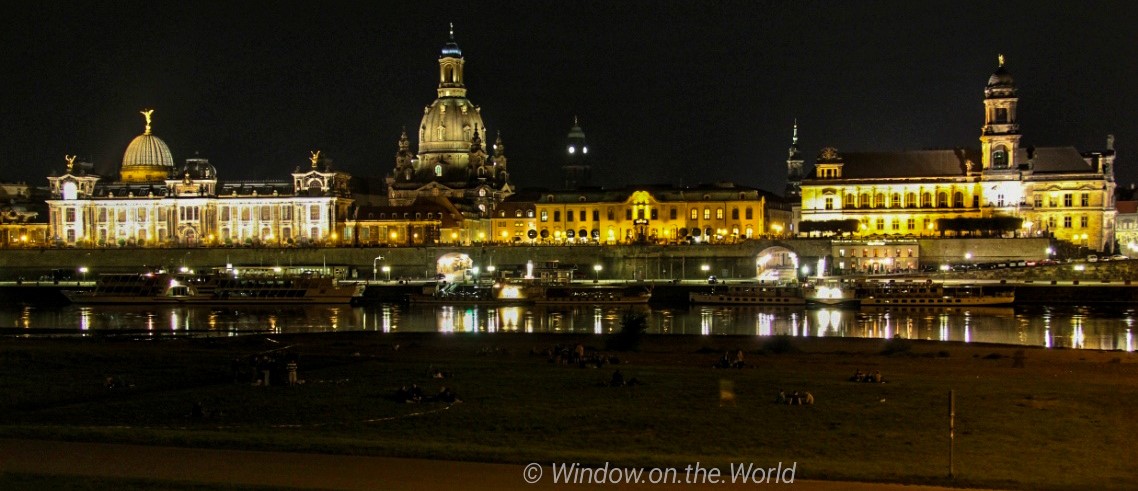
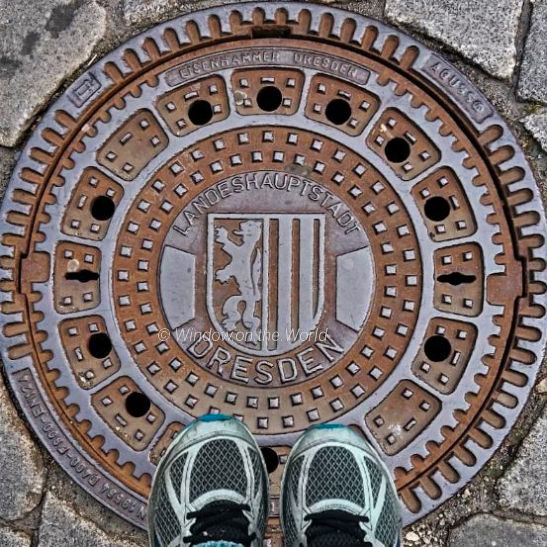
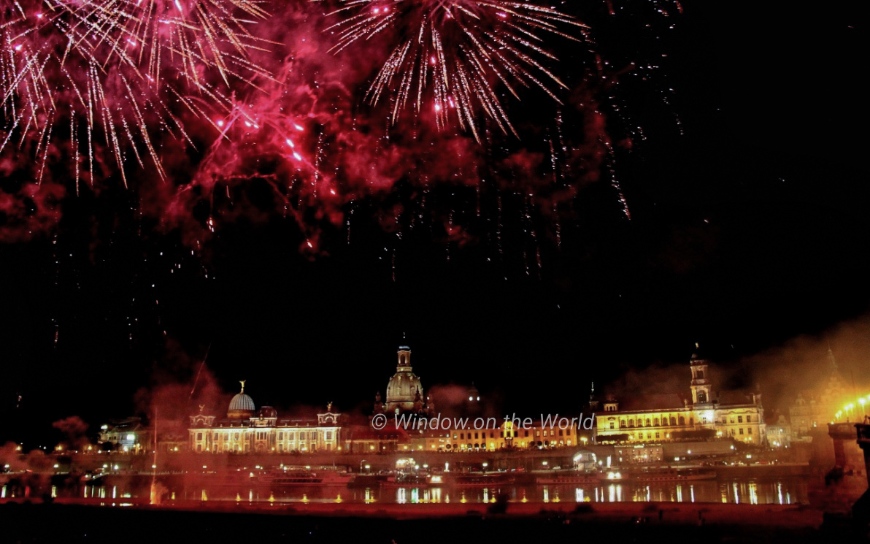
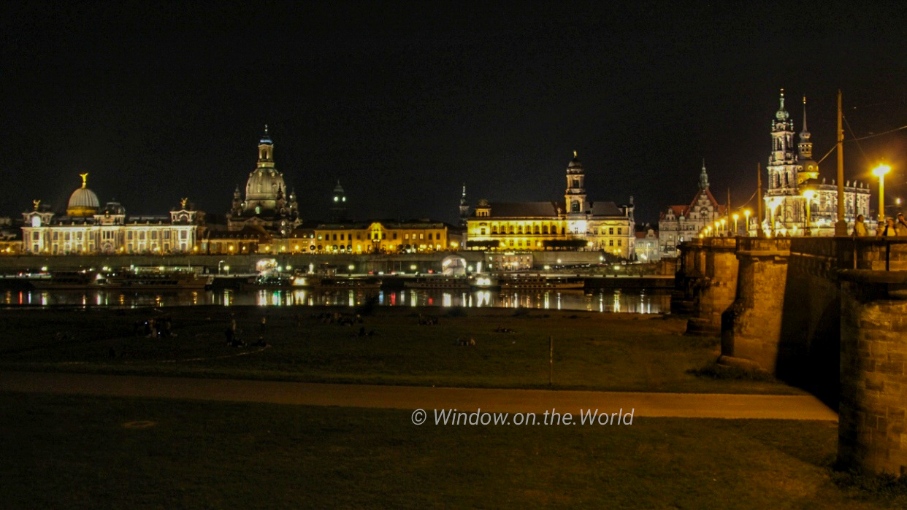
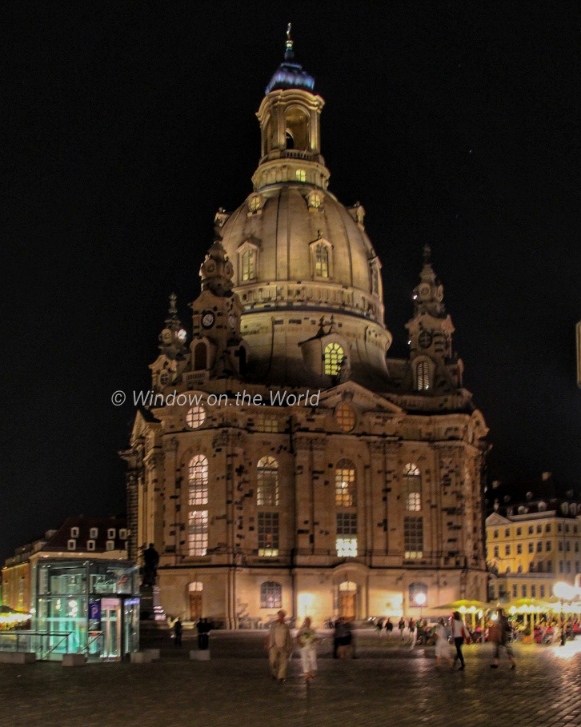
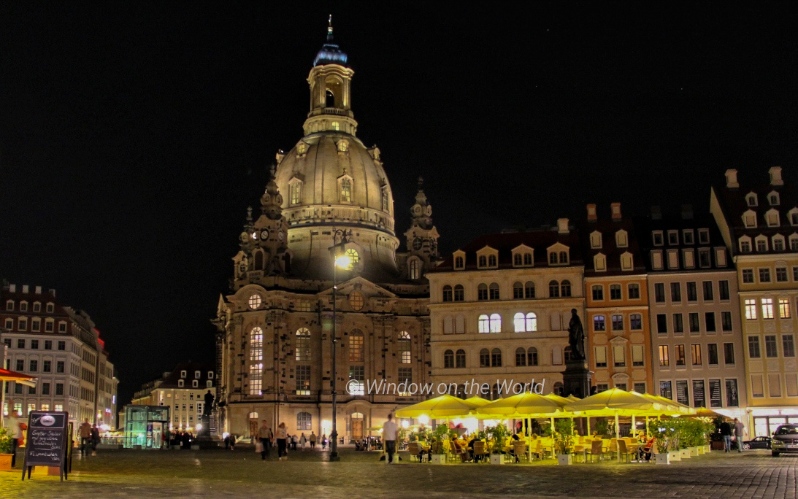
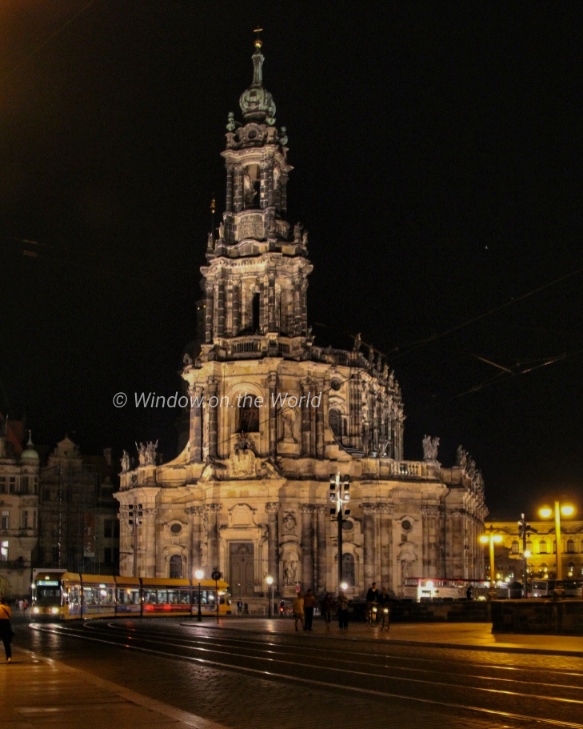
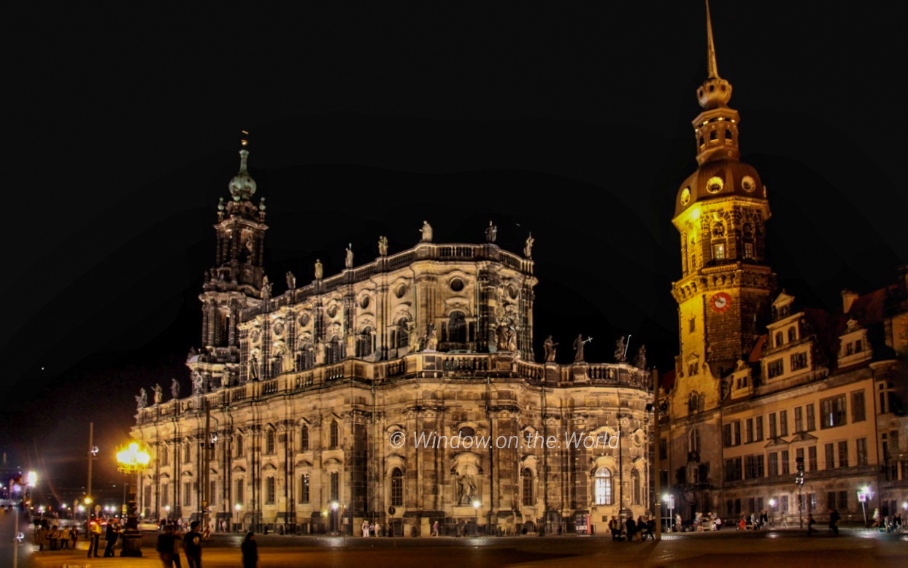
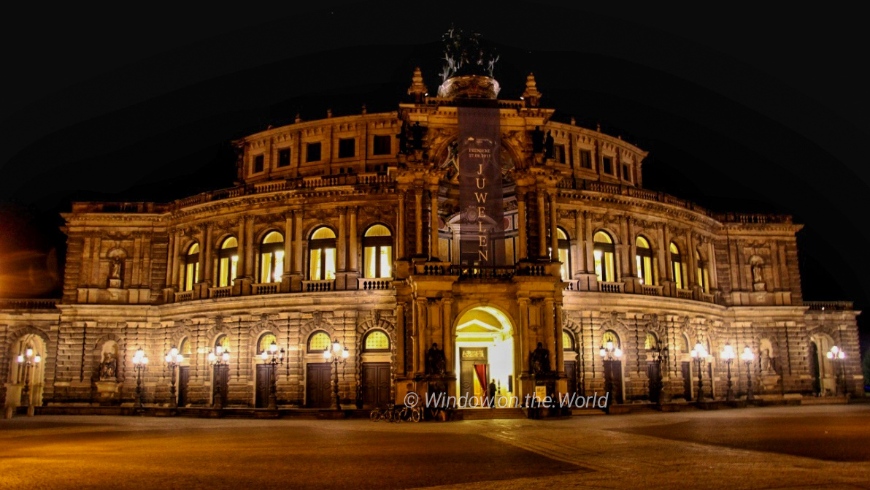
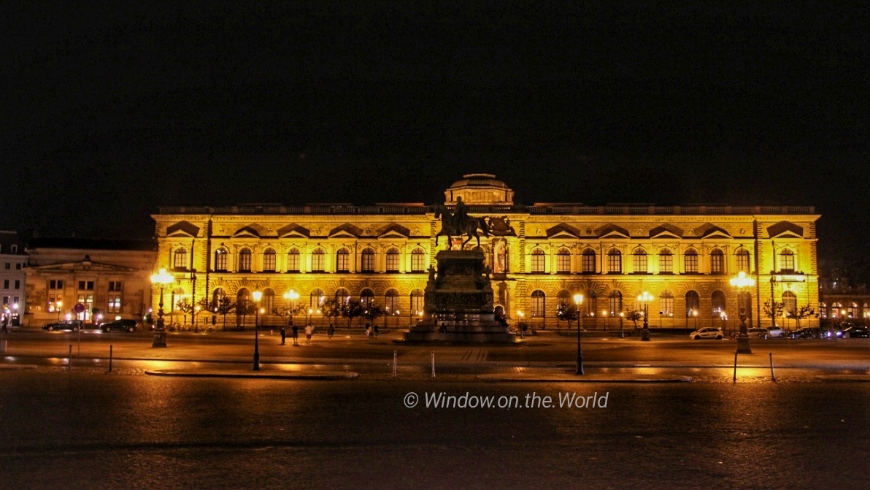
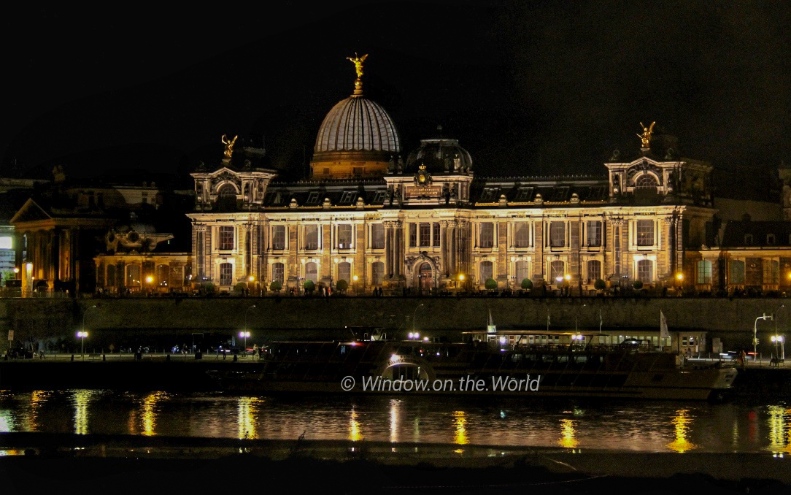
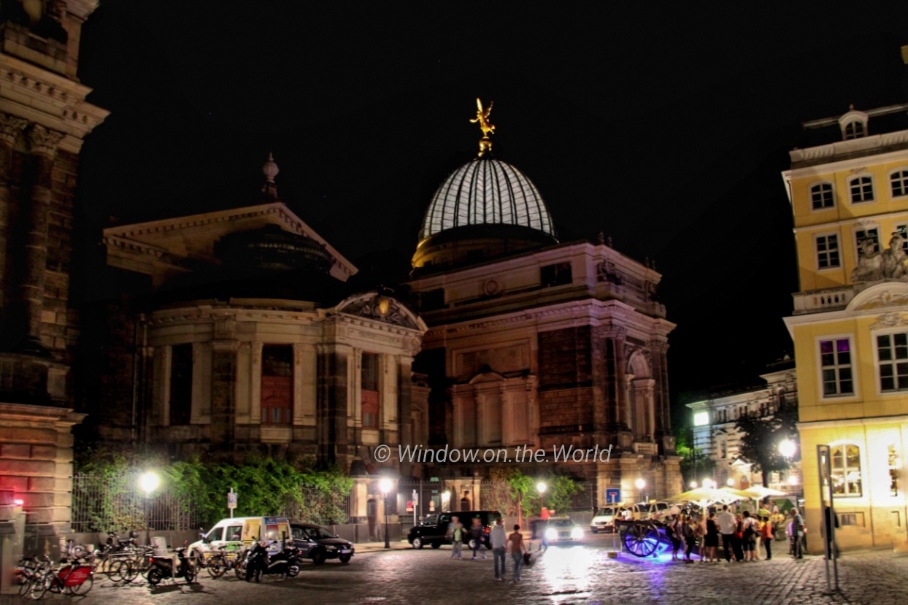
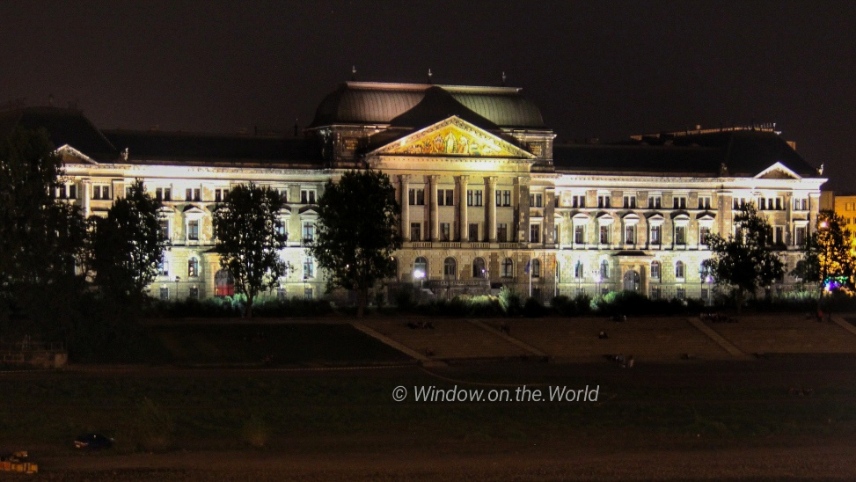
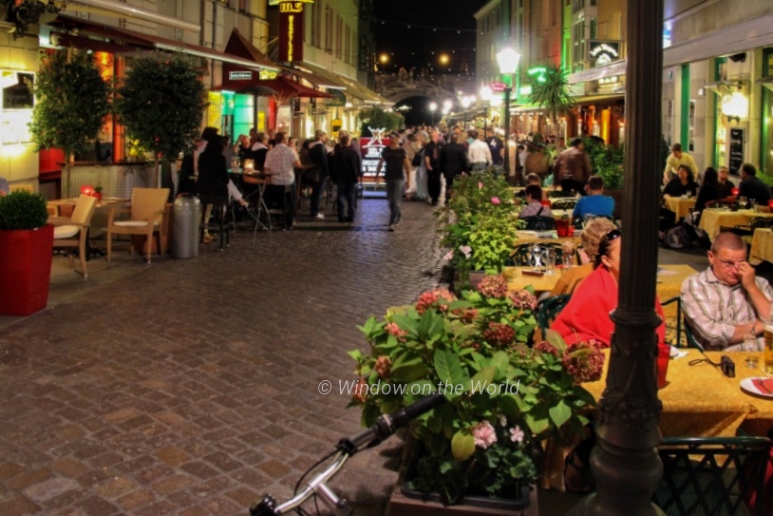
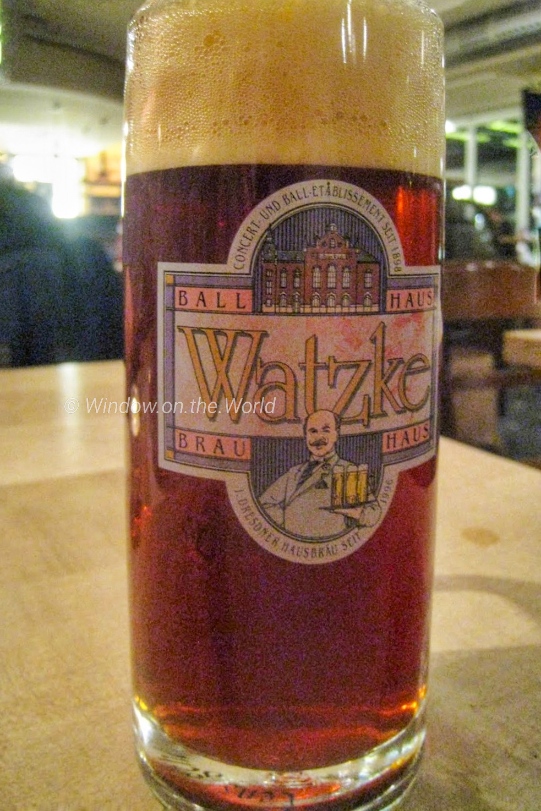
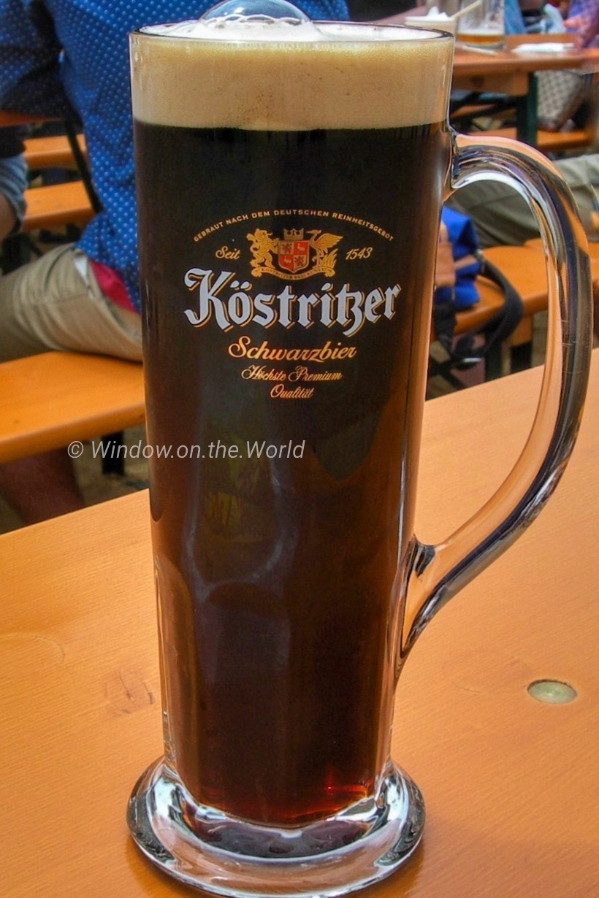
Welcome to Dresden! A beautiful manhole cover with city’s Coat of Arms.When I arrive in late evening, the city was celebrating some festival with fireworks over the old city center.Historic building of Dresden and the Augustus Bridge crossing the river Elbe. There has been a bridge at the same location since at least the 12th century. The current bridge was built between 1907 and 1910.The Dresden Frauenkirche, a Lutheran church of Our Lady. An earlier church building was Catholic until it became Protestant during the Reformation and was replaced in the 18th century by a larger Baroque Lutheran building, featuring one of the largest domes in Europe. The church was destroyed in the bombing of Dresden during World War II. The remaining ruins were left for 50 years as a war memorial. The church was rebuilt after the reunification of Germany, starting in 1994 through 2004. The Neumarkt square with the Dresden Frauenkirche and its many baroque buildings, reconstructed in 2004.Dresden Cathedral (Katholische Hofkirche), stands as one of Dresden’s foremost landmarks, built between 1739 and 1751. While the general population of the city was Protestant, its rulers were Catholic. The Catholic Elector of Saxony and King of Poland built the cathedral for his own use and for the use of other high-ranking officials, connecting it to his home, Dresden Castle, with an ornate high level walkway.Dresden Cathedral (Katholische Hofkirche) and Dresden Castle, two of Dresden’s foremost landmarks. Both buildings were badly damaged during the bombing of Dresden in the World War II. The buildings were restored in 1960s by the East German government. They were further restored in the early 21st century following reunification, including the rebuilding of the bridge to the castle.Semperoper Dresden, the opera house and the concert hall. The opera house was originally built in 1841, after a devastating fire in 1869, the opera house was rebuilt in 1878. The building was largely destroyed again during the bombing of Dresden in the World War II, leaving only the exterior shell standing. It was rebuilt in 1985 to be almost identical to its appearance before the war.The Semper Gallery, constructed from 1847 until 1854, as a New Royal Museum. Until World War II, the Semper Gallery housed the Collection of Prints, Drawings and Photographs and the Collection of Classical Sculptures. The building was severely damaged during bombing of Dresden in the World War II. Most of the paintings were evacuated for safe-keeping earlier and so were not harmed. The building’s reconstruction was completed in 1960.The Dresden Academy of Fine Arts, a vocational university of visual arts, founded in 1764. The former Royal Academy of Arts building, built in 1894, with the glass dome, which is also known as Lemon Squeezer due to its form. The building was severely damaged during bombing of Dresden in the World War II and has been heavily renovated and reconstructed in 1990s.The Dresden Academy of Fine Arts with its glass dome and Pheme on top of the dome. Next to it is The art gallery in the Lipsius building (Kunsthalle im Lipsiusbau), one of the exhibition venues. The Saxon State Ministry of Finance, built between 1890 and 1896 in the neo-renaissance style. The building was severely damaged during bombing of Dresden in the World War II and has been heavily renovated and reconstructed between 1992 and 1994.Exploring old town of Dresden.Enjoying locally brewed beer from the Brauhaus at Ballhaus Watzke, a l19th-century restaurant with a ballroom on the upper floor and an in-house brewery under monument protection.Enjoying Schwarzbier (black beer), brewed by the Köstritzer brewery, founded in 1543, one of the oldest producers of Schwarzbier.
After this road trip, I drove back to Heidelberg, Germany for another week of Business Meetings.
In May 2017, 23 days before I was going to complete 50 years, grabbed an opportunity and took an early retirement.. Picked up a backpack and traveling ever since.. Love to travel around the world, experience different culture, local cuisine & drinks .. and take pictures.. so far been to 108 countries and still counting...


 Window on the World