During Chinese National Day Holidays of 2016, I took some additional days off and caught a flight to Rome for two weeks long road trip across Italy, Monaco, San Marino and Vatican City. After more than a week of visiting Pisa, Florence, Cinque Terre, Monaco, San Marino and Positano, I drove back to Rome. While in Rome, walked to the Vatican City, multiple times, day and late night, over next 4 days.
The independent state of Vatican City came into existence on 11 February 1929 by the Lateran Treaty between the Holy See and Italy. The Vatican is a distinct territory, an enclave within the city of Rome, under “full ownership, exclusive dominion, and sovereign authority and jurisdiction” of the Holy See. With an area of 0.49 km2 (0.19 sq mi, one-seventh the size of New York’s Central Park) and a population of about 800, it is the smallest sovereign state in the world by both area and population.
In 1984, the Vatican was added by UNESCO to the List of World Heritage Sites; it is the only UNESCO site that consist of an entire Nation-state.
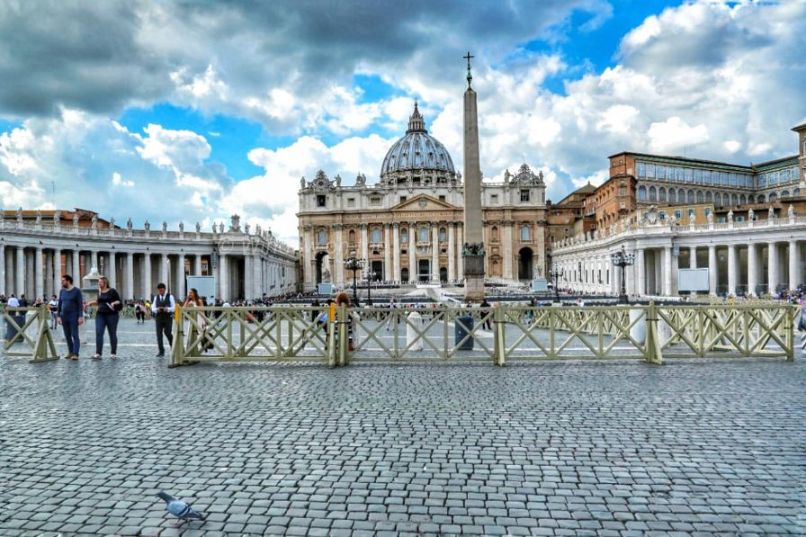
The main tourist attractions in Vatican City are focused in religious tourism, including the visit to the Basilica of St. Peter, Saint Peter’s Square, and the Vatican Museums.
Saint Peter’s Basilica is the most renowned work of Renaissance architecture and the largest church in the world. In 313 AD, after Emperor Constantine legalized Christianity in Rome, he began construction of the original basilica atop the ancient burial ground with what was believed to be the tomb of St. Peter at its center.
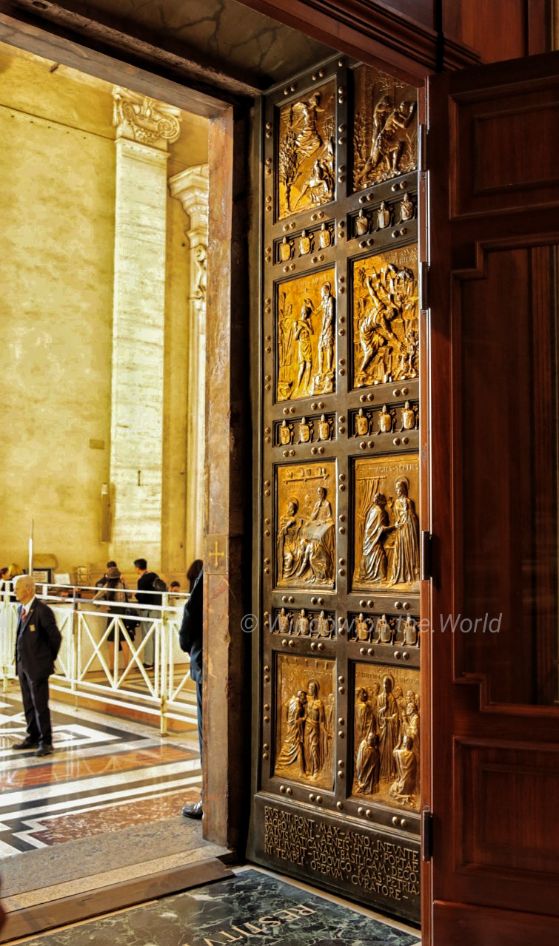
The present Basilica was built over 16th & 17th century, completed in 1626, by almost every great Italian artist at that time, sits over a maze of catacombs and St. Peter’s suspected grave. Holy Door, the entrance portal to Saint Peter’s Basilica is only open on a year that the pope deems a Holy Year. A period in which the Roman Catholic Church offers remission from the consequences of sin. Holy years are usually declared approximately every 25 years, it means this door is opened only once every 25 years. When walking through it, the Roman Catholic Church maintains that you will be given a free general indulgence from sin!
Holy Door is bricked up from inside. On the first day of the Holy Year, the pope strikes the brick wall with a hammer and then opens the door to let in the pilgrims. Once again, it is the pope himself who closes the door at the end of the Jubilee Year. The tradition of the opening and closing of the Holy door can be traced back as far as the 15th Century.
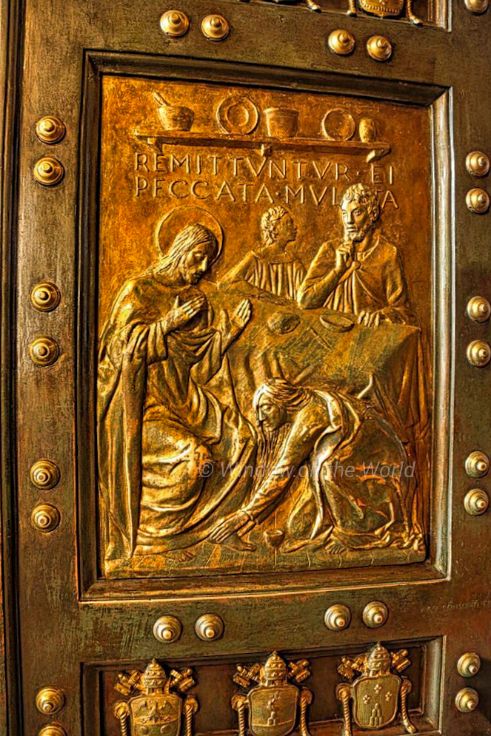
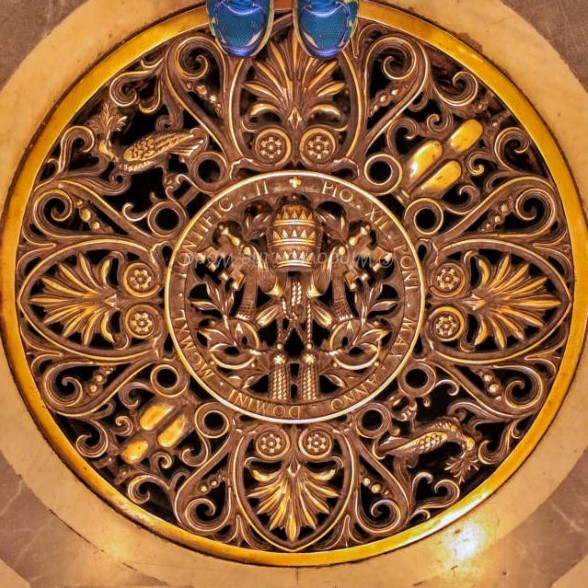
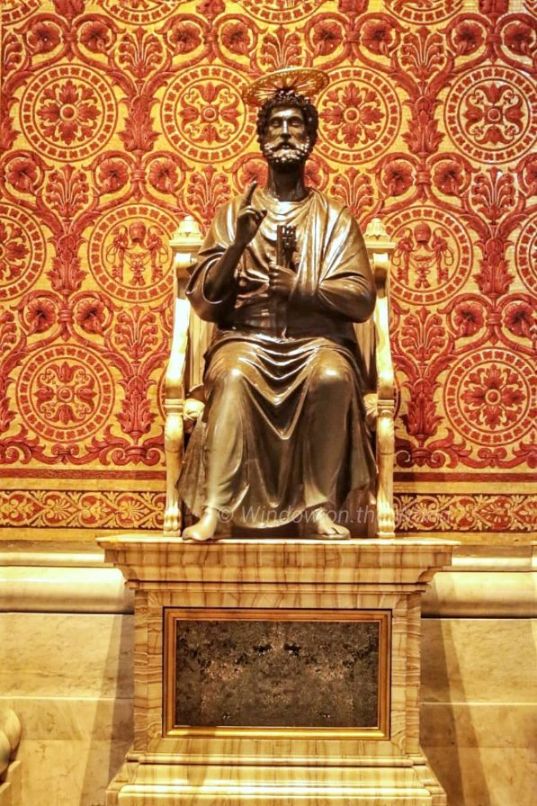
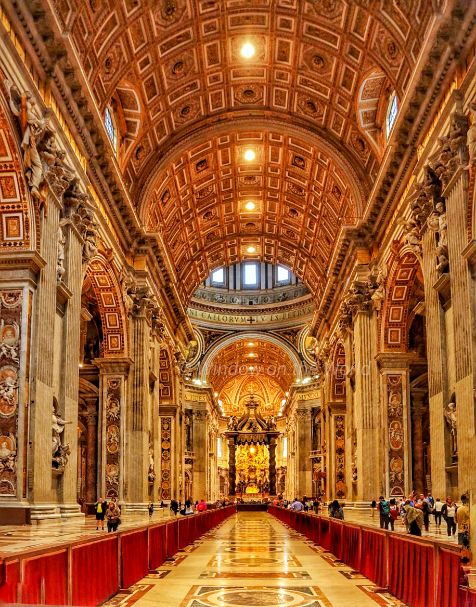
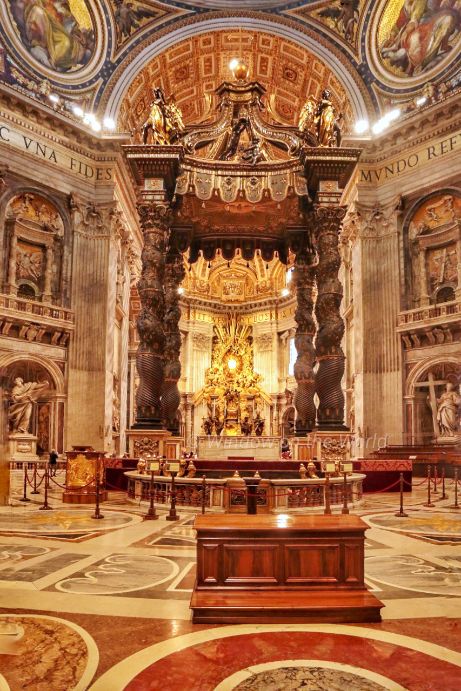
October 2016, the time I visited, Pope Francis announced The Extraordinary Jubilee of Mercy from 8 December 2015 to 20 November 2016. Pope Francis declared, “The Holy Door will become a Door of Mercy through which anyone who enters will experience the love of God who consoles, pardons, and instills hope.” One of 16 Biblical scenes on the Holy Door focusing on stories of mercy and forgiveness. The current Holy Door made of bronze was carved in 1948 by Vico Consorti. Welcome to the Vatican City. A beautiful manhole cover depicting coat of arms, birds and flower patterns. The bronze statue of Saint Peter holding the keys of heaven. According to Catholic teaching, Jesus promised the keys to heaven to Saint Peter, empowering him to take binding actions. The statue has long been regarded as having been created in the 5th century, commissioned by Pope Leo I (440-461), but modern analysis has dated the statue to the 13th-14th c.Maderno’s nave, looking towards the chancel. Carlo Maderno appointed as chief architect of St Peter’s in 1603, was forced to modify Michelangelo’s plans for the Basilica and provide designs for an extended nave with a palatial façade.St. Peter’s Baldachin, a large Baroque sculpted bronze canopy, directly under the dome of the basilica, was created between 1623 and 1634, by Lorenzo Bernini, marks the place of Saint Peter’s tomb underneath. Under its canopy is the high altar of the basilica.
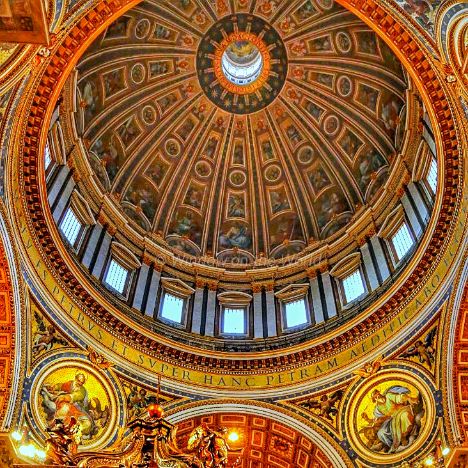
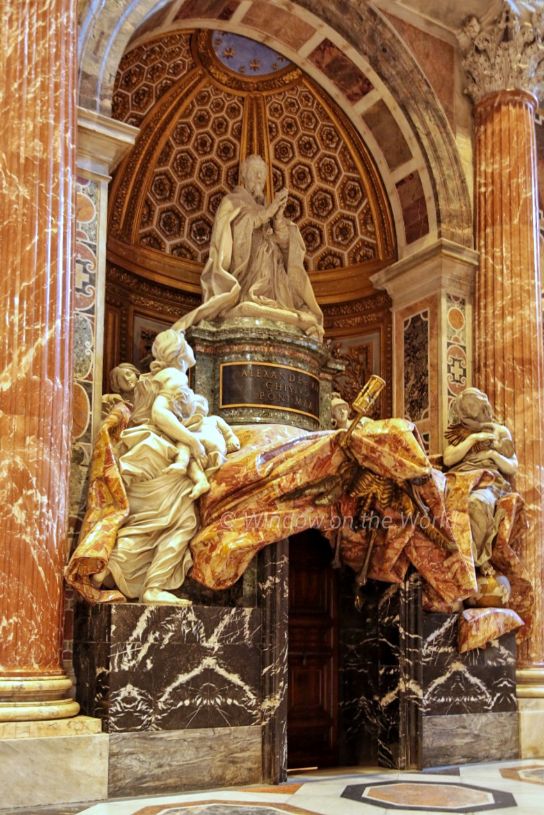
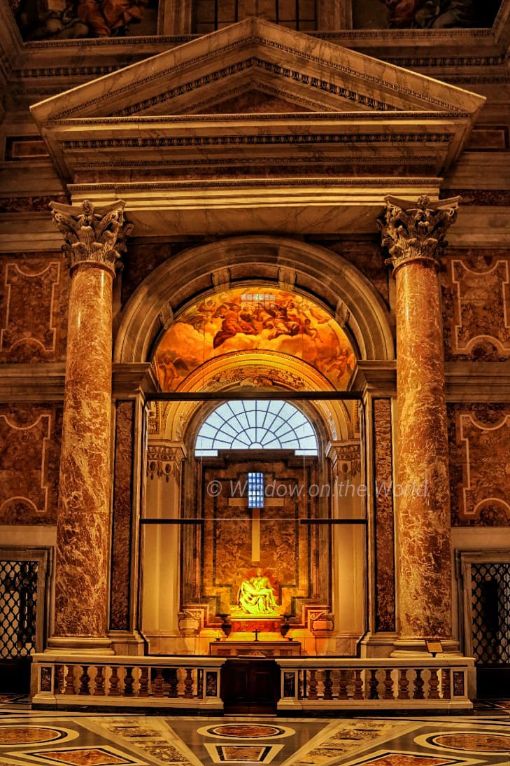
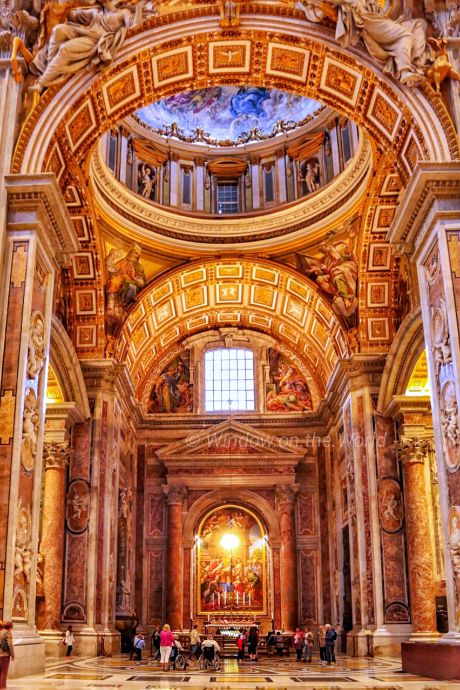
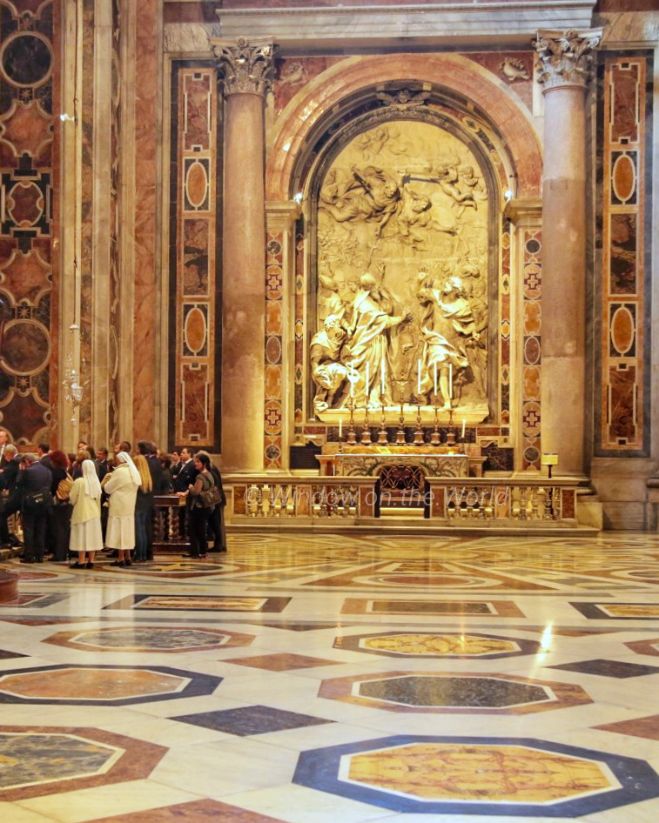
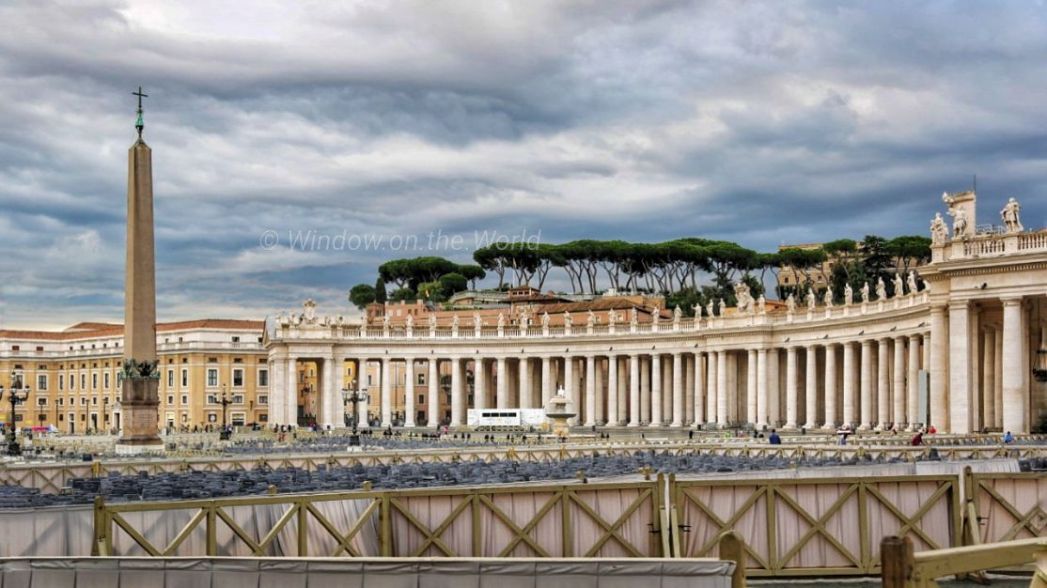
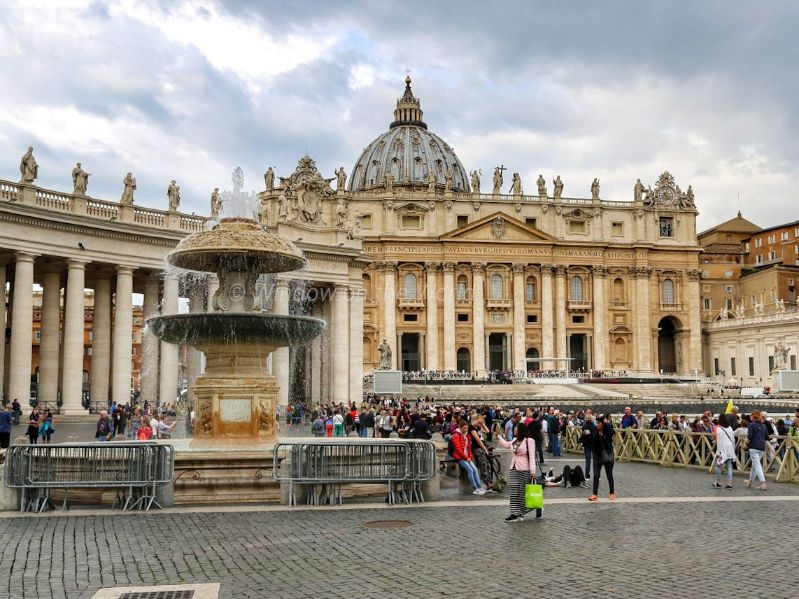
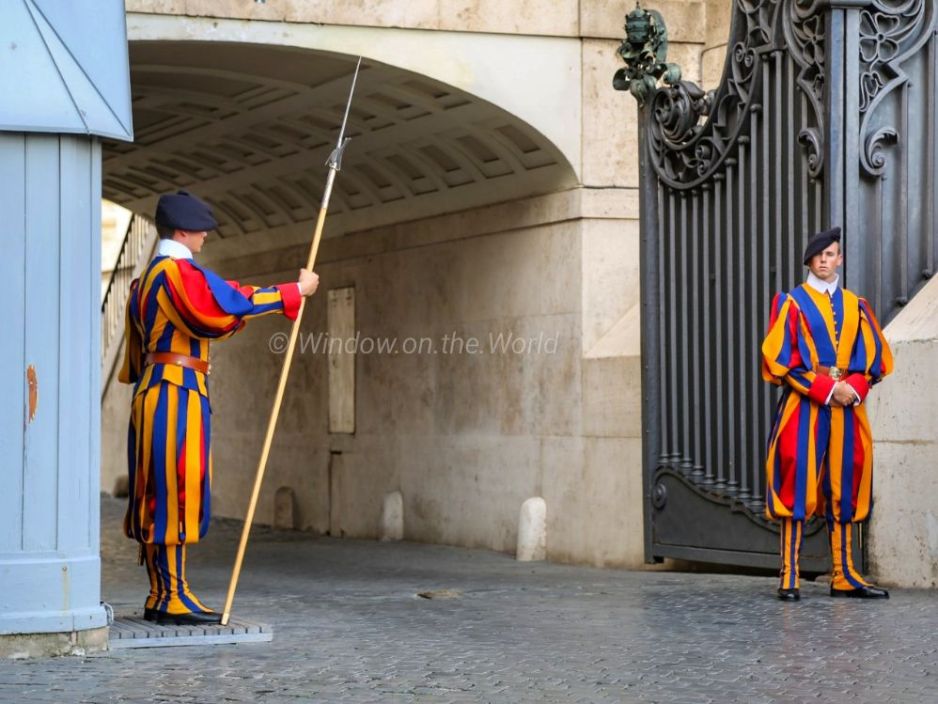
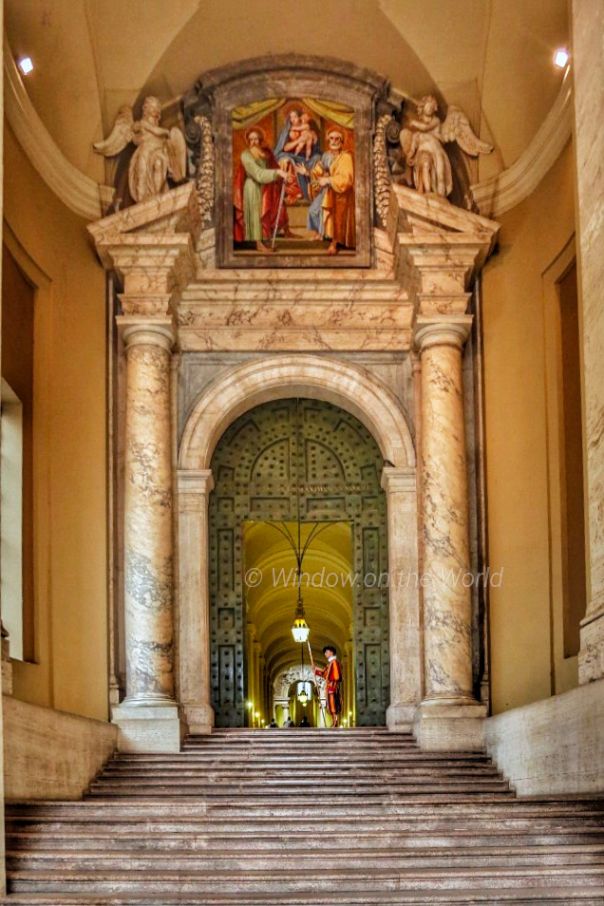
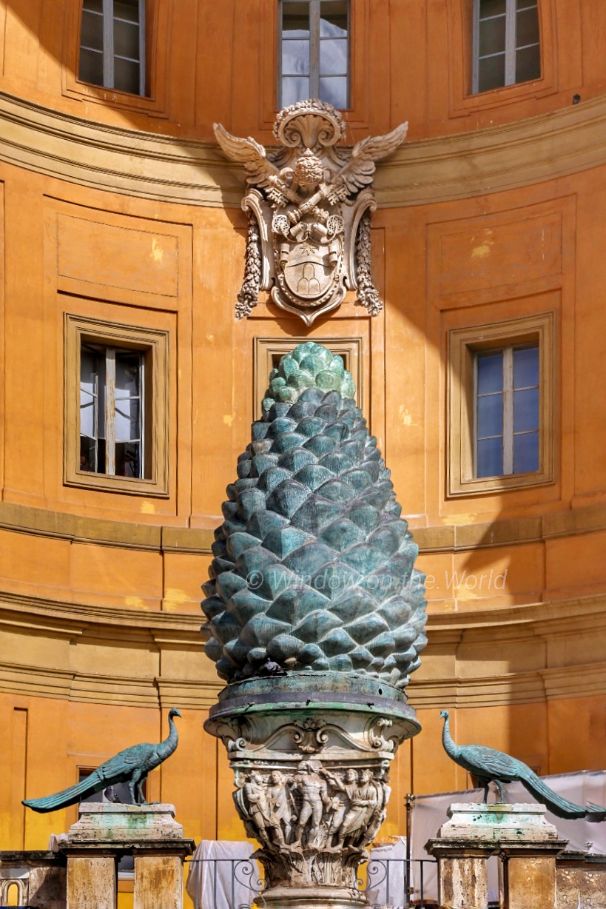
The four columns are 20 meters or 66 feet high. The source of the bronze to make the structure was an issue of contemporary controversy as it was believed to have been taken from the roof or portico ceiling of the ancient Roman Pantheon, though Urban’s accounts say that about ninety percent of the bronze from the Pantheon was used for a cannon, and that the bronze for the baldachin came from VeniceThe dome of St. Peter’s rises to a total height of 136.57 metres (448.1 ft) from the floor of the basilica to the top of the external cross. It is the tallest dome in the world. Multiple Architects, like Bramante, Sangallo, Michelangelo, Giacomo della Porta, and Domenico Fontana, worked on it from 1505 to 1590. Giacomo della Porta and Domenico Fontana brought the dome to completion in 1590,The Tomb of Pope Alexander VII, a sculptural monument designed and partially executed by the Italian artist Gian Lorenzo Bernini. These statues were carved in white marble. Below Alexander, the figure of Death is represented in gilded bronze, shrouded in a billowing drapery of Sicilian jasperThe Pietà, famous work of art by Michelangelo, depicts the body of Jesus on the lap of his mother Mary after the Crucifixion. The sculpture, in Carrara marble, was commissioned for a French Cardinal for his funeral monument, but was moved to its current location in the 18th century. It is the only piece Michelangelo ever signed.St. Peter’s Our Lady of the Column Dome; a small dome over the Chapel of Our Lady of the Column, decorated in 1757 with mosaics from the Litany of Loreto.Fuga d’Attila or Flight of Attila, a colossal marble relief of the Meeting of Attila and Pope Leo (1646–53), by Alessandro Algardi.The Vatican obelisk, made of a single piece of red granite weighing more than 350 tons, was erected for an Egyptian pharaoh more than 3,000 years ago. The obelisk, originally brought to Rome from Egypt by Caligula in 37 AD. in 1586, it was moved to its present location in St. Peter’s Square, where it does double duty as a giant sundial.One of the two fountains which form the axis of the Piazza di San Pietro, (St. Peter’s Square).The Swiss Guard, recognizable by its armor and colorful Renaissance-era uniforms, has been protecting the pontiff since 1506. That’s when Pope Julius II, following in the footsteps of many European courts of the time, hired one of the Swiss mercenary forces for his personal protection. The Swiss Guard’s role in Vatican City is strictly to protect the safety of the pope. The force is entirely comprised of Swiss citizens.A Swiss Guard In Vatican City standing at the entrance of a doorThe Fontana della Pigna or simply Pigna (“The Pine cone”) is a former Roman fountain built in the 1st century AD, which now decorates a vast niche in the wall of the Vatican facing the Cortile della Pigna, Composed of a large bronze pine cone almost four meters high which once spouted water from the top, the Pigna originally stood near the Pantheon next to the Temple of Isis. It was moved to the courtyard of the Old St. Peter’s Basilica during the Middle Ages and then moved again, in 1608, to its present location.
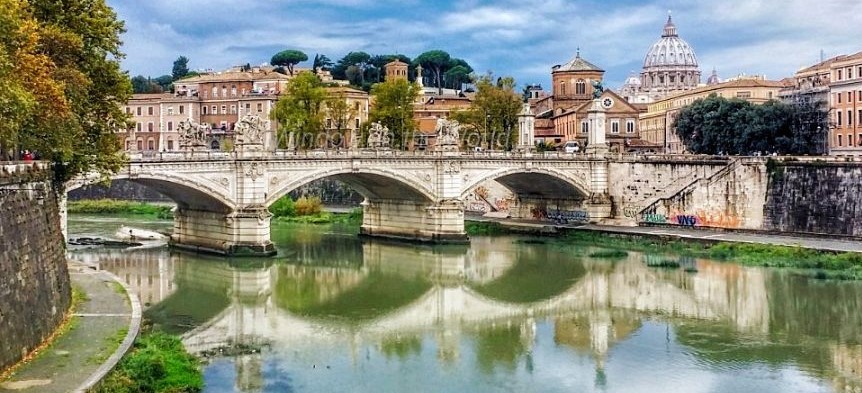
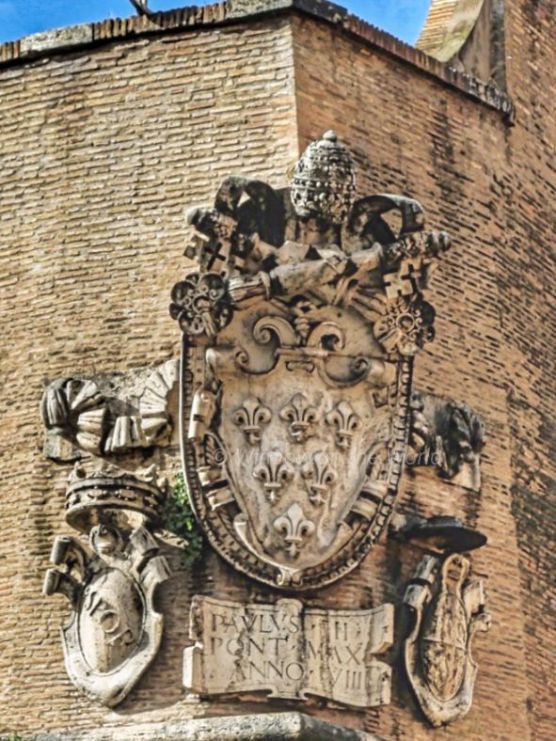
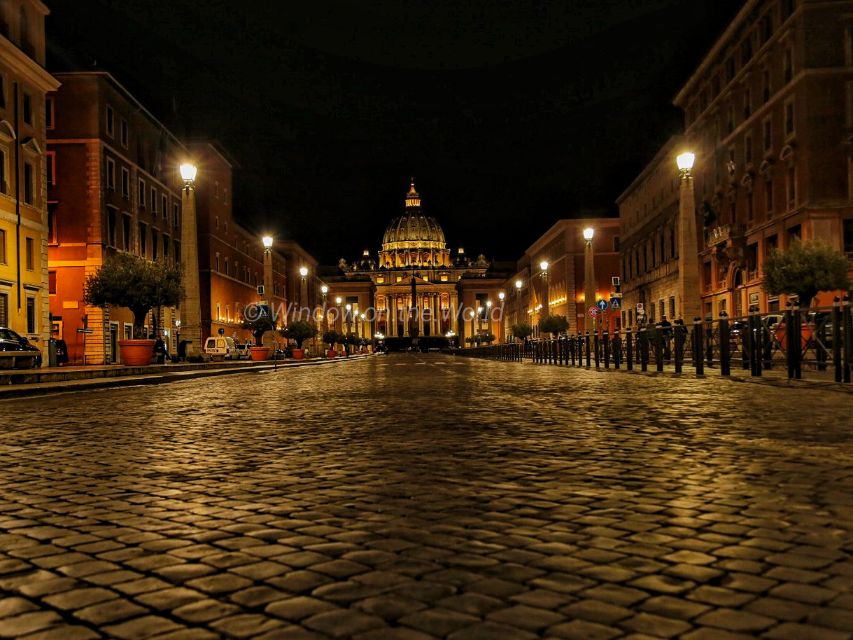
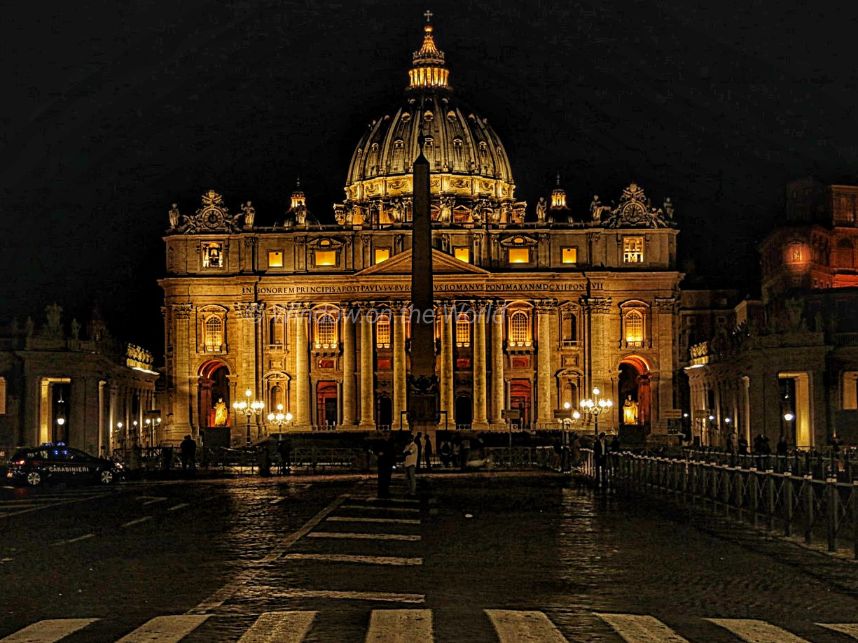
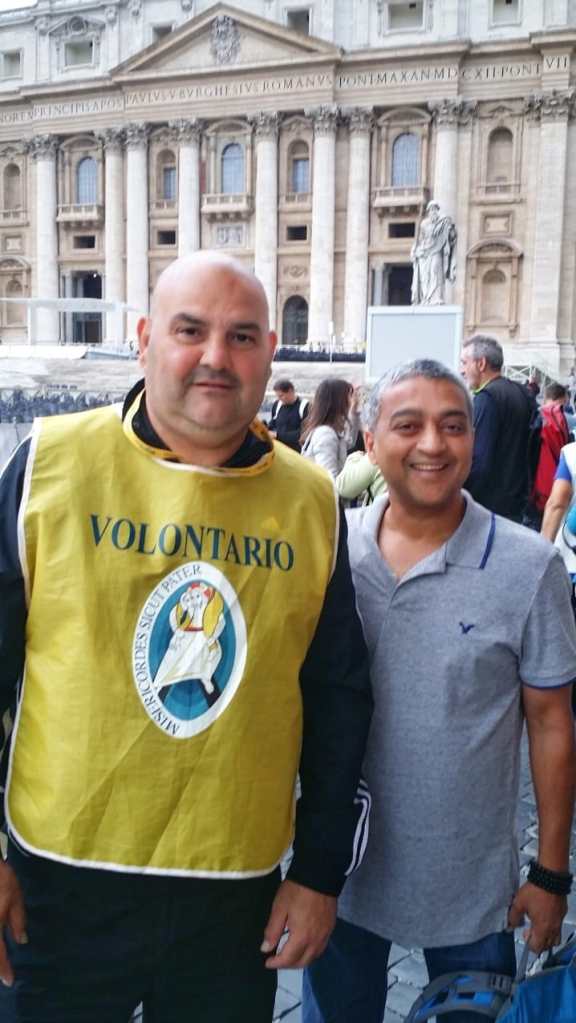
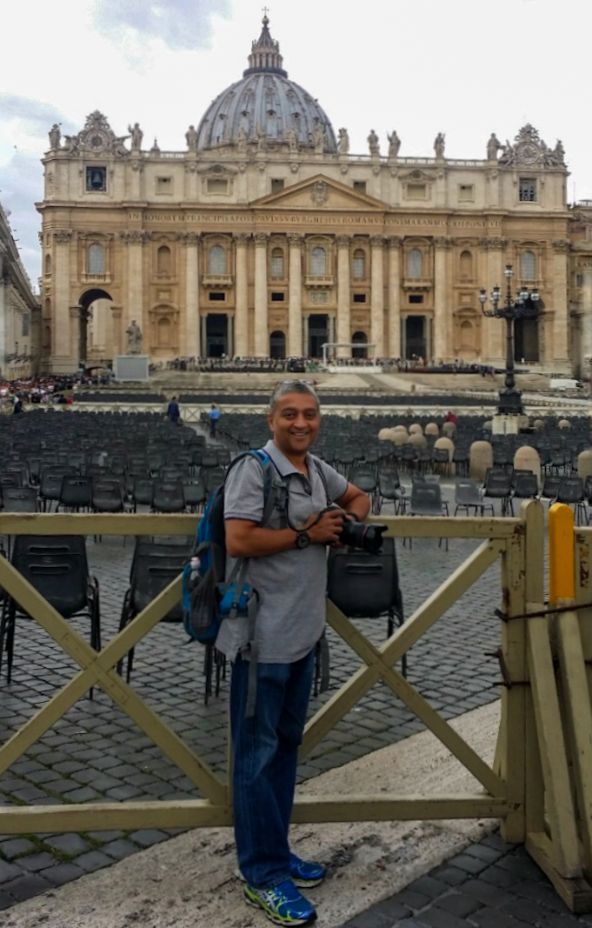
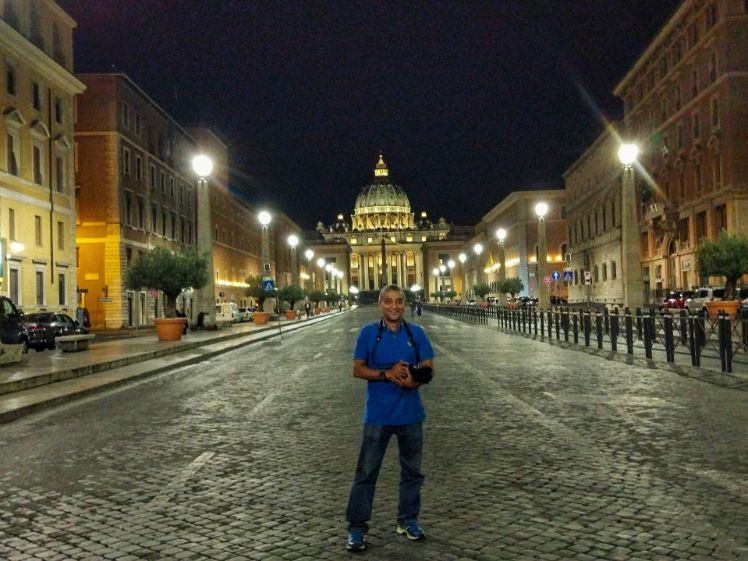
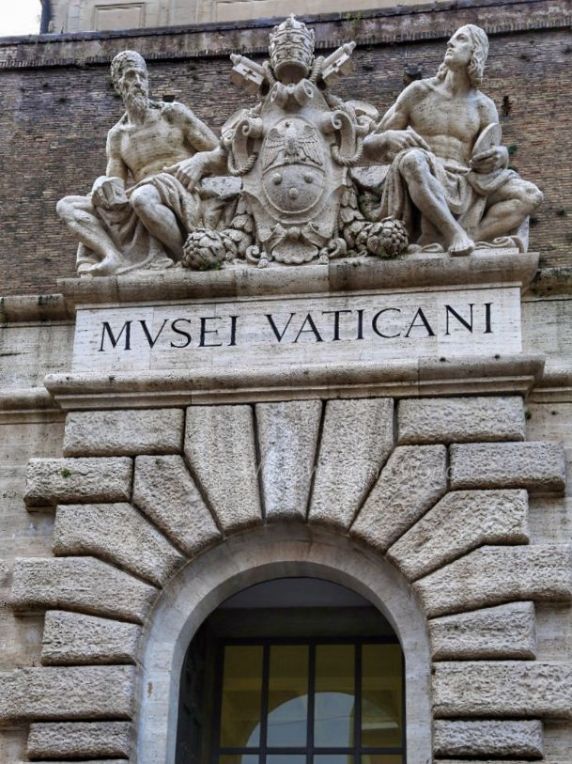
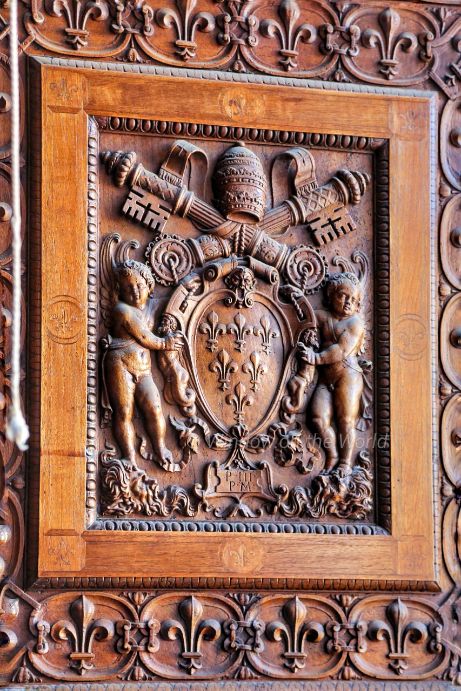
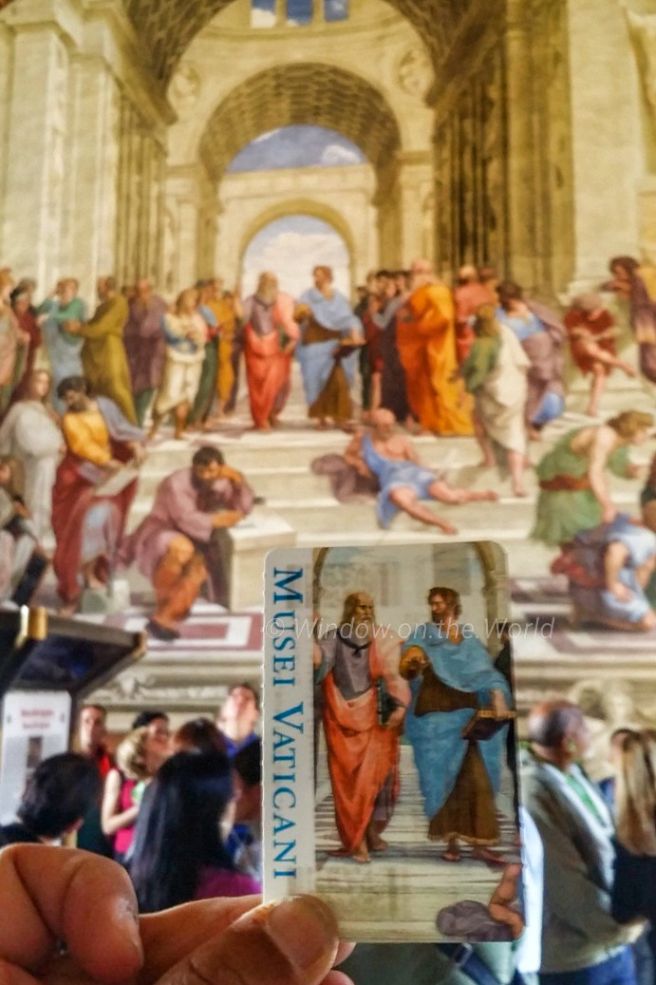
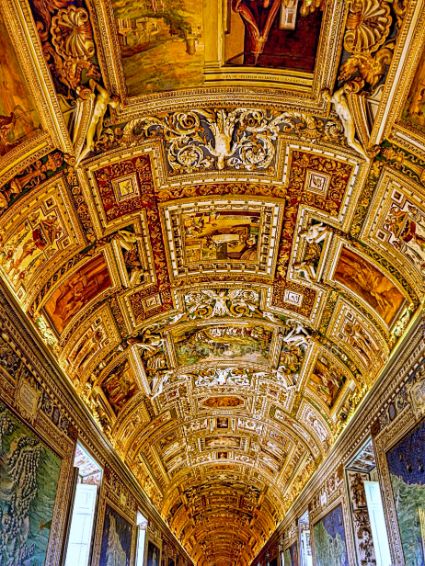
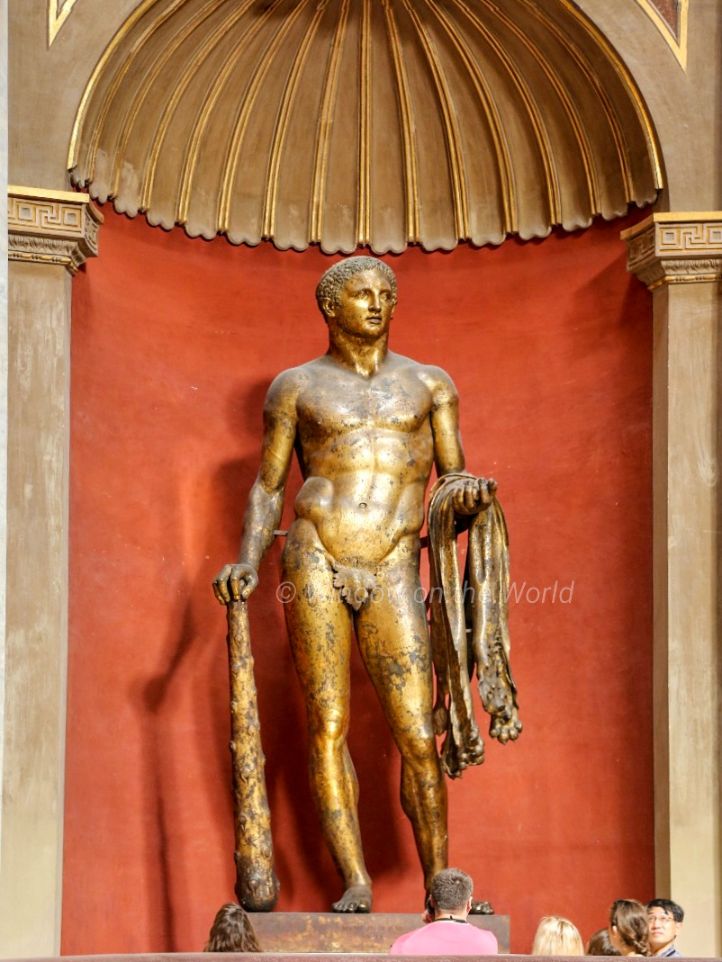
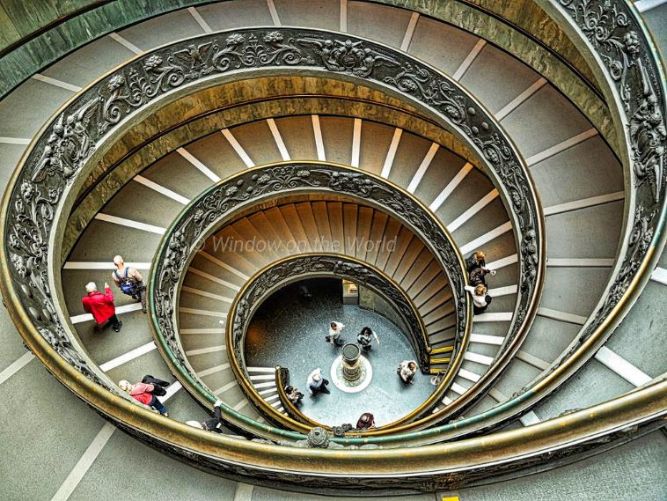
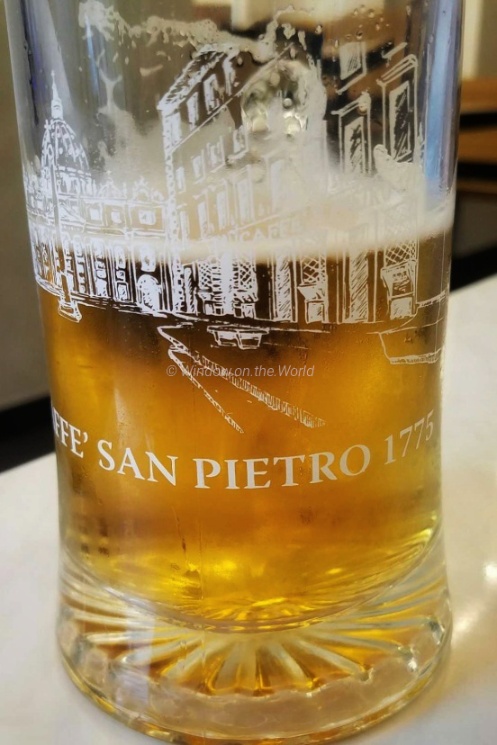
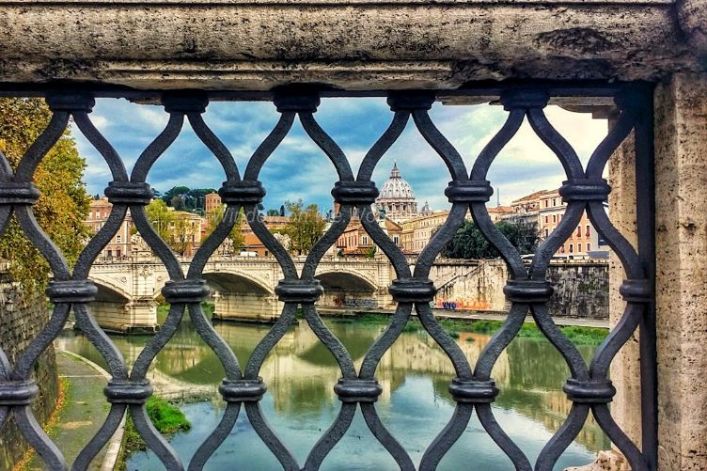
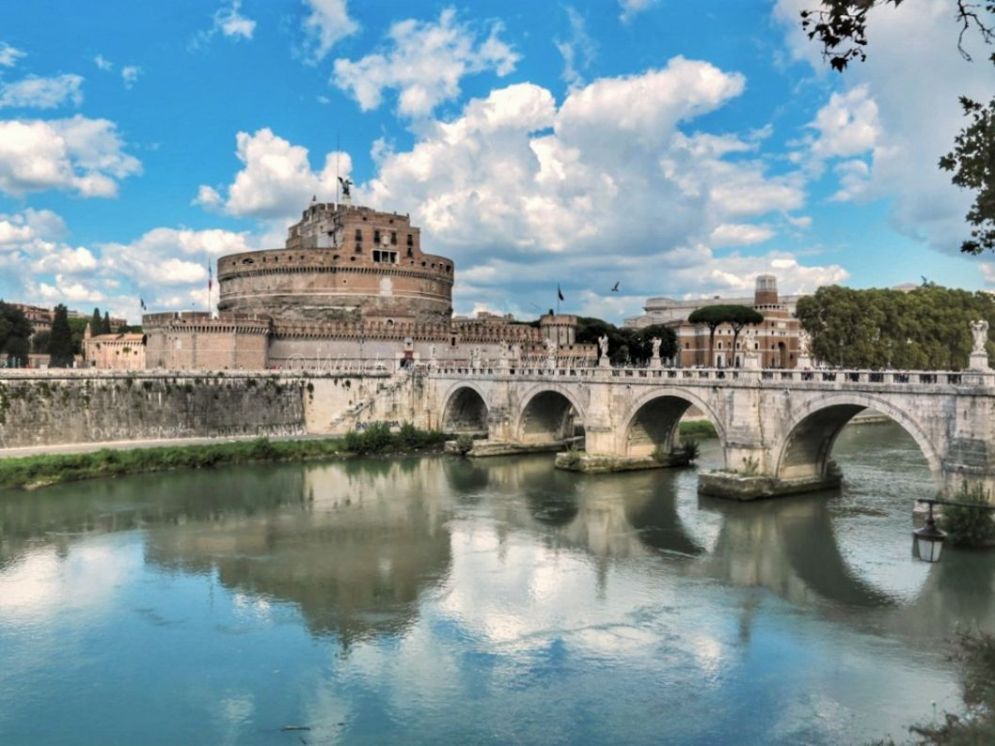
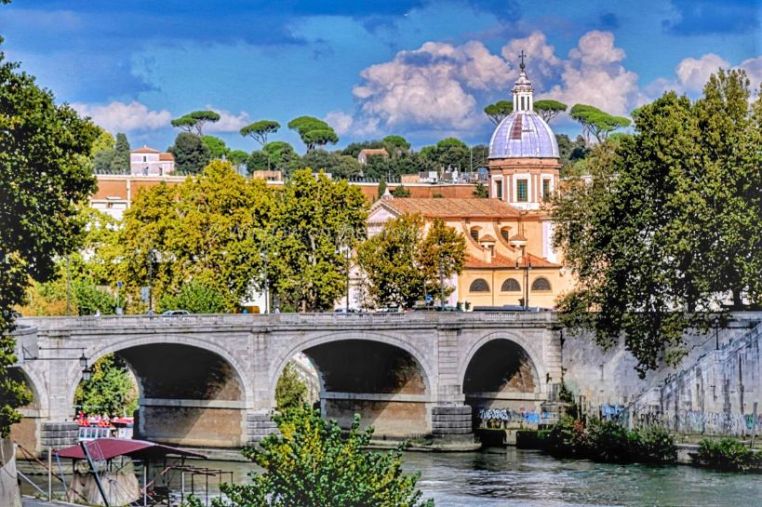
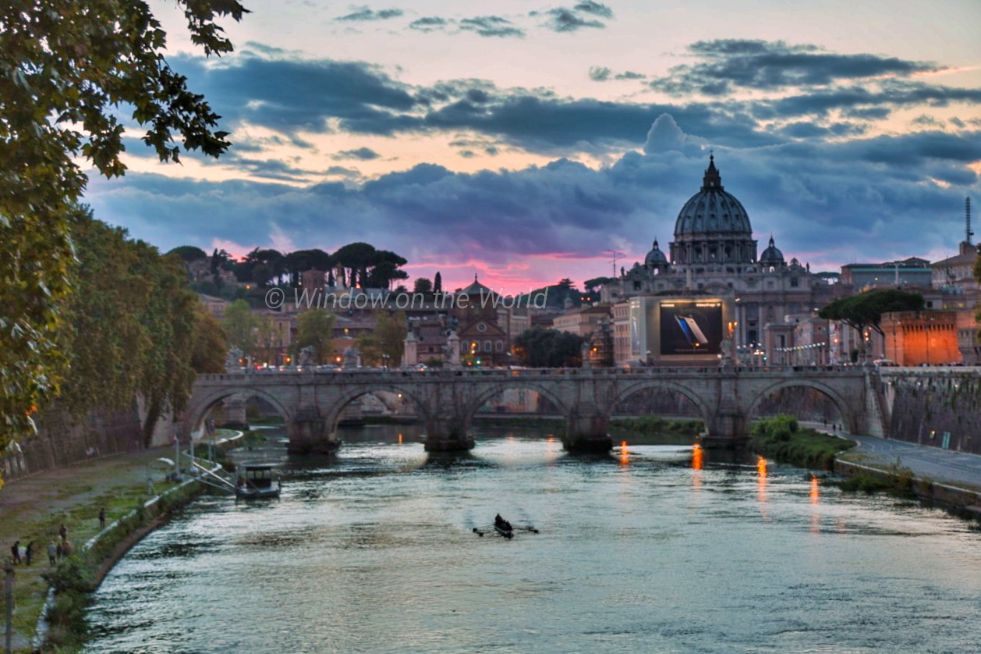
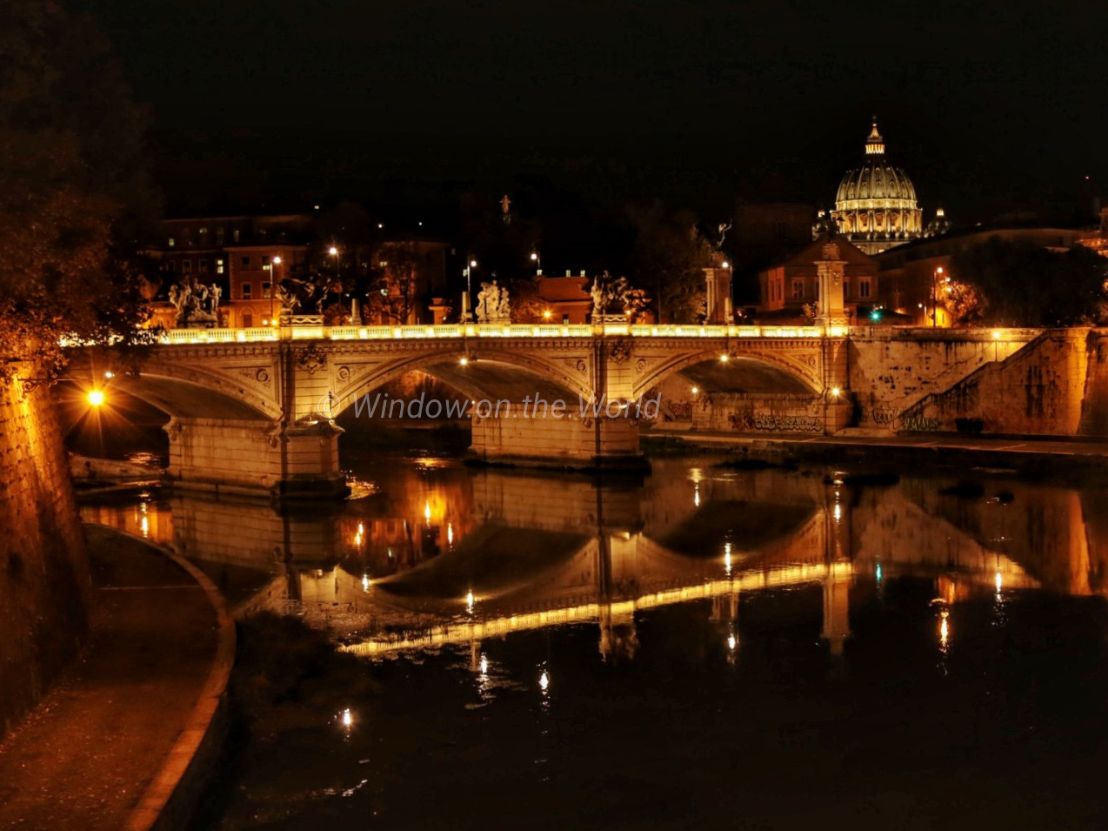
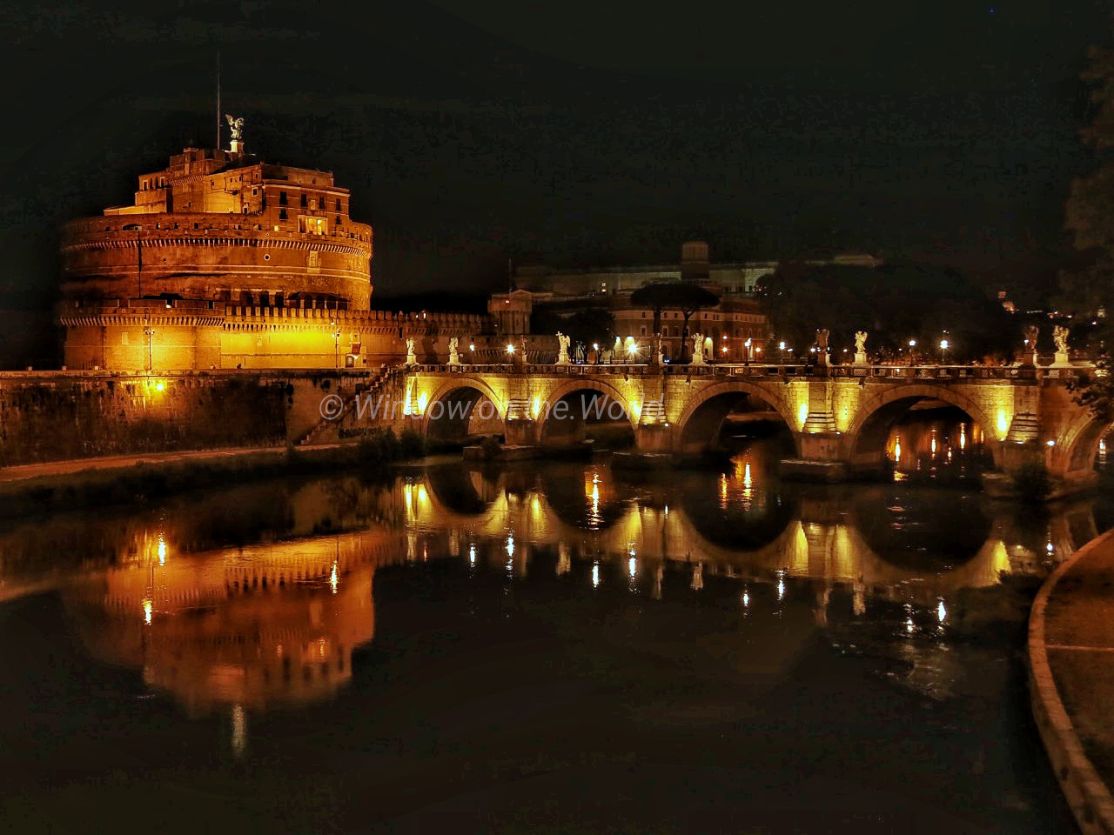
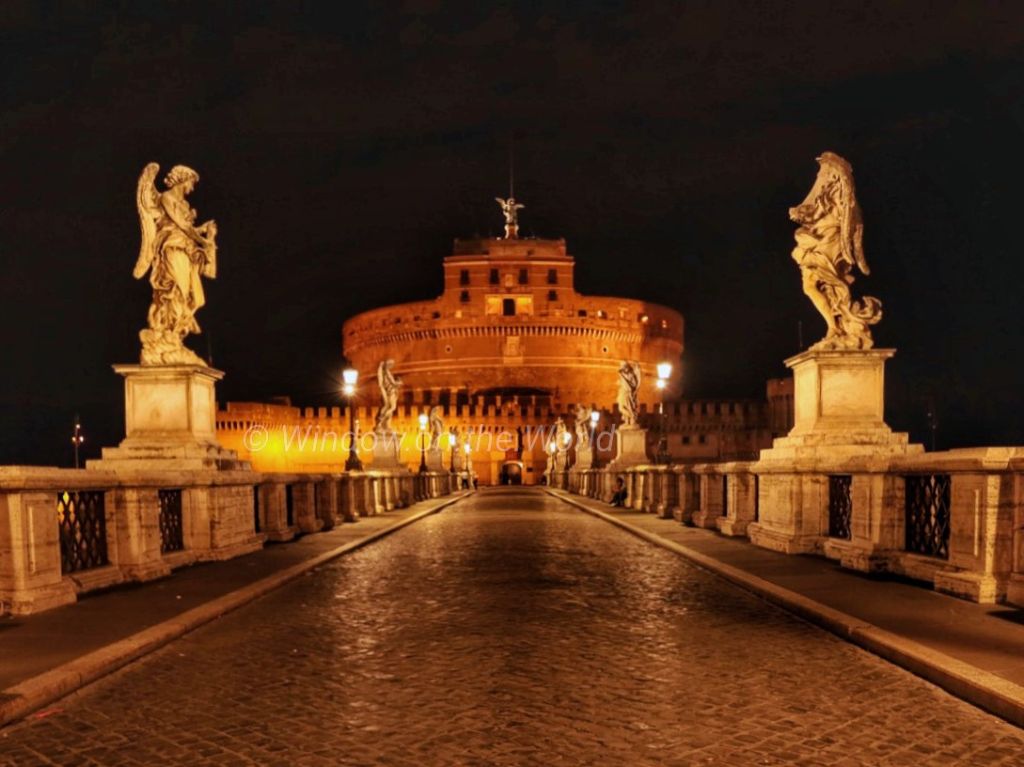
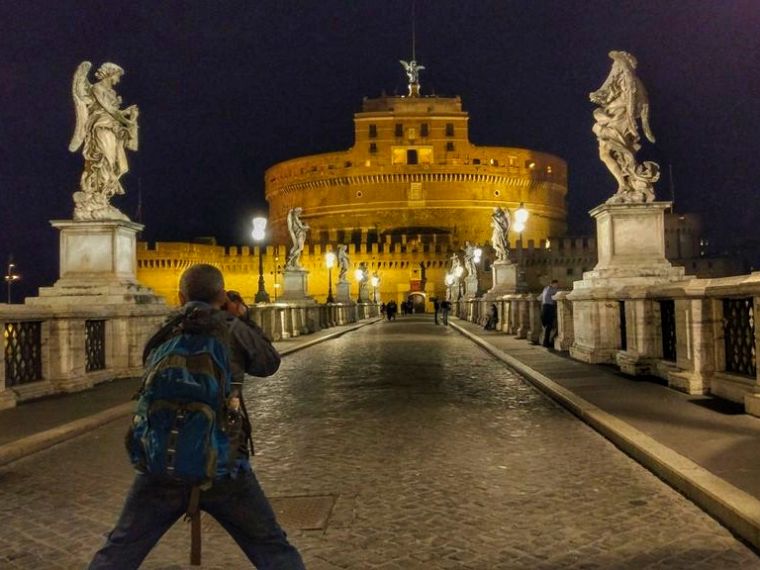
The bronze peacocks on either side of the fountain are copies of those decorating the tomb of the Emperor Hadrian, now the Castel Sant’Angelo.Pope Paul III Coat of Arms on an outer Wall of the Vatican.The Via della Conciliazione, a wide street built by Mussolini after the conclusion of the Lateran Treaties, leads from the River Tiber to the Piazza di San Pietro and gives distant views of St. Peter’s, with the basilica acting as a terminating vista. I took this picture and many other pictures around 2:00 AM in the morning.St. Peter’s Basilica and the piazza at night, or can very early morning around 2:00am.During my visit to the Vatican city, the Roman Catholic Church was celebrating The Extraordinary Jubilee of Mercy. With a volunteer wearing vest with the official logo, shows Jesus, personification of Mercy, carrying on his shoulders a “lost man”.Photo was taken around 2:00 am in the morning and there are still tourists, just like us, still walking the streets of this holy city.A must visit place if you are in Rome. The Vatican Museum (Musei Vaticani) displays works from the immense collection amassed by the Catholic Church and the papacy throughout the centuries including several of the most renowned Roman sculptures and most important masterpieces of Renaissance art in the world. The museums contain roughly 70,000 works, of which about 20,000 are on display. The Sistine Chapel with its ceiling decorated by Michelangelo and the Stanze di Raffaello decorated by Raphael are on the visitor route through the Vatican Museums..The coat of arms of Pope Paul III is visible may places in the Vatican MuseumThe School of Athens, a fresco by the Italian Renaissance artist Raphael, painted between 1509 and 1511 as a part of Raphael’s commission to decorate the rooms now known as the Stanze di Raffaello. Photography is not allowed in The Sistine Chapel.Colorful Gallery ceiling at the Vatican MuseumBronze statue of Hercules of the Forum Boarium, displayed in the Vatican museums. The Statue is slightly over life-sized and in the Hellenistic style of the second century BC.Bramante Staircase; spiral stairs of the Vatican Museums, designed by Giuseppe Momo in 1932Enjoying cold Beer in the St Peter’s Square.A view from Ponte Sant’Angelo of Ponte Vittorio Emanuele II on the Tiber and the St. Peter’s Basilica.A view of Ponte Vittorio Emanuele II on the Tiber and the St. Peter’s Basilica.A view of Ponte Sant’Angelo on the Tiber and the Castel Sant’Angelo. The Mausoleum of Hadrian , built in 123–139 AD, usually known as Castel Sant’Angelo, a towering cylindrical building commissioned by the Roman Emperor Hadrian as a mausoleum for himself and his family. The building was later used by the popes as a fortress and castle, and is now a museum. The structure was once the tallest building in Rome.Ponte Cavour, a bridge over the River Tiber, built between 1896 and 1901, linking piazza del Porto di Ripetta to lungotevere dei Mellini.A magnificent Sunset Afterglow over the Tiber and the St. Peter’s Basilica.A view after dark of Ponte Vittorio Emanuele II on the Tiber and the St. Peter’s Basilica.A view of Ponte Sant’Angelo on the Tiber and the Castel Sant’Angelo.The Castel Sant’Angelo from Ponte Sant’Angelo, a Roman bridge over the Tiber, completed in 134 AD by Roman Emperor Hadrian, to connect the city center to his newly constructed mausoleum. The bridge is now solely pedestrian, and provides a scenic view of Castel Sant’Angelo and the St. Peter’s Basilica.The man in action at 2am in the morning 🙂
Rome and the Vatican city were the last places in my two weeks long road trip across Italy, Monaco, San Marino and Vatican City. I returned back to Shanghai, my home at that time.
In May 2017, 23 days before I was going to complete 50 years, grabbed an opportunity and took an early retirement.. Picked up a backpack and traveling ever since.. Love to travel around the world, experience different culture, local cuisine & drinks .. and take pictures.. so far been to 108 countries and still counting...



 Window on the World
One reply on “Vatican City”
What a gorgeous place! The photos definitely made me feel as if I had been there with you 🙂 Thanks for sharing!
LikeLike