
Destination 》Africa 》Egypt 》Luxor
Year Visited: 2014 – Oct
I visited Luxor during my visit to Egypt in 2014. After exploring Old Cairo and the Pyramids for five days, I took a flight to Luxor, known as a city of Thebes during ancient time, located along the banks of the River Nile. The great city of Thebes was a capital of Egypt during the period of the Middle and New Kingdoms. (c 2050 BC). The city of Luxor is known as the world’s greatest open-air museum, containing some of the largest and most magnificent ancient monuments ever constructed.
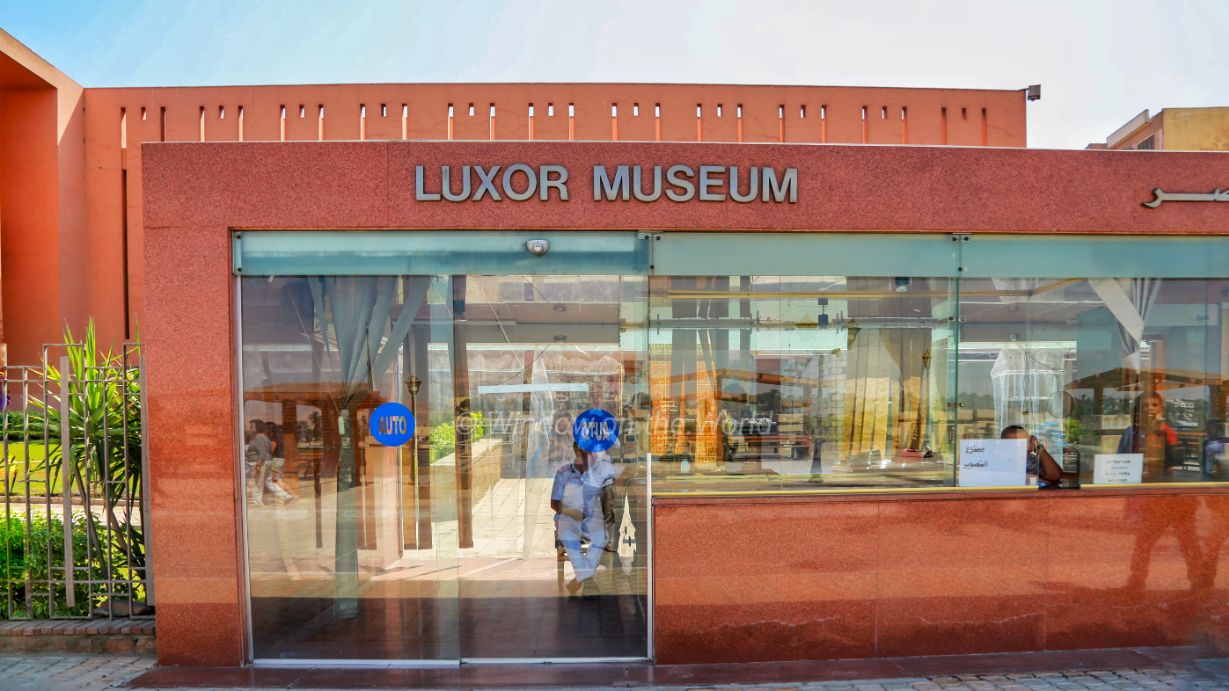
Ancient Thebes with its Necropolis is registered as a UNESCO World Cultural Heritage Site since 1979. The ruins of the temple complexes of Karnak and Luxor are on the east bank of the river Nile along with the Luxor Museum. The west bank of the River Nile has the most monuments, temples and tombs, including the Valley of the Kings.
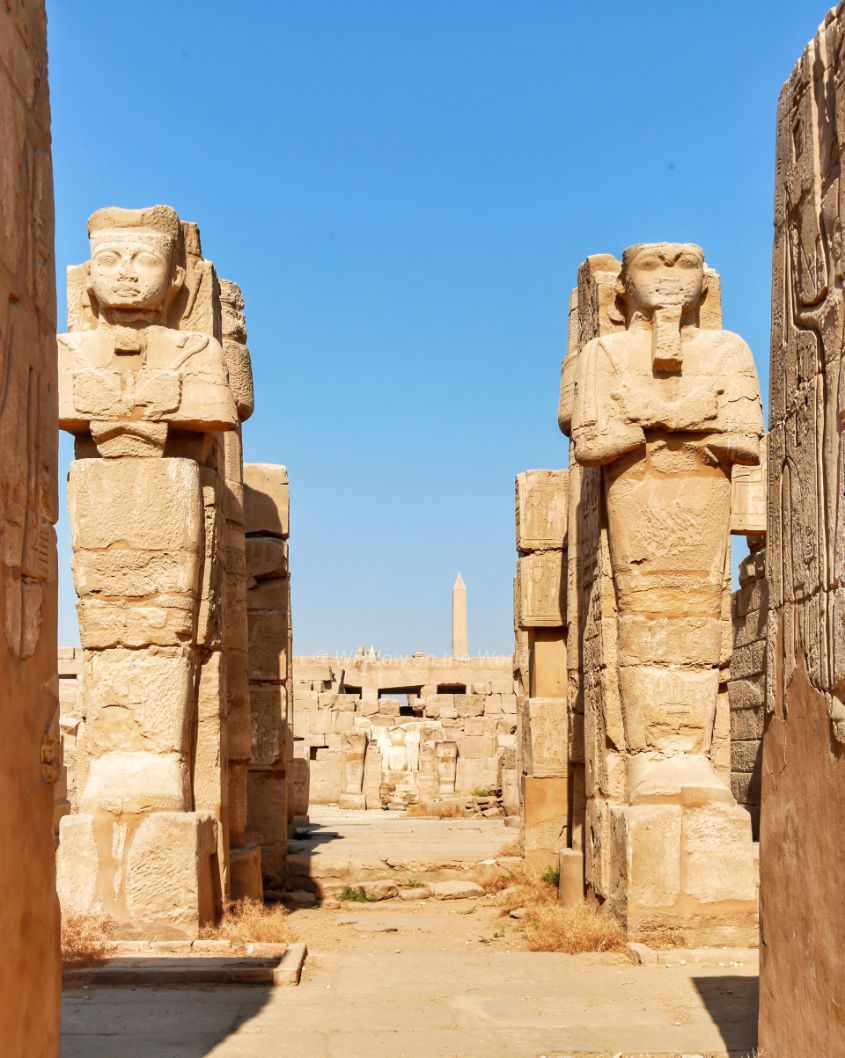
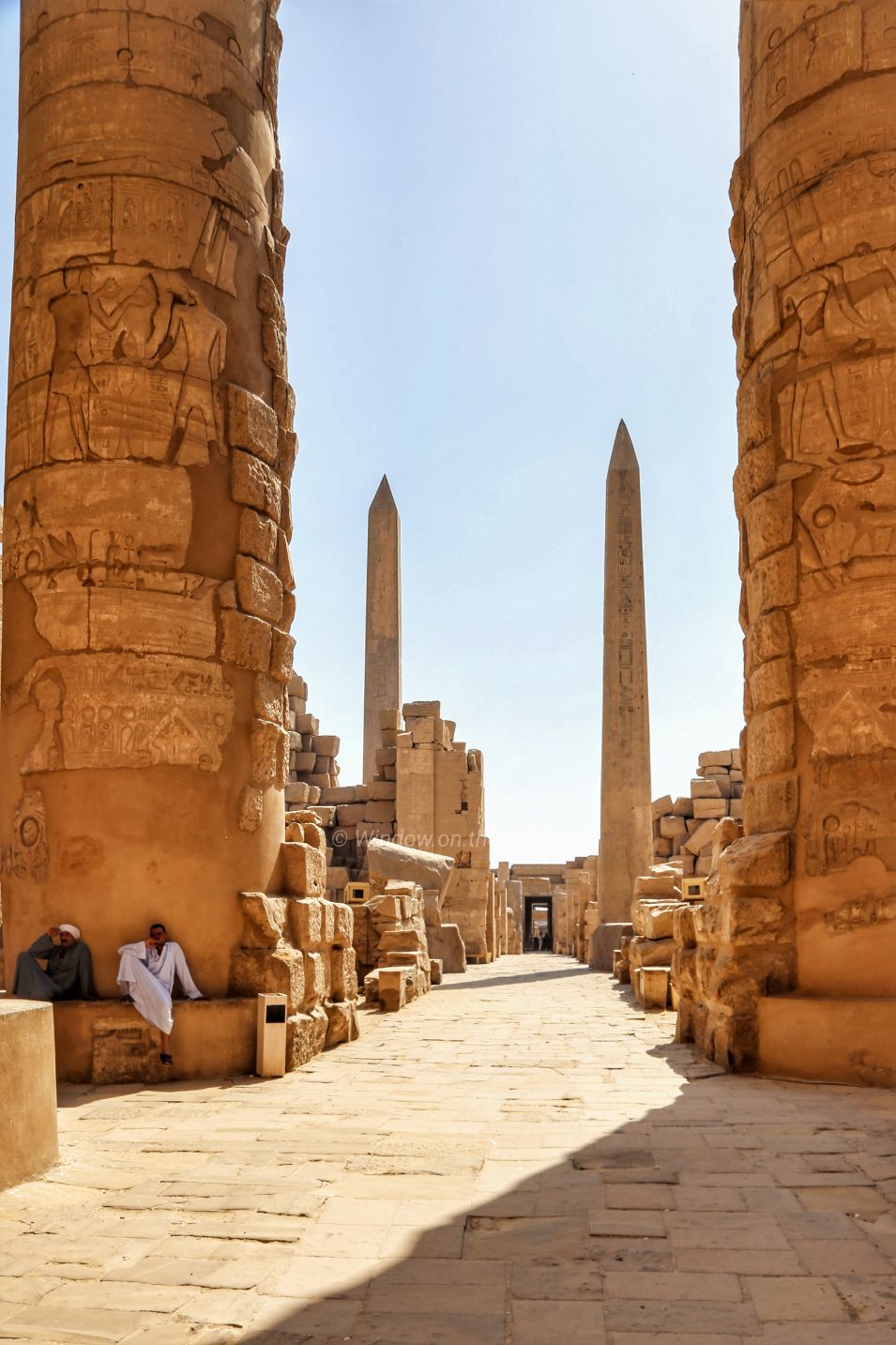
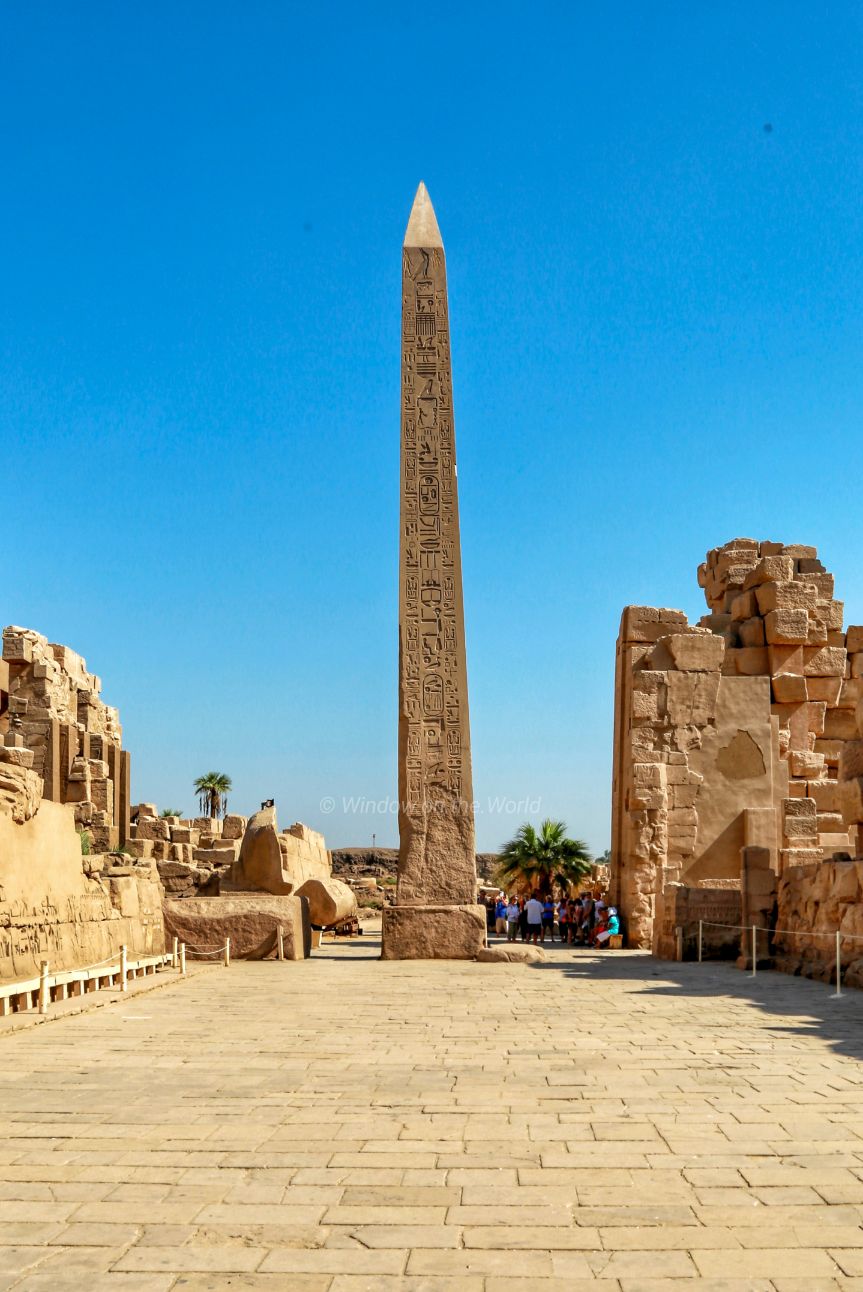
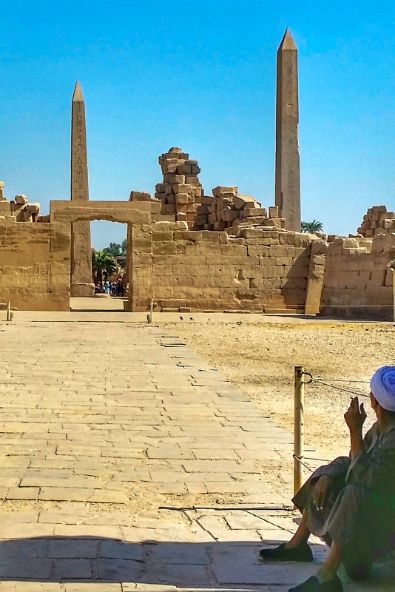
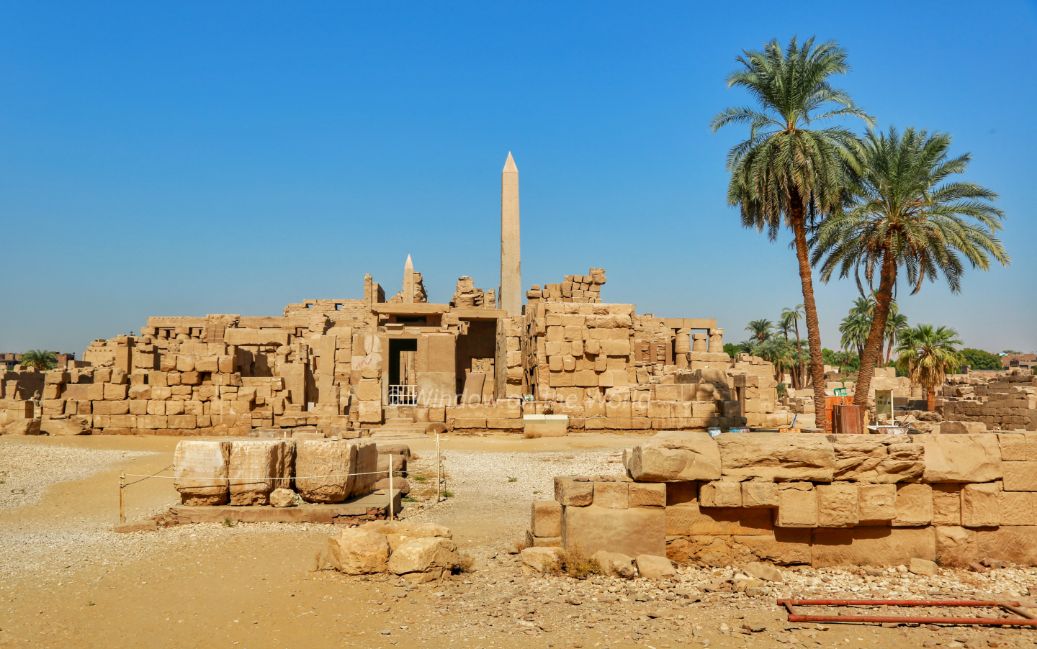
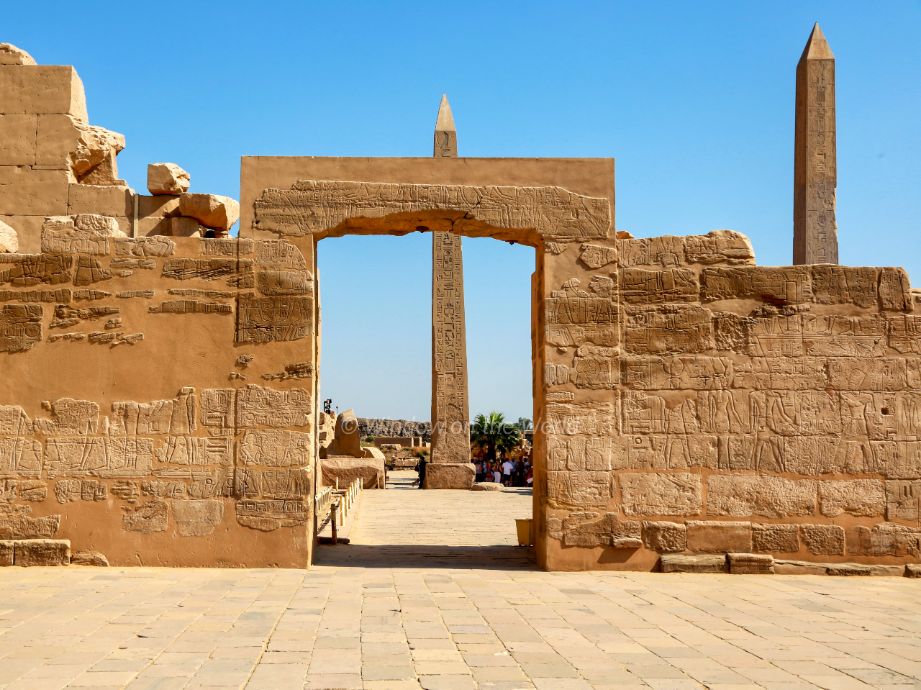
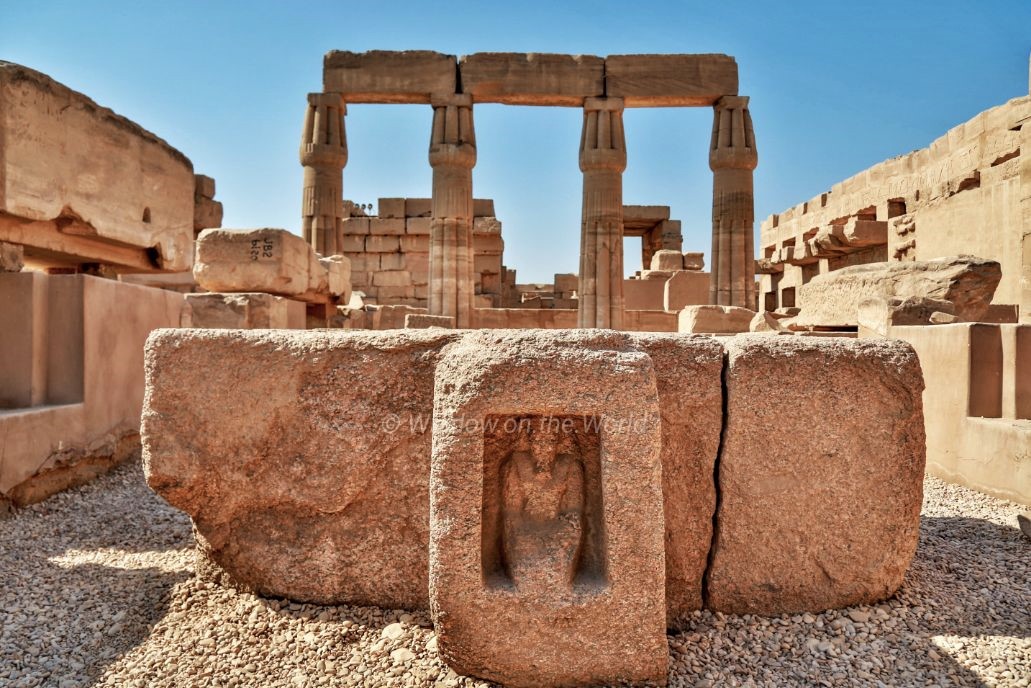
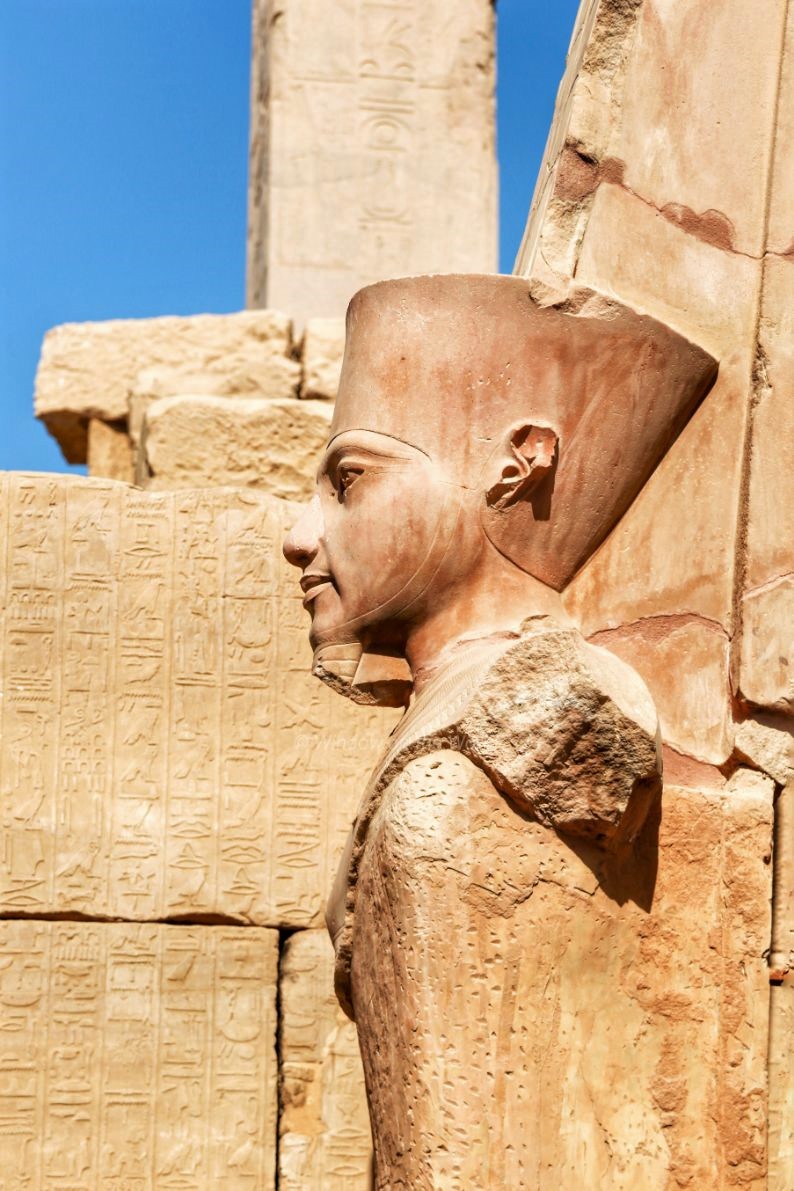
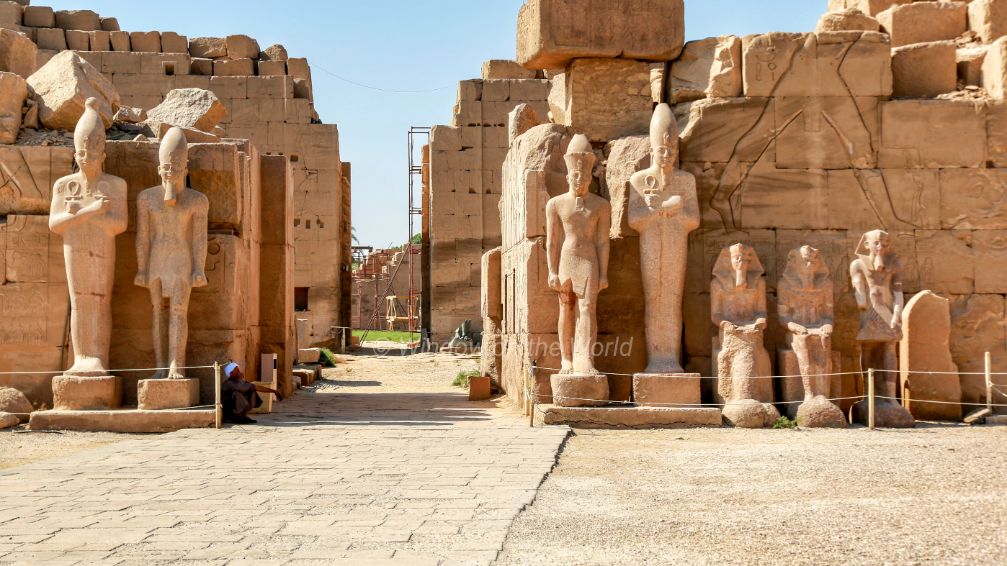
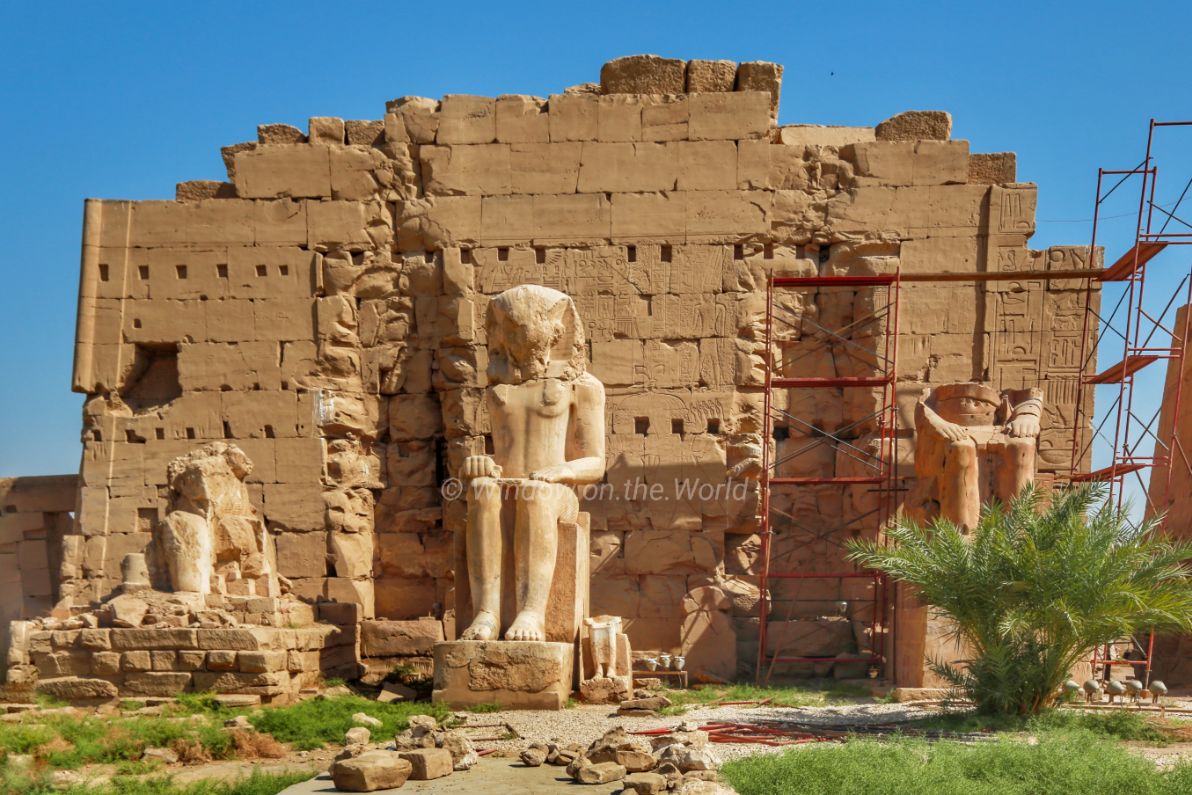
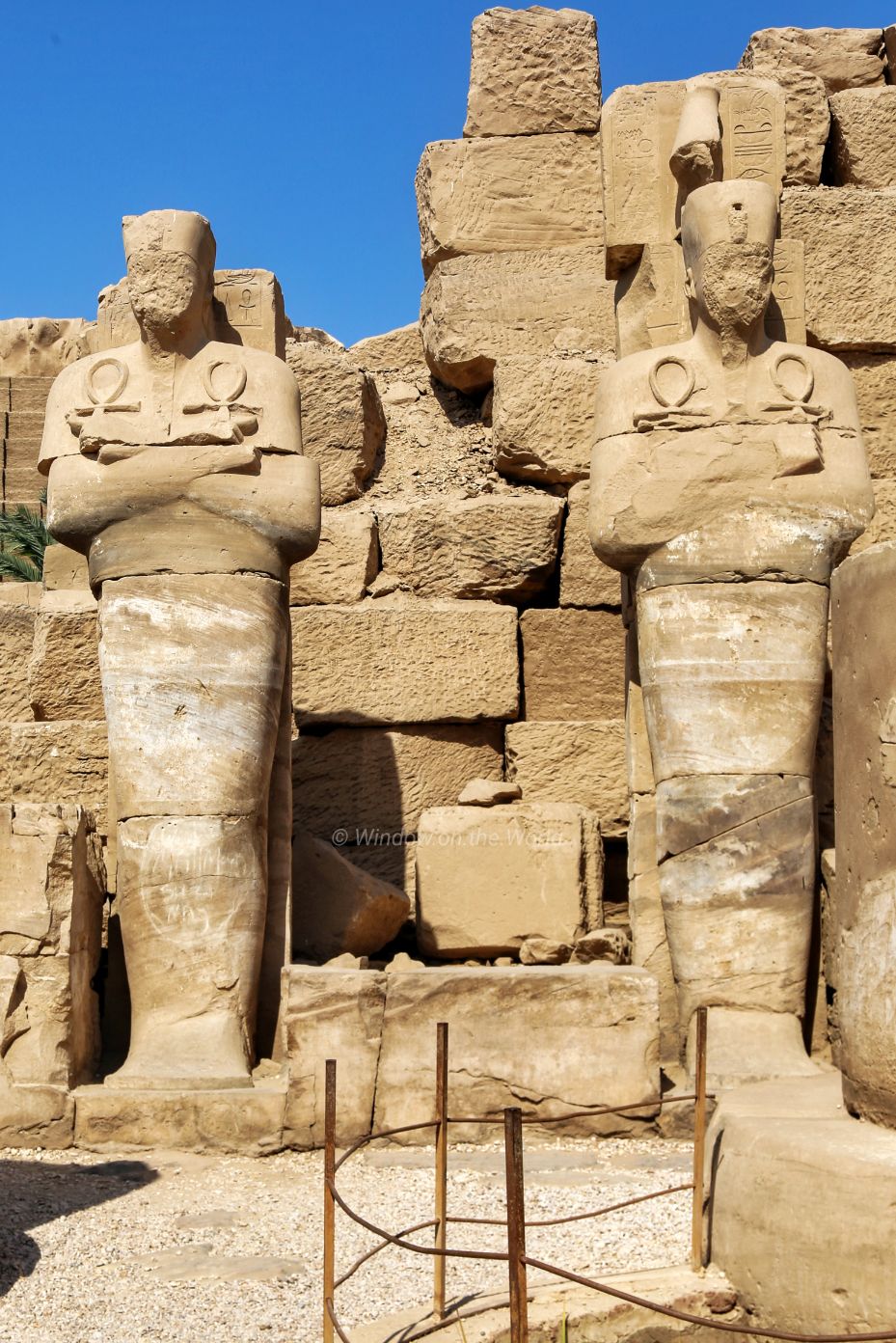
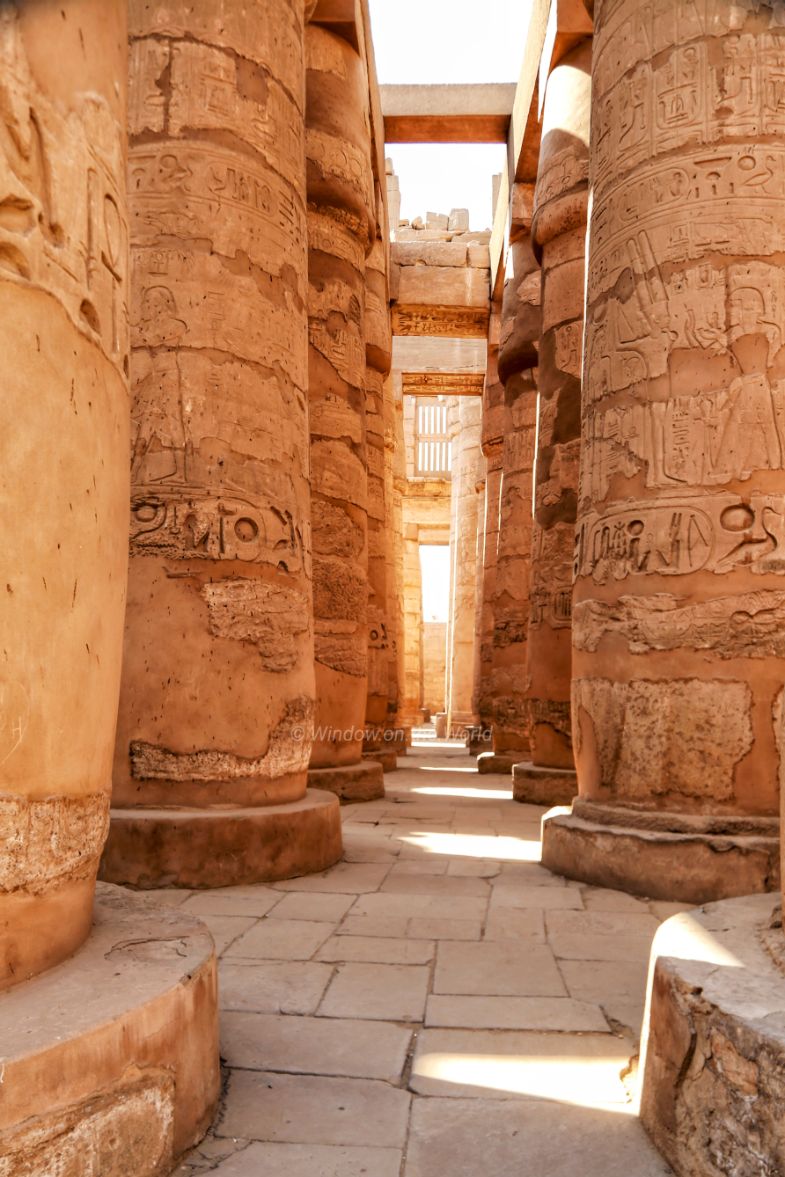
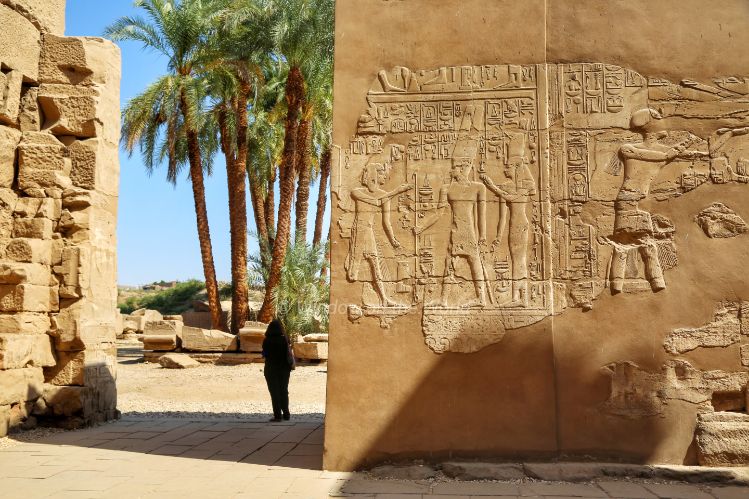
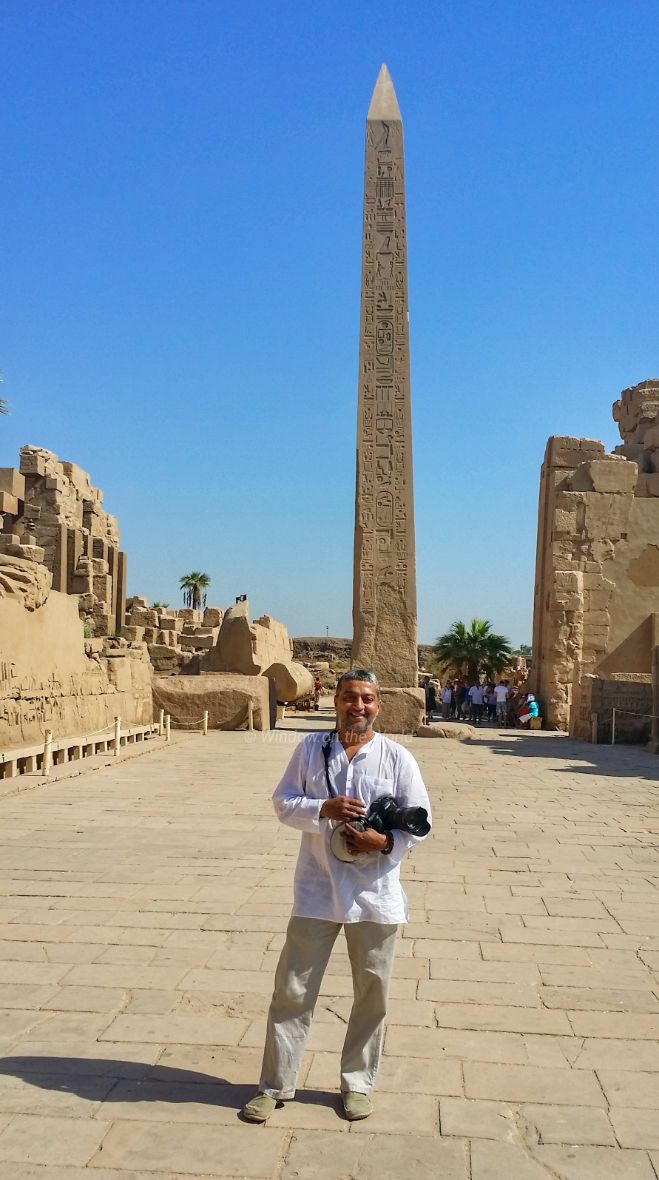
The Karnak Temple Complex located on the east bank of the river Nile, comprises a vast mix of decayed temples, chapels, pylons, and other buildings. Construction at the complex began during the Middle Kingdom (around 2050-1700 BC) and continued into the Ptolemaic period (305 – 30 BC). The Karnak Temple Complex is one of the largest religious building in the world.
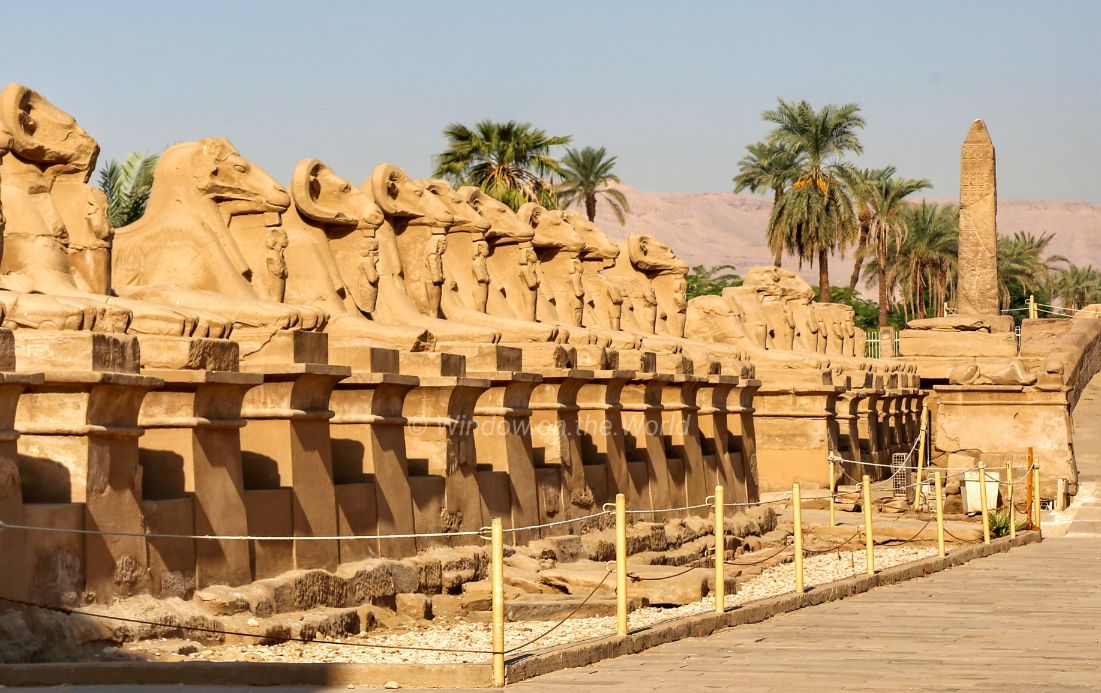
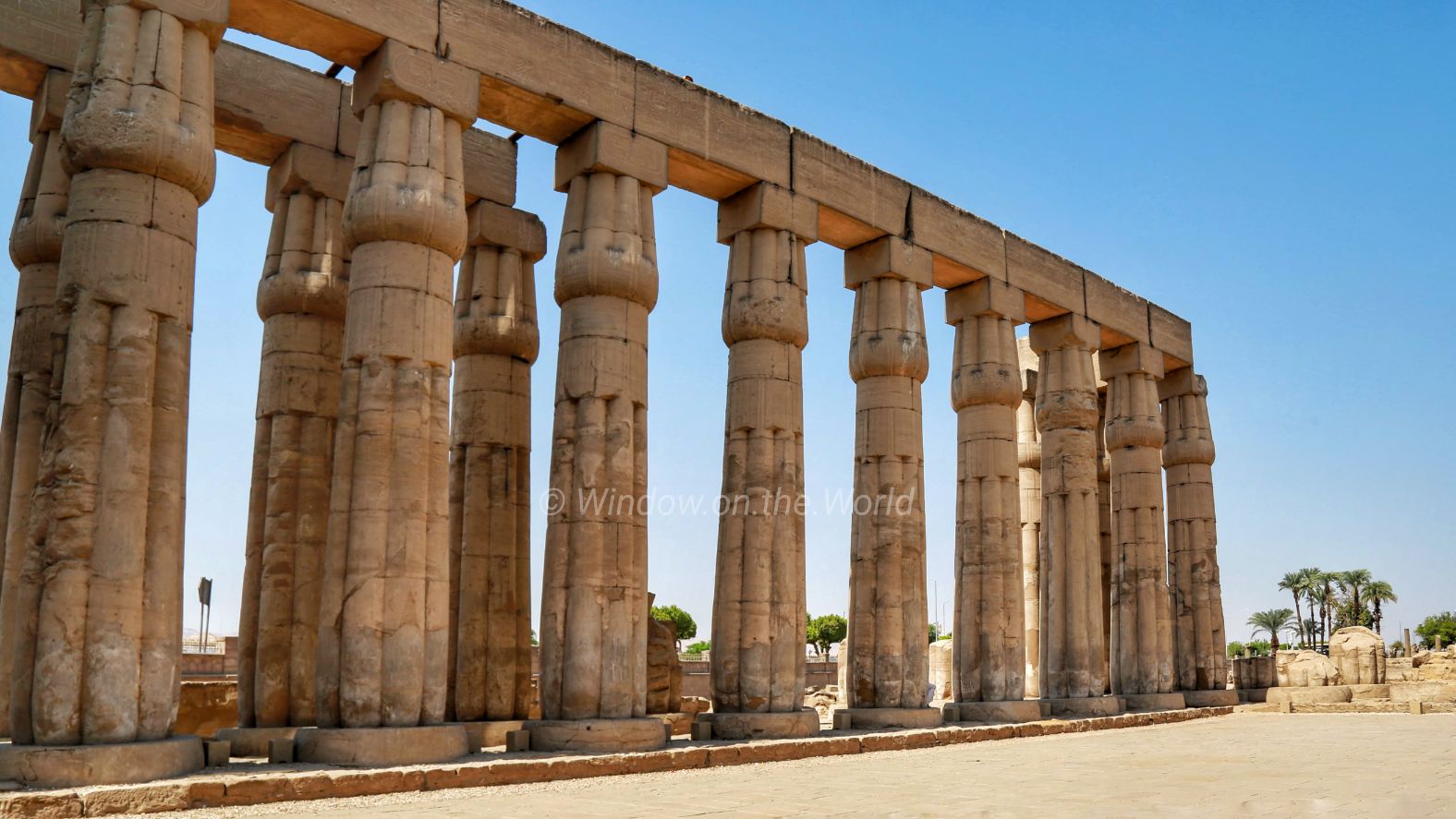
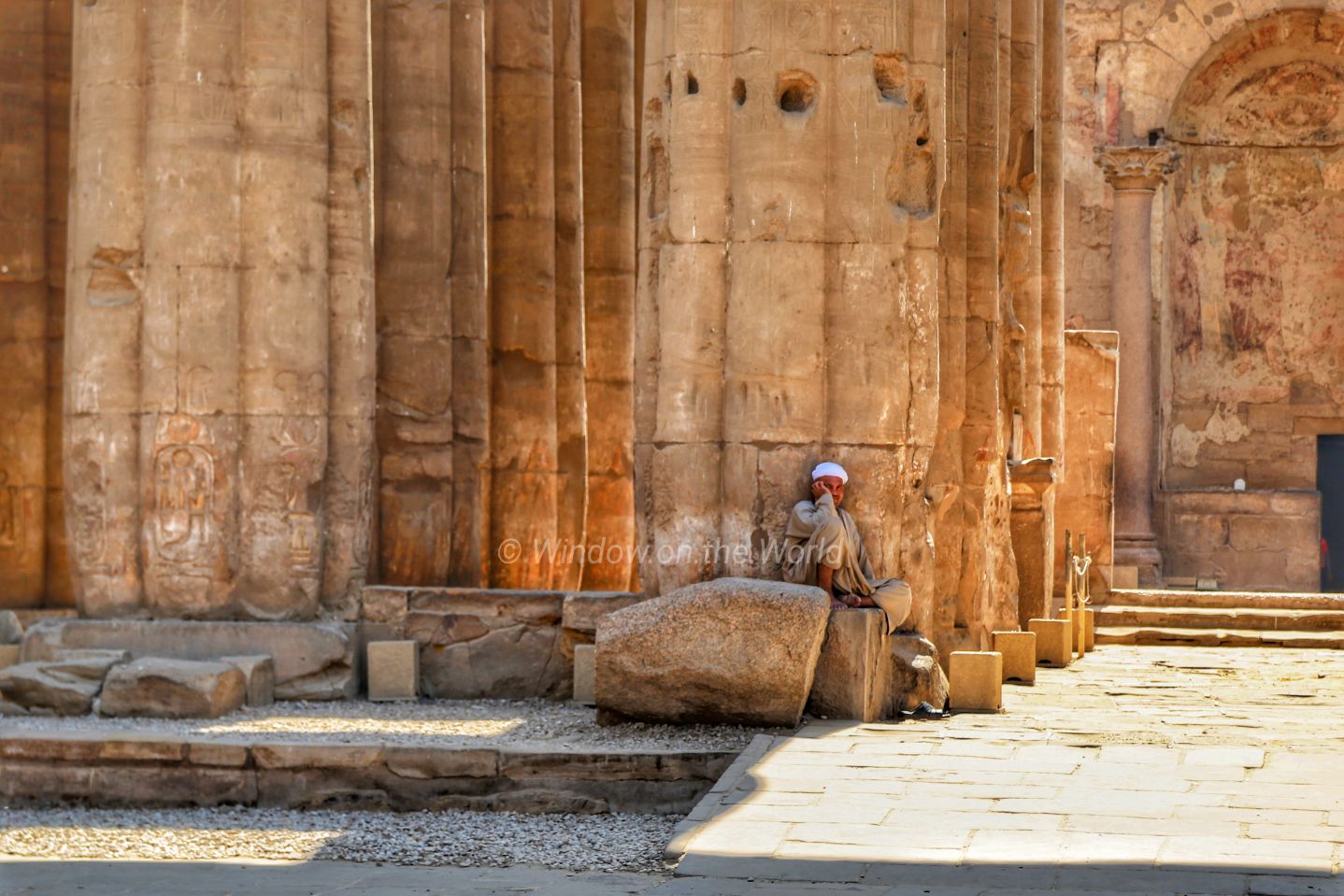
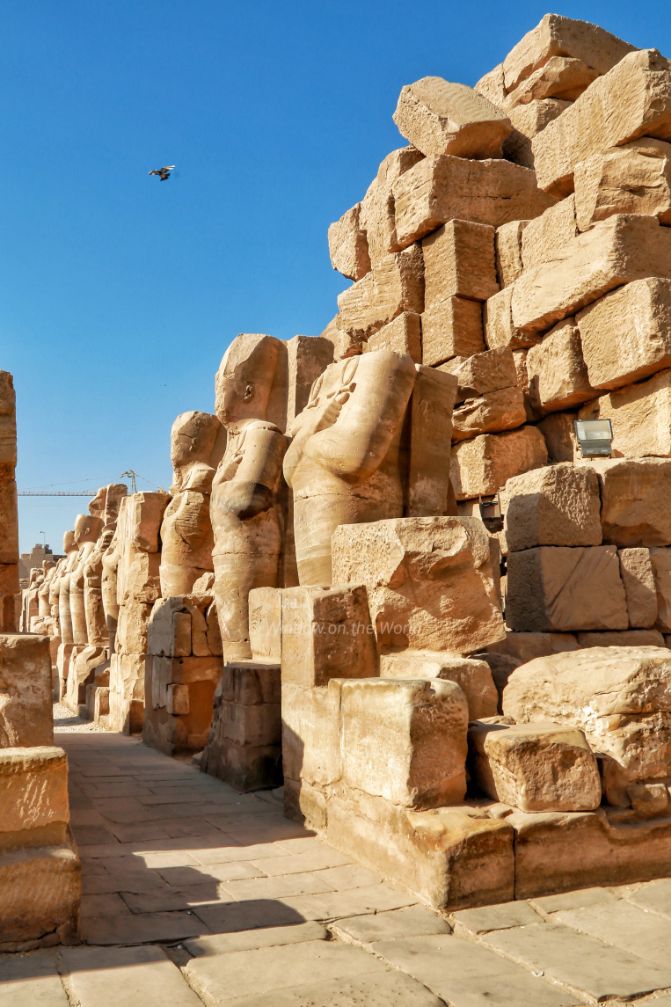
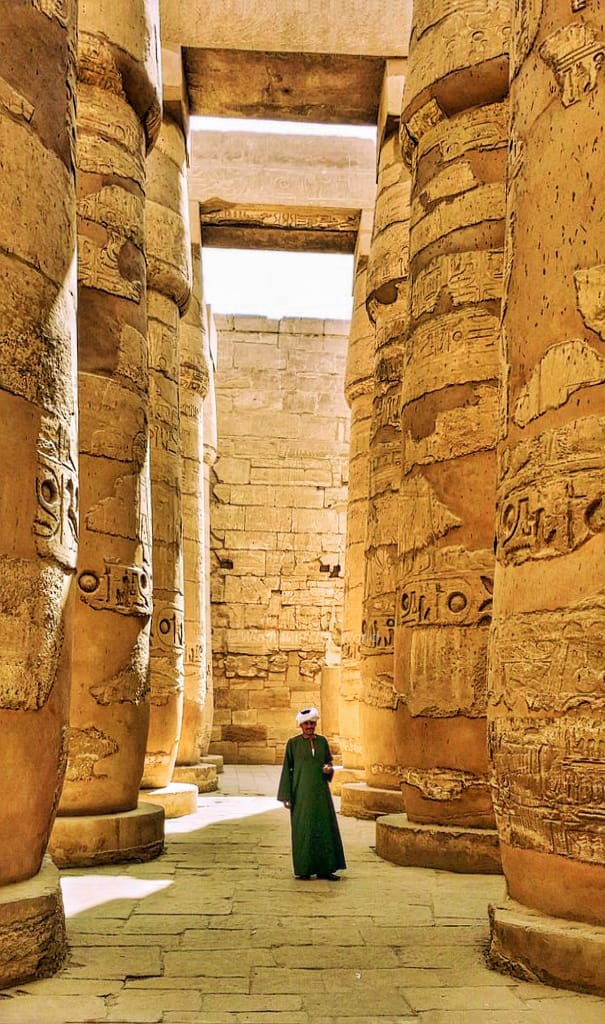
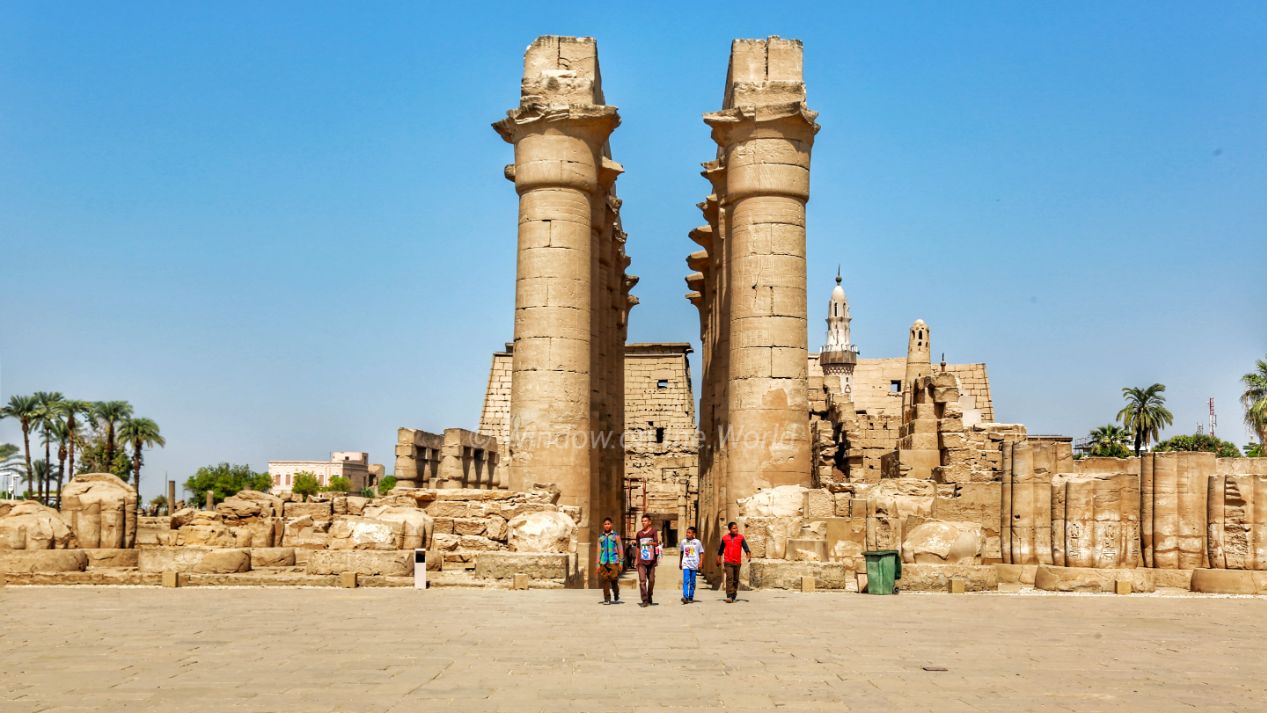
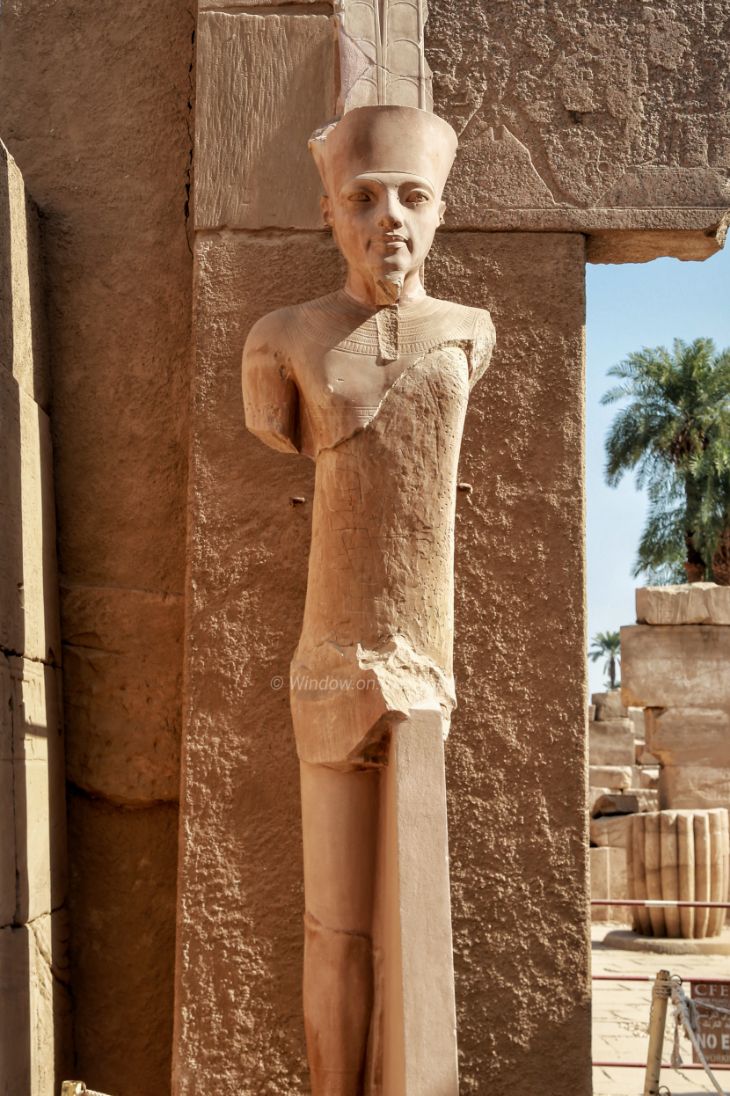
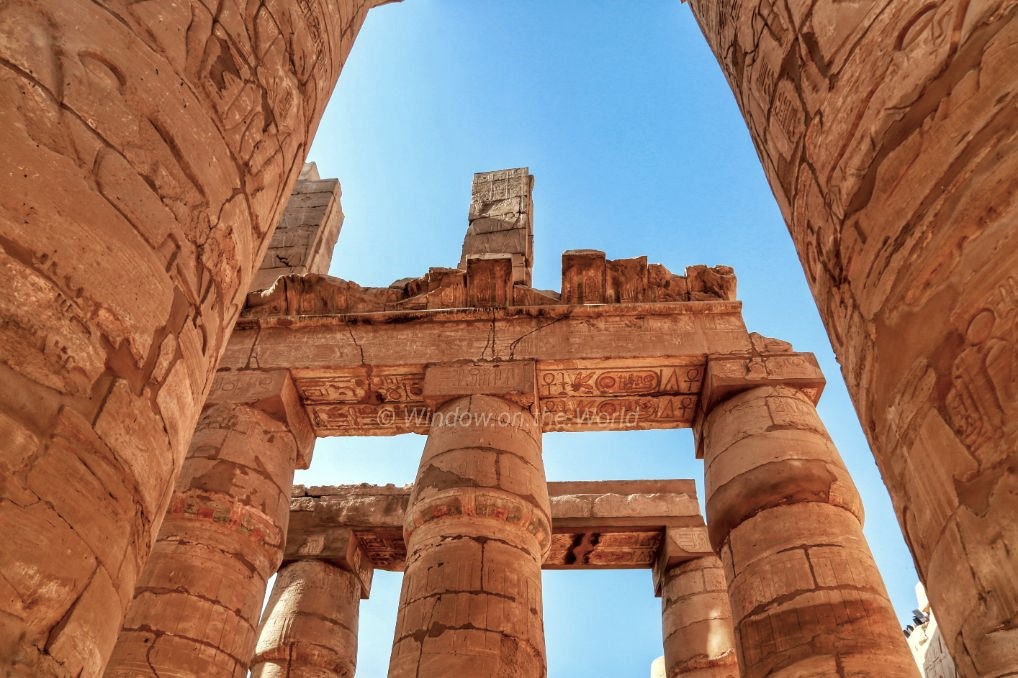
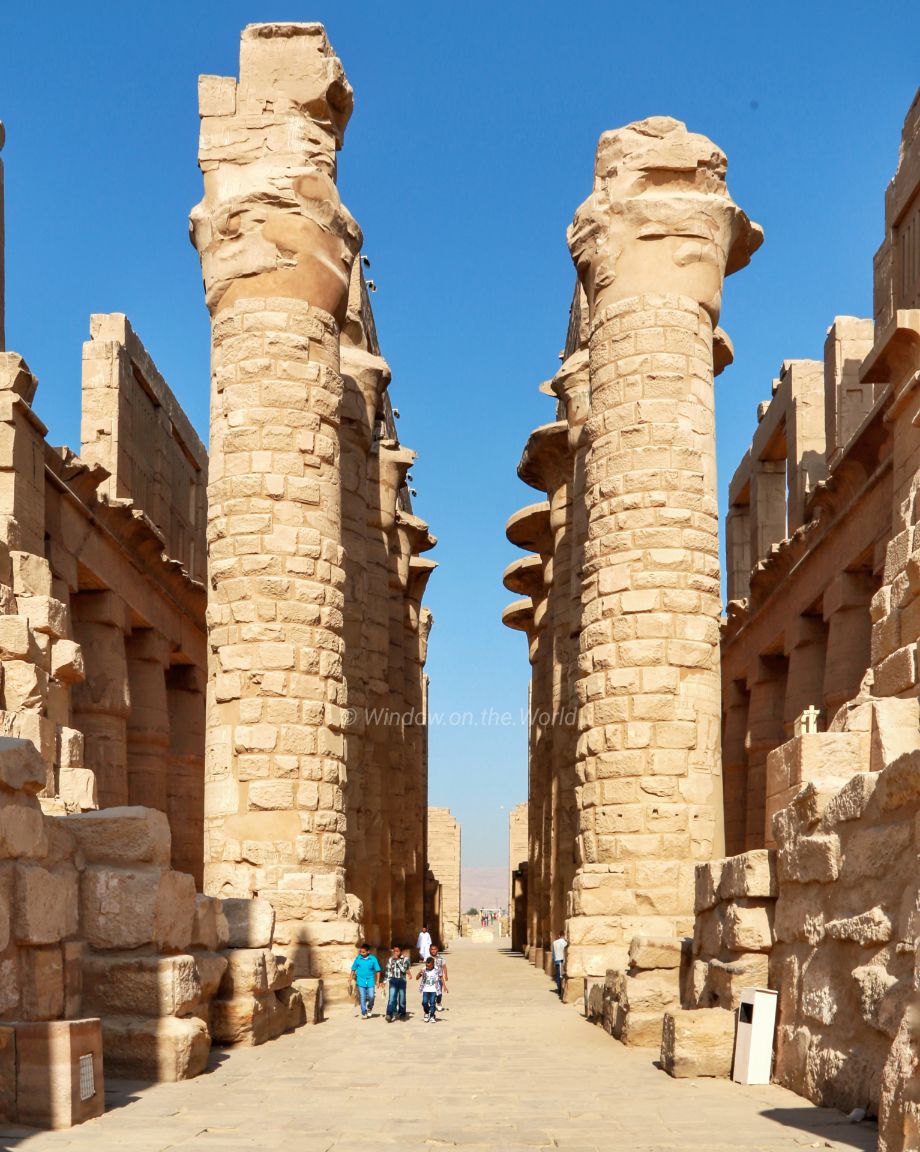
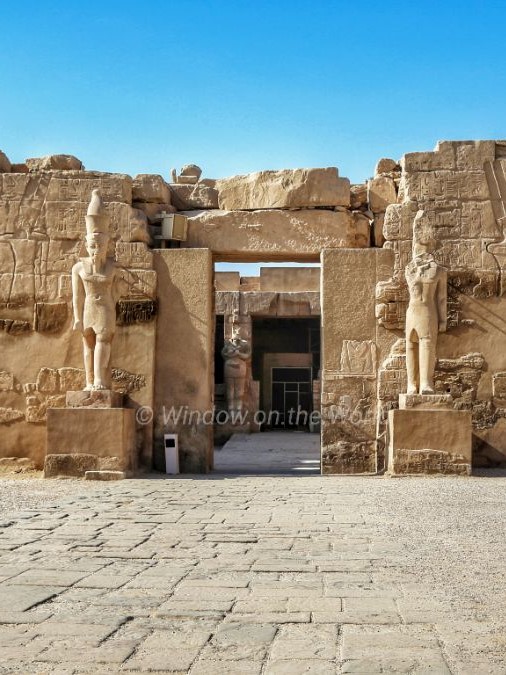
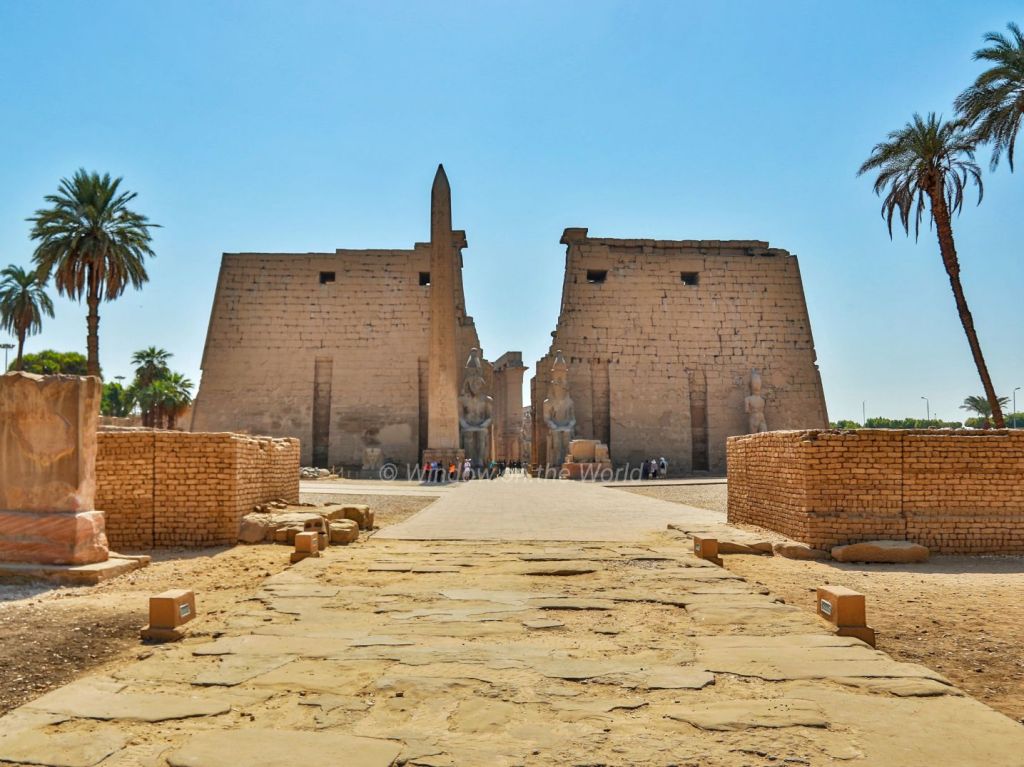
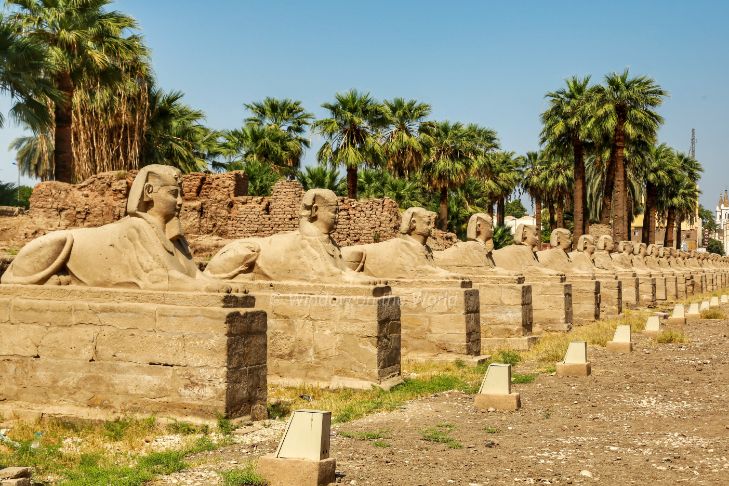
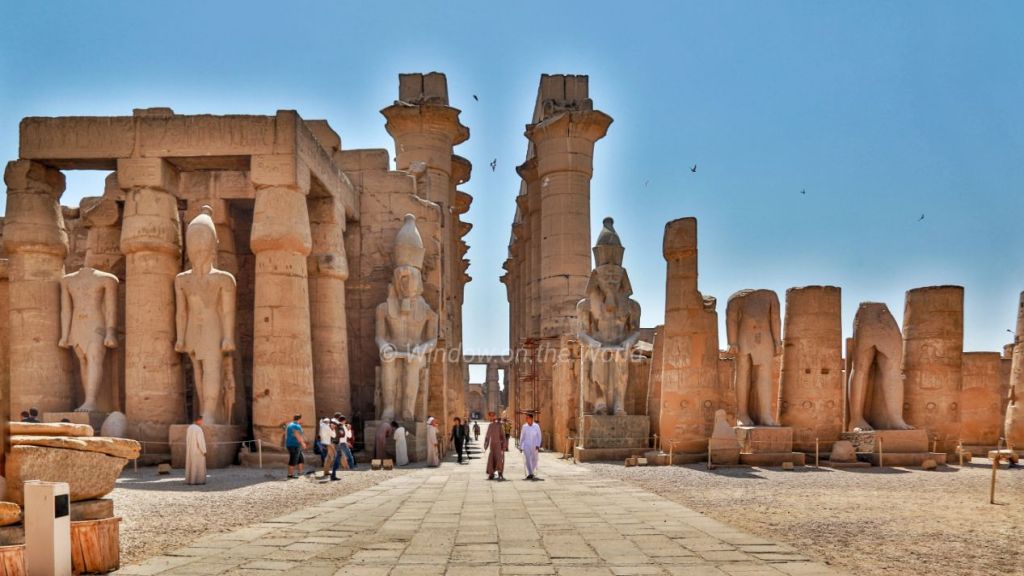
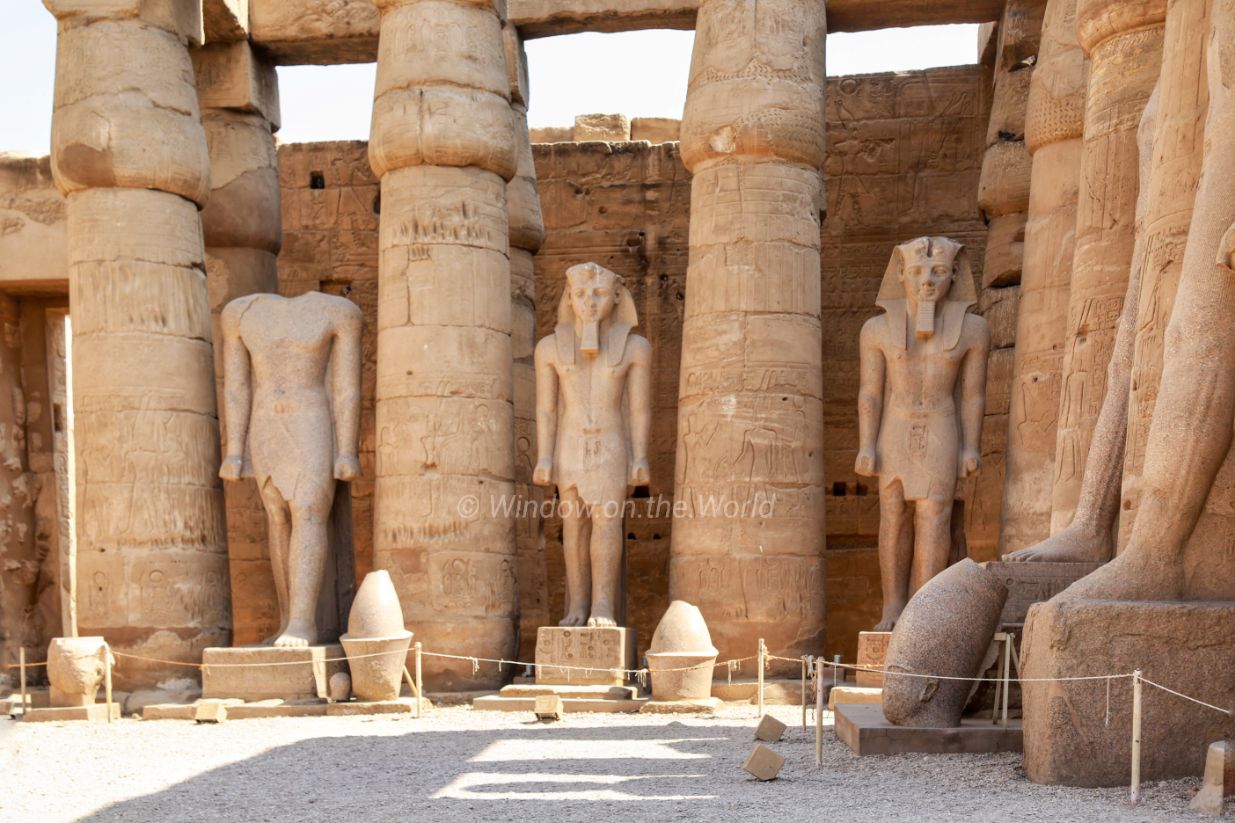
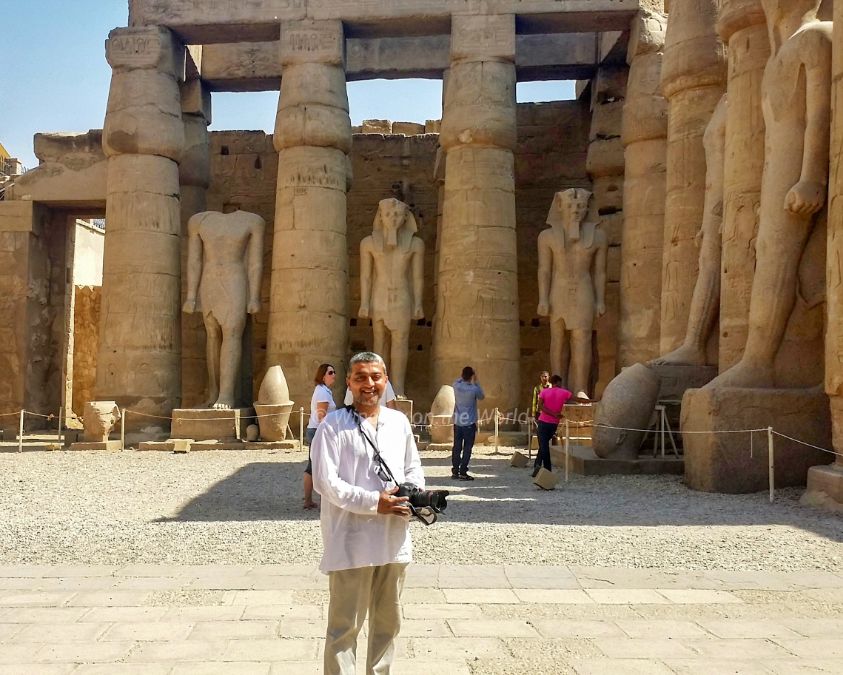
Luxor Temple is a large Ancient Egyptian temple complex located on the east bank of the Nile River in Luxor (ancient Thebes) and was constructed approximately 1400 BC. The temple of Luxor is much smaller than that of Kamak; however it is also magnificent and of majestic beauty.
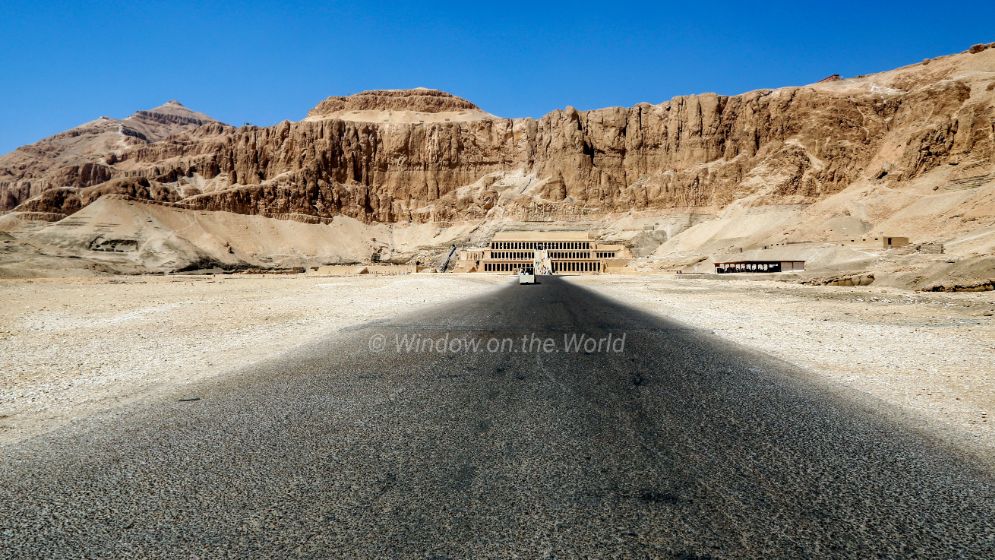
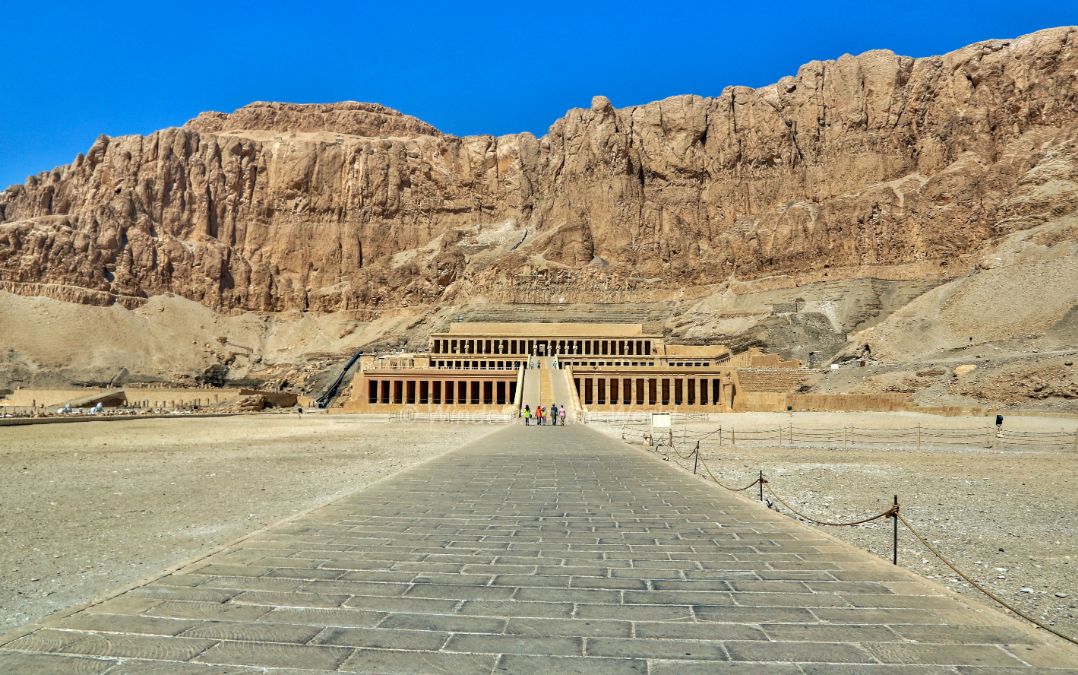
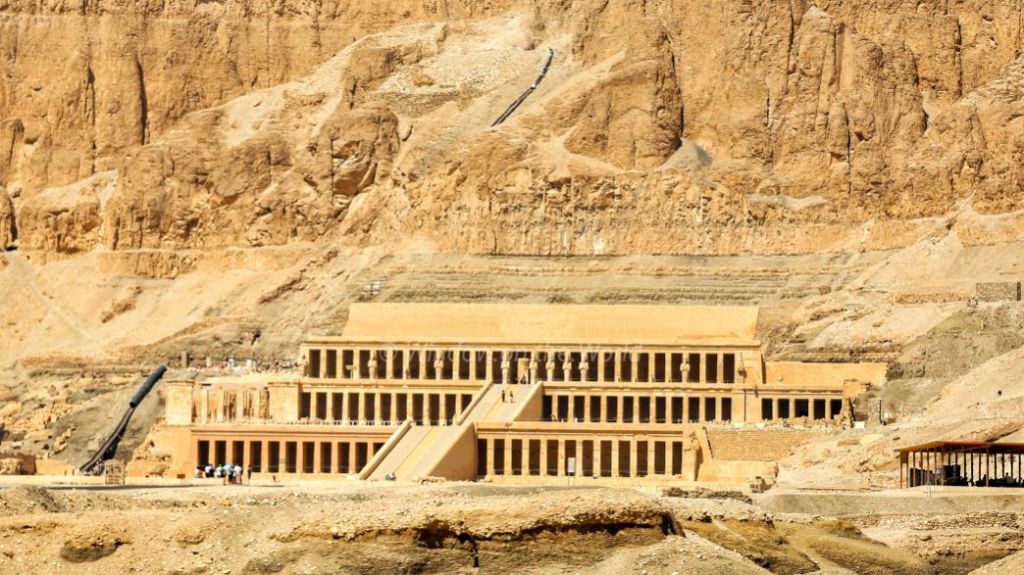
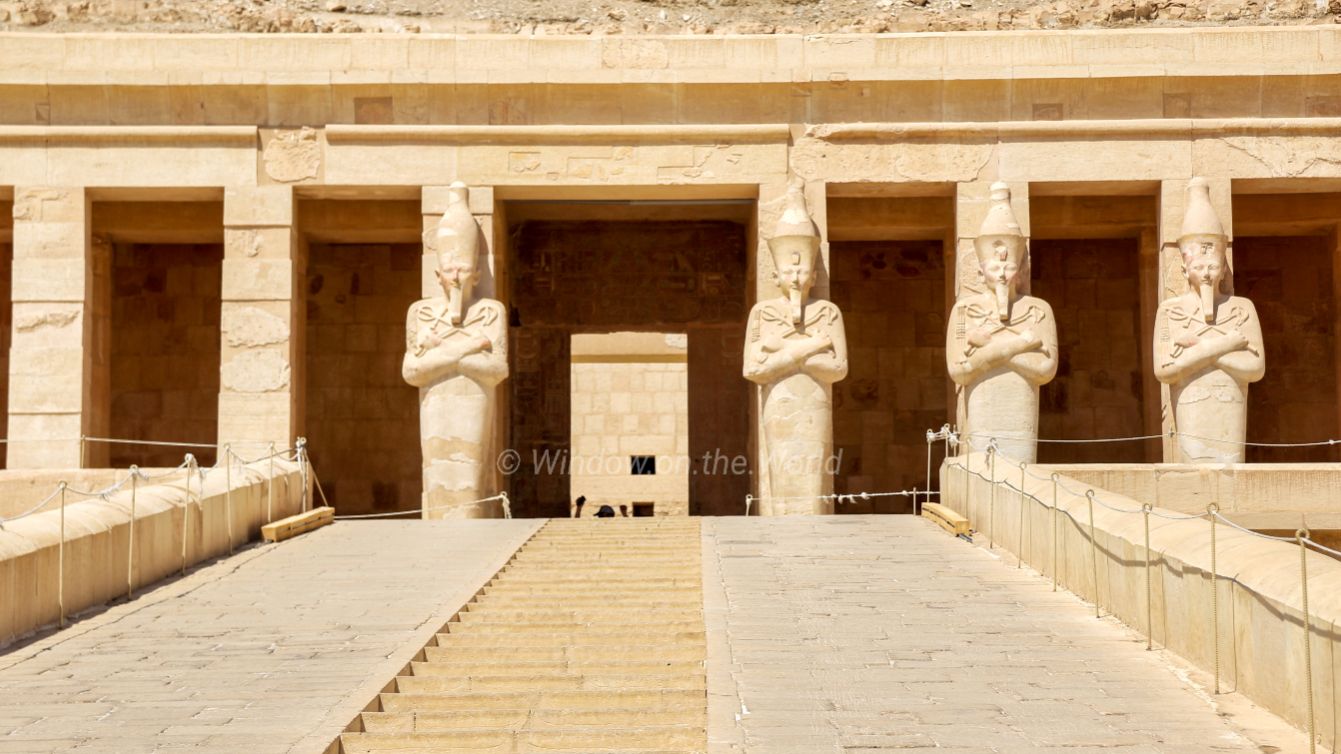
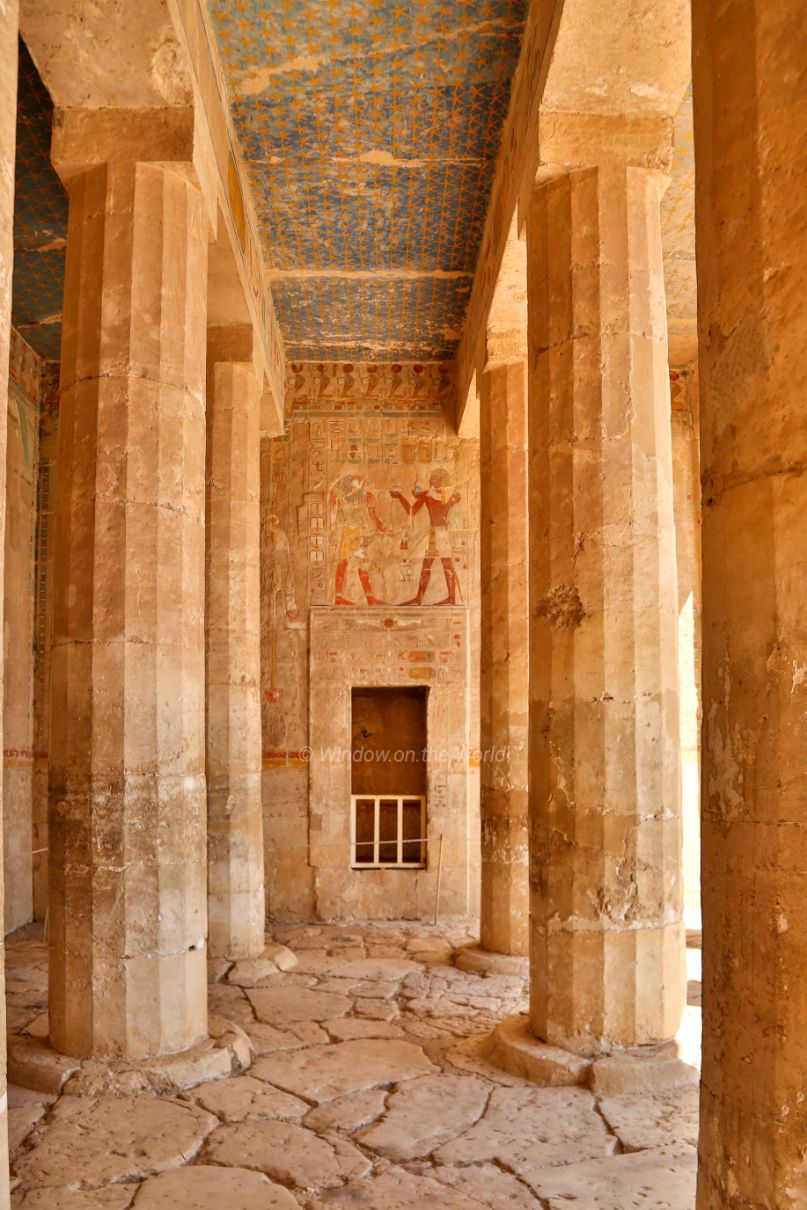
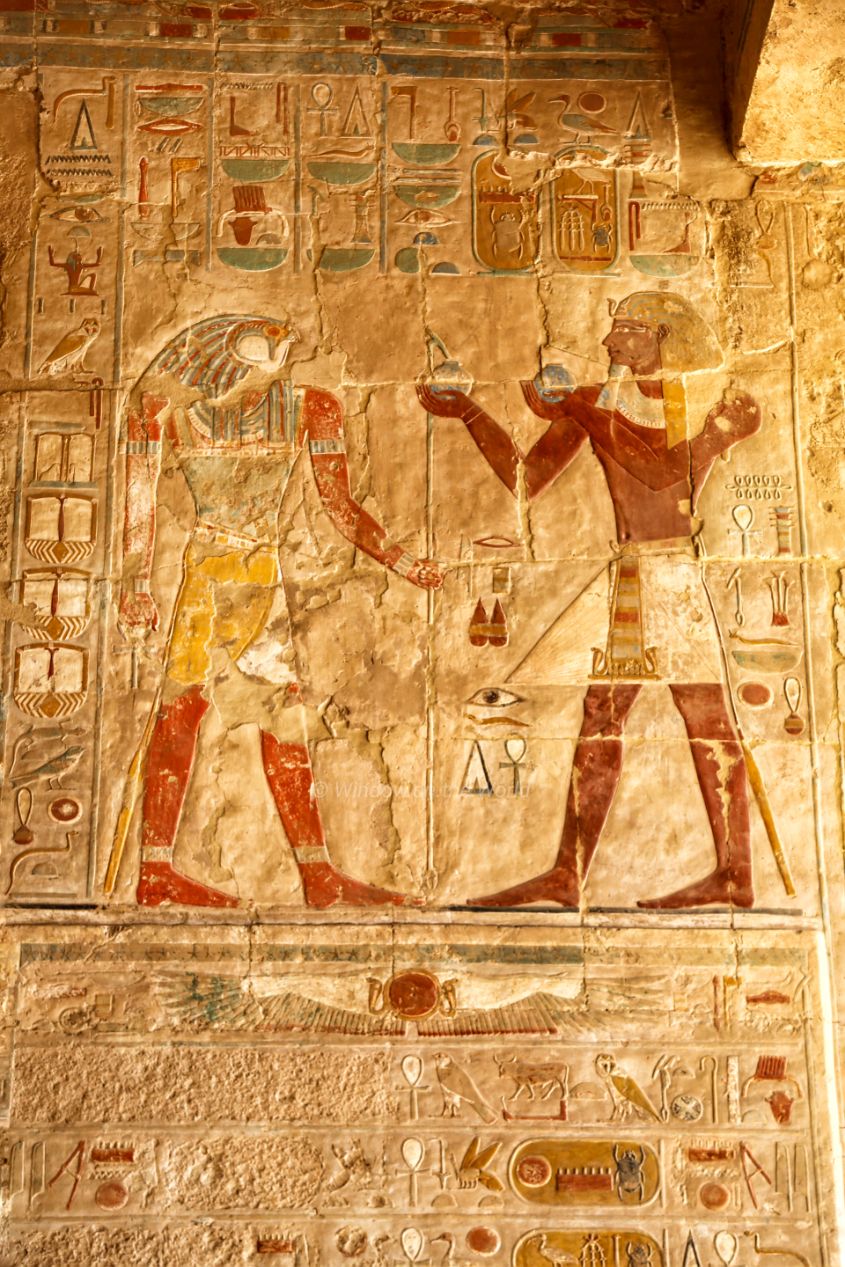
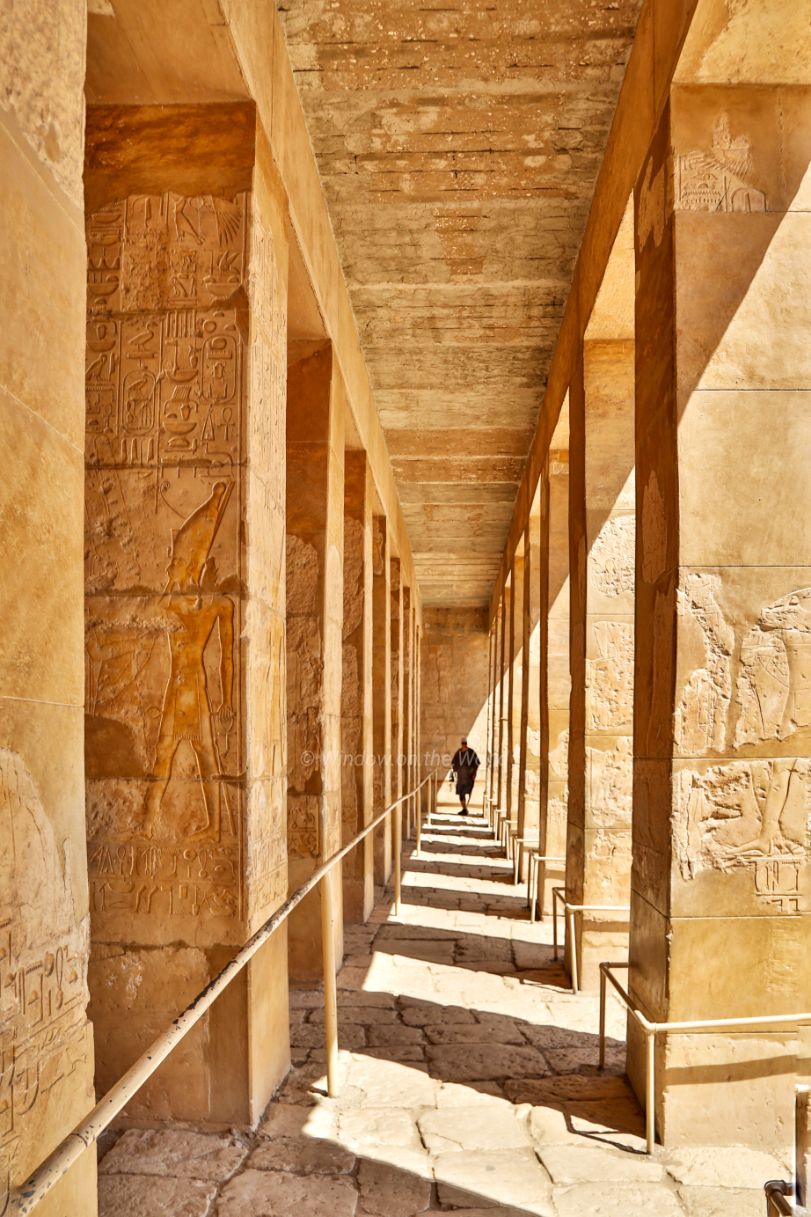
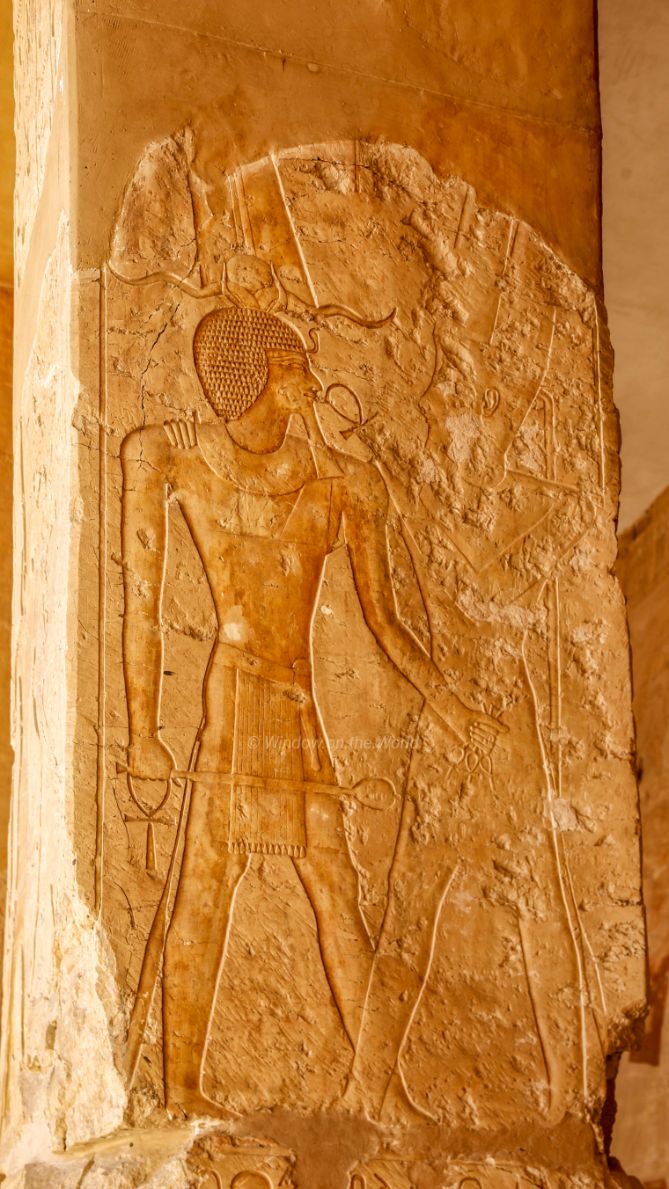
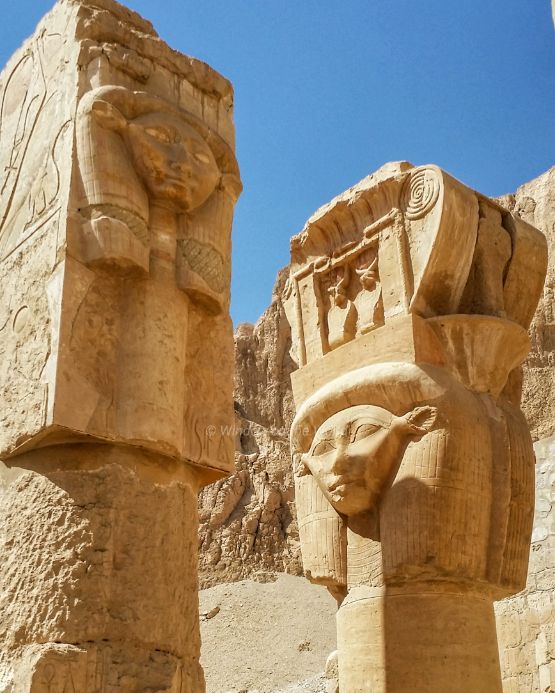
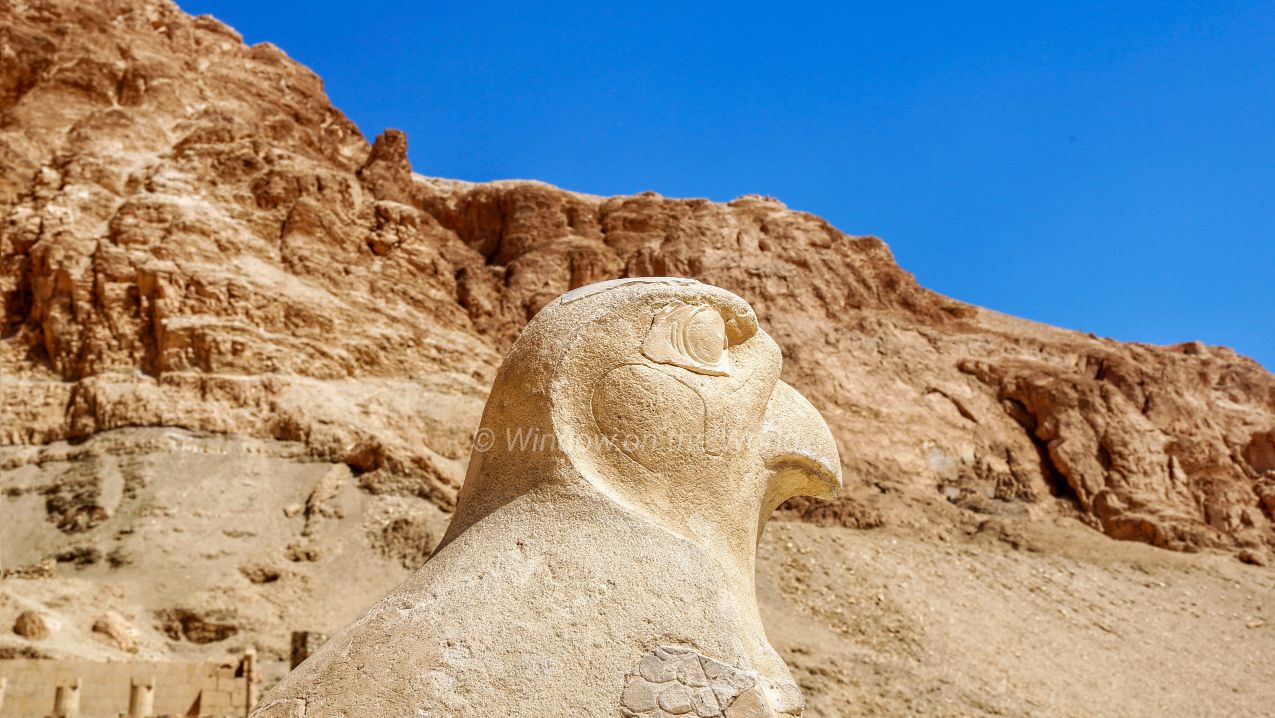
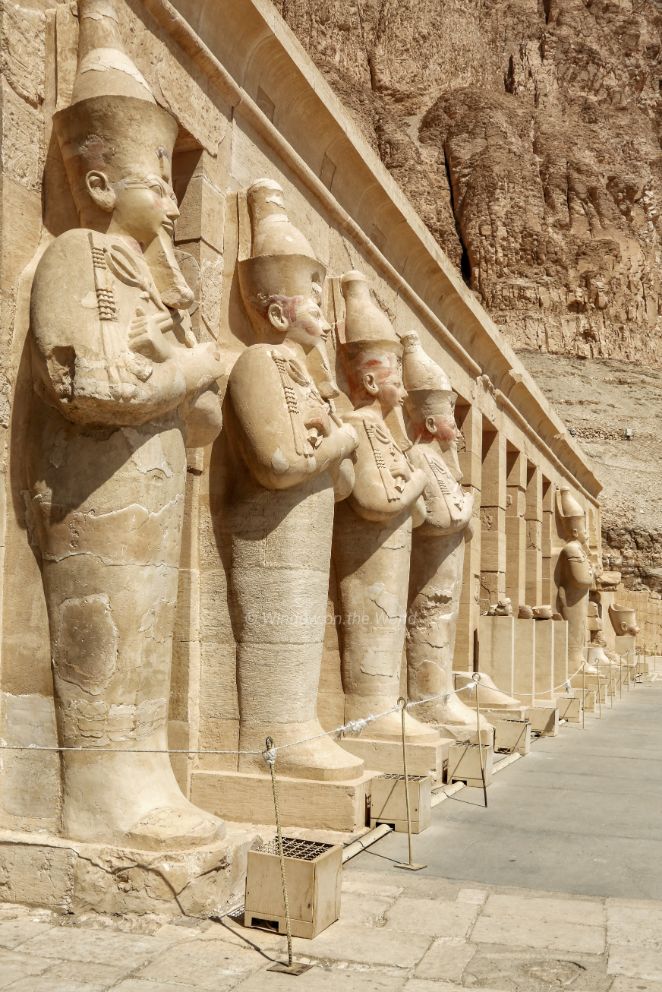
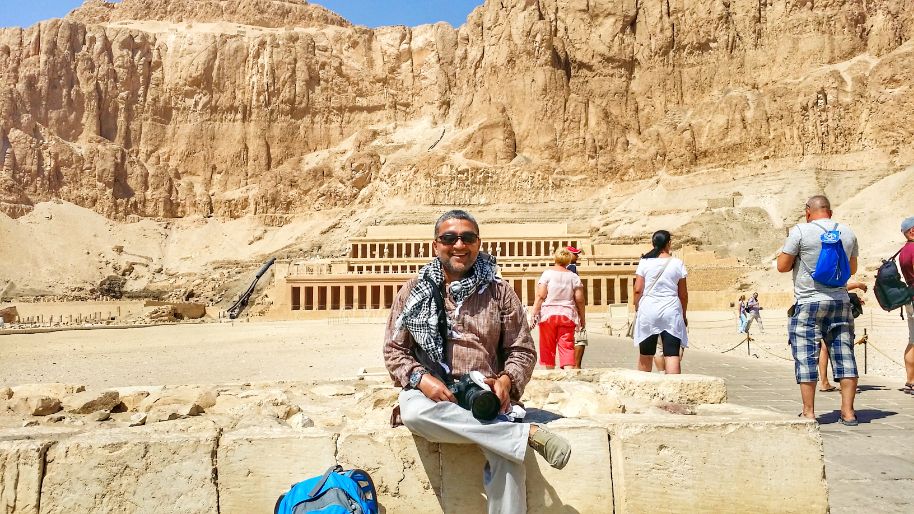
The Mortuary Temple of Hatshepsut, also known as the Djeser-Djeseru (“Holy of Holies”), is a mortuary temple built for the Eighteenth Dynasty pharaoh Hatshepsut (1507–1458 BC). She was the fifth pharaoh of the Eighteenth Dynasty of Egypt, the second historically-confirmed female pharaoh. It is considered one of the “incomparable monuments of ancient Egypt.” The temple has three layered terraces reaching 29.5 meters (97 ft) tall.
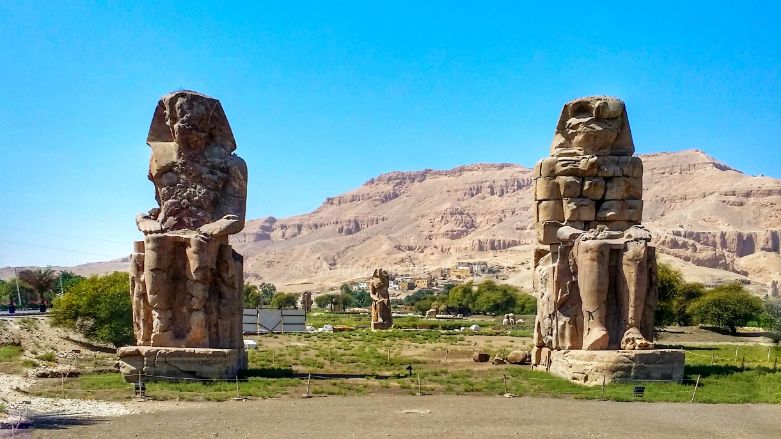
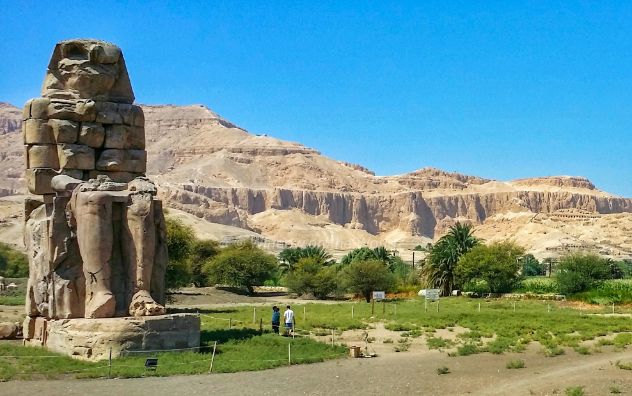
The Colossi of Memnon are two massive stone statues of the Pharaoh Amenhotep III, who reigned in Egypt from 1386 BC till 1353 BC. The Statues have been sitting in the Theban Necropolis since 1350 BC. They were constructed as guardians for Amenhotep III’s mortuary complex which once stood behind them. The statues rise 60 ft (18 meters) high and weigh 720 tons each; both carved from single blocks of sandstone.
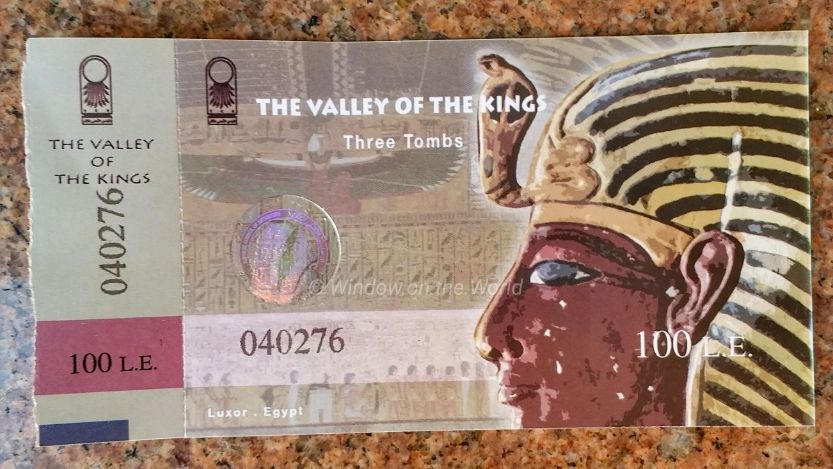
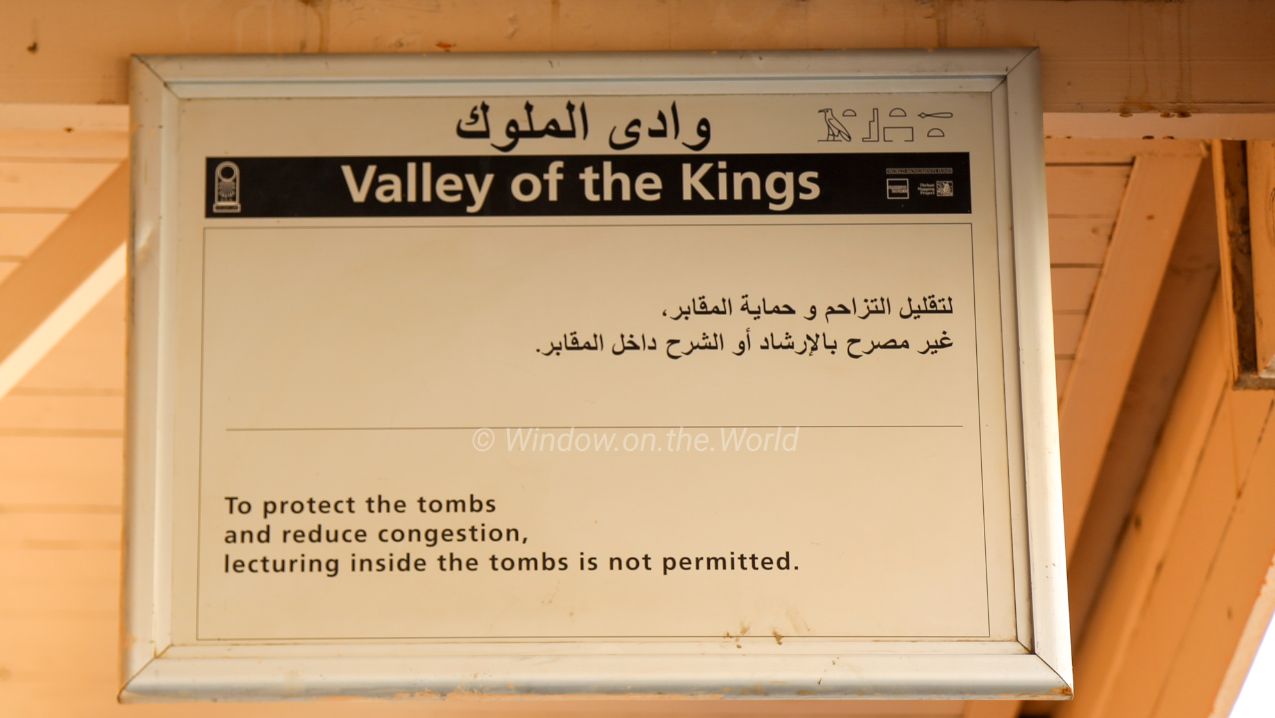
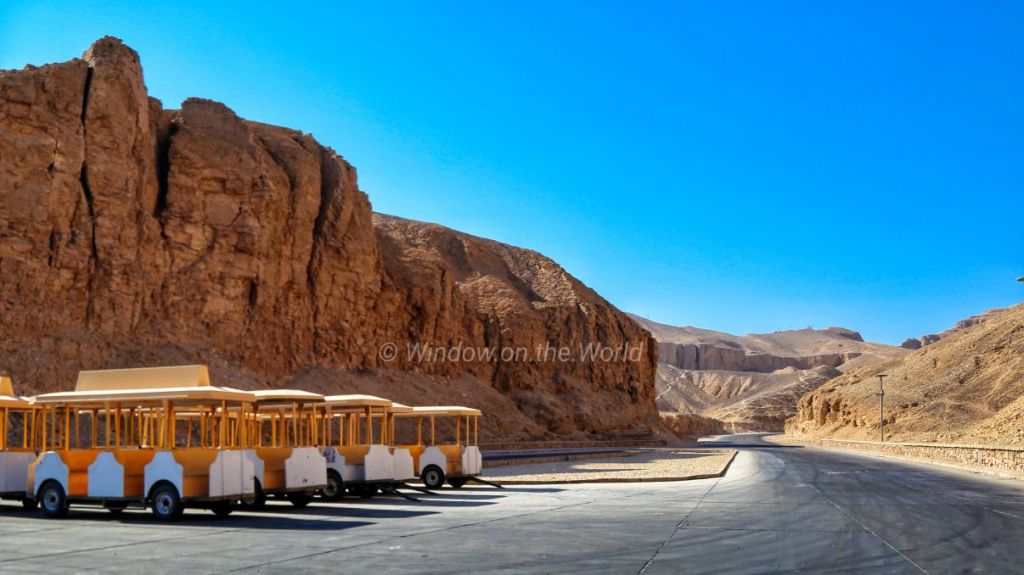
The Valley of the Kings, a valley in the west bank of Luxor, for a period of nearly 500 years from the 16th to 11th century BC, was the principal burial place of the Pharaohs of the Egyptian New Kingdom, as well as a number of privileged nobles. The valley has 63 tombs ranging in size from a simple pit to a complex tomb with over 120 chambers. No cameras allowed inside the Valley, but I highly recommend to visit this place, it will give you an idea of the opulence and power of the pharaohs.
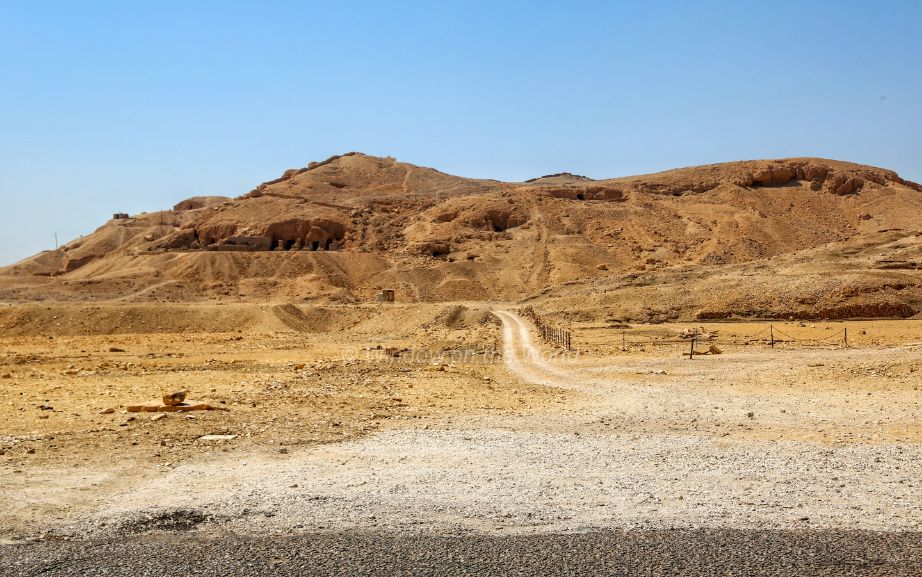
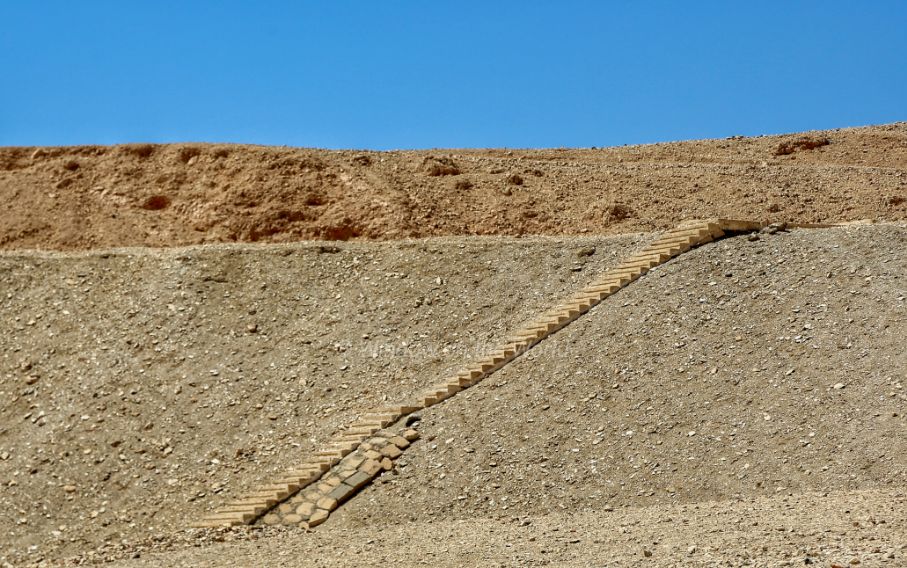
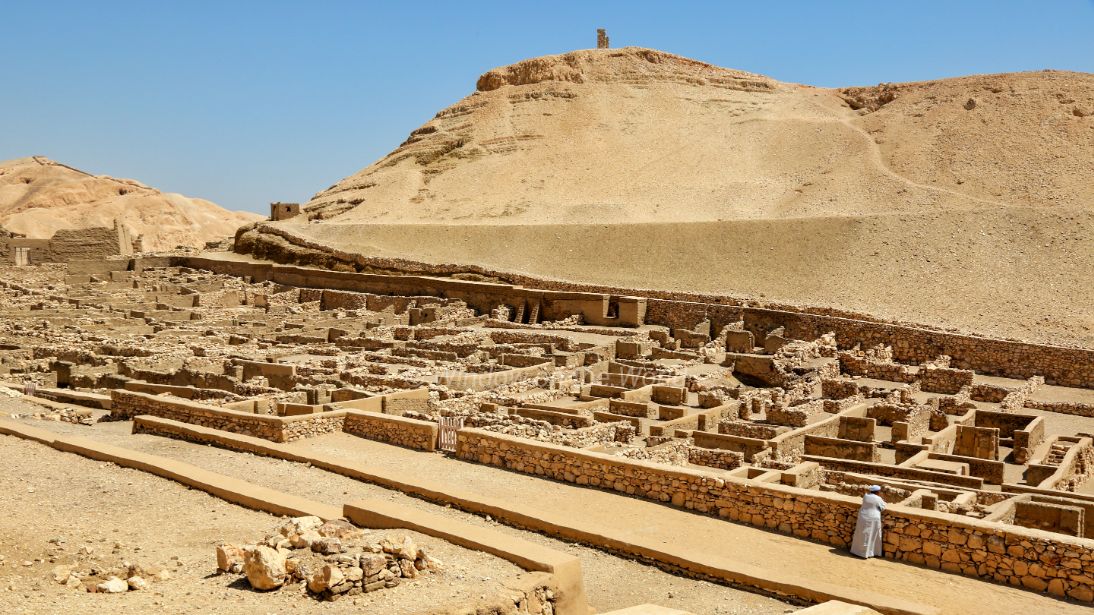
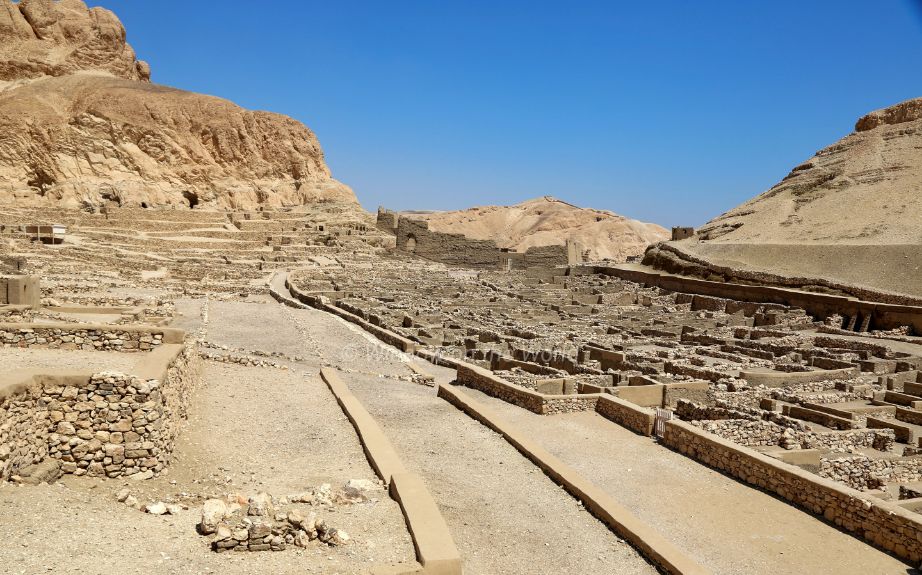
Deir el-Medina, an ancient Egyptian village which was home to the artisans who worked on the tombs in the Valley of the Kings during the 18th to 20th dynasties of the New Kingdom of Egypt (ca. 1550–1080 BC)
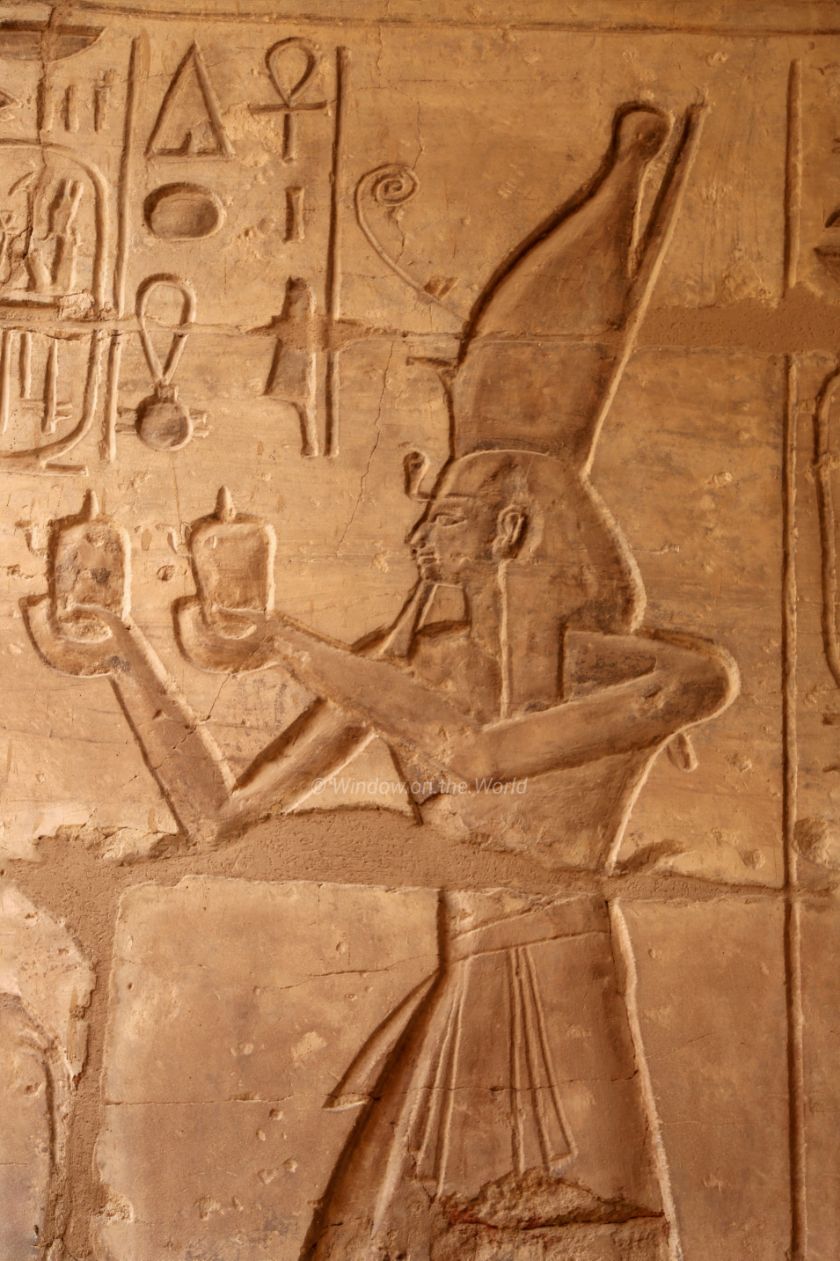
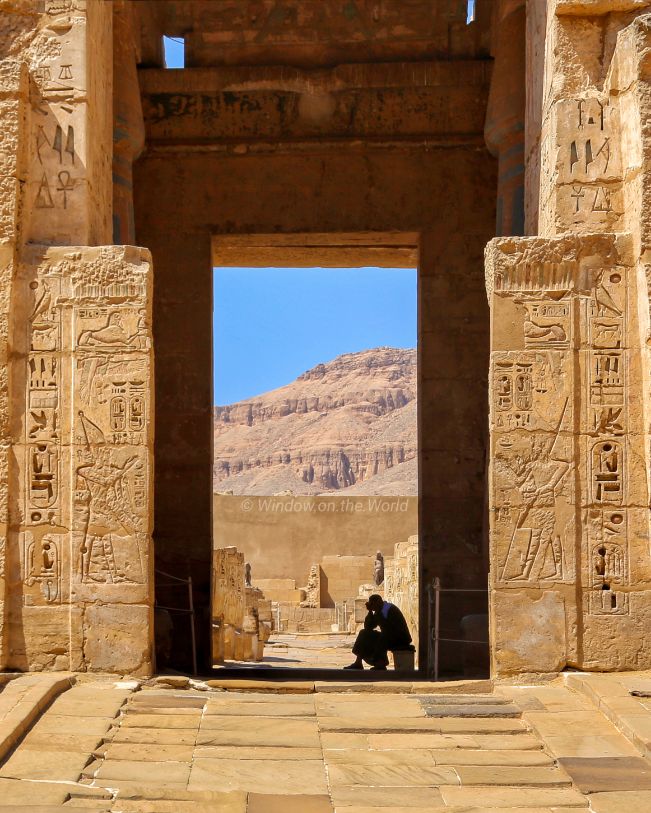
Medinet Habu, the Mortuary Temple of Ramesses III, was an important New Kingdom period temple structure in the West Bank of Luxor. Aside from its size and architectural and artistic importance, the temple is probably best known as the source of inscribed reliefs.
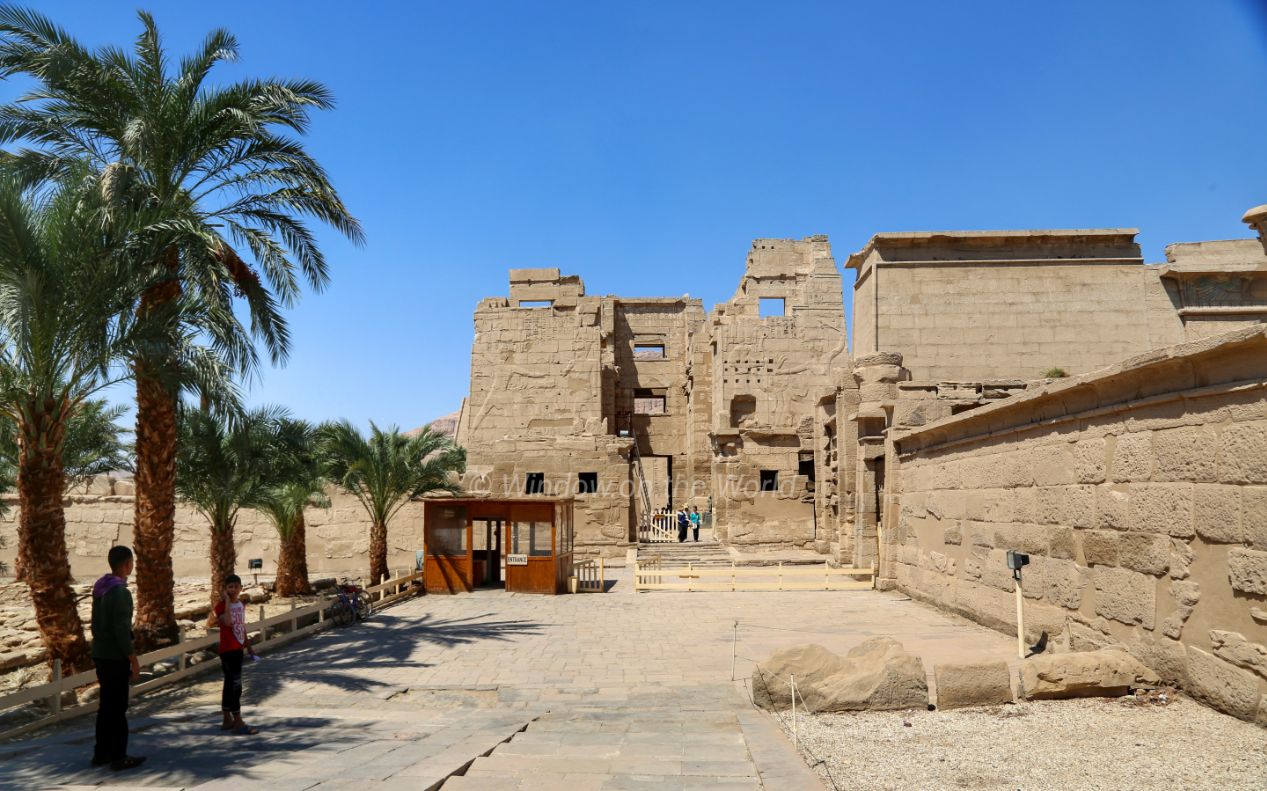
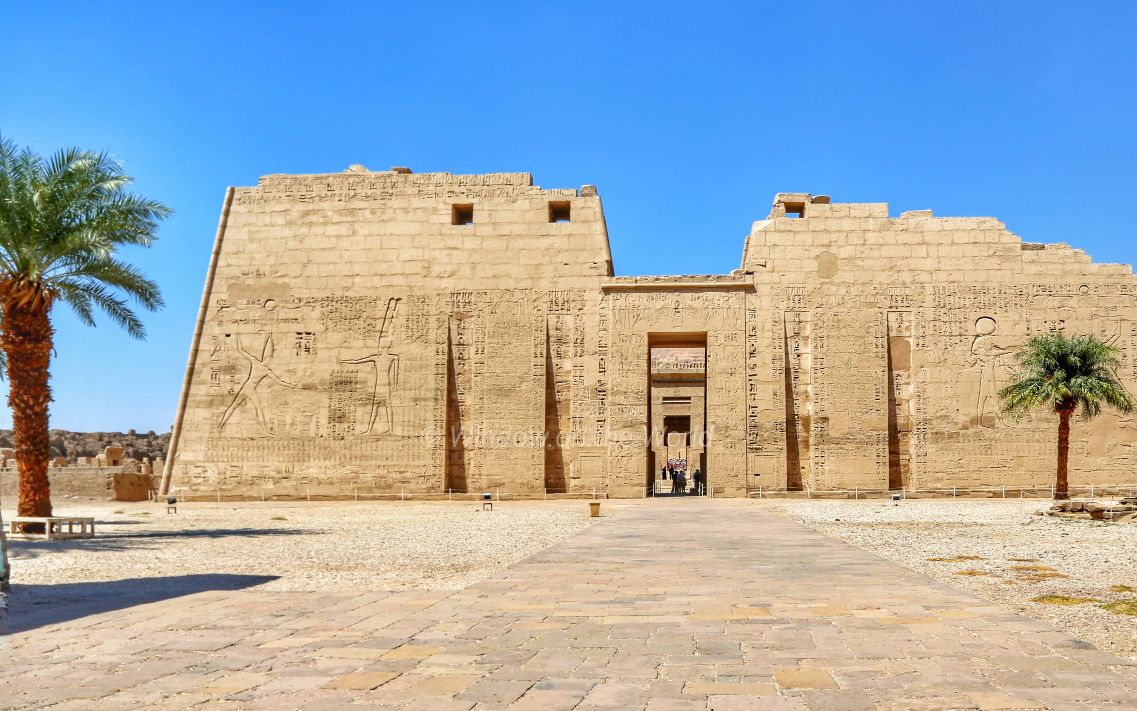
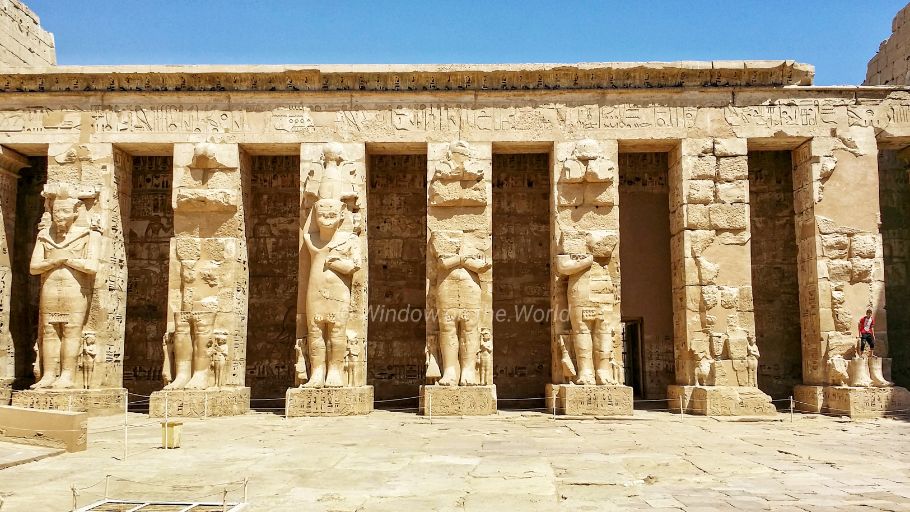
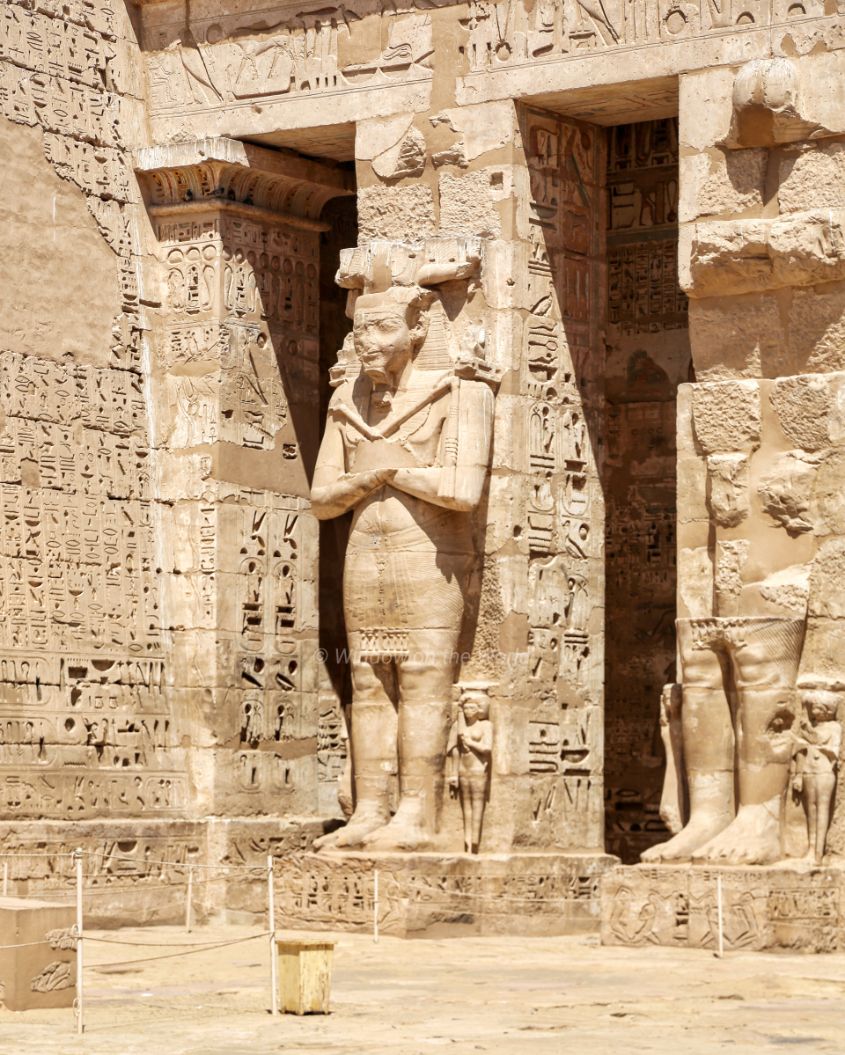
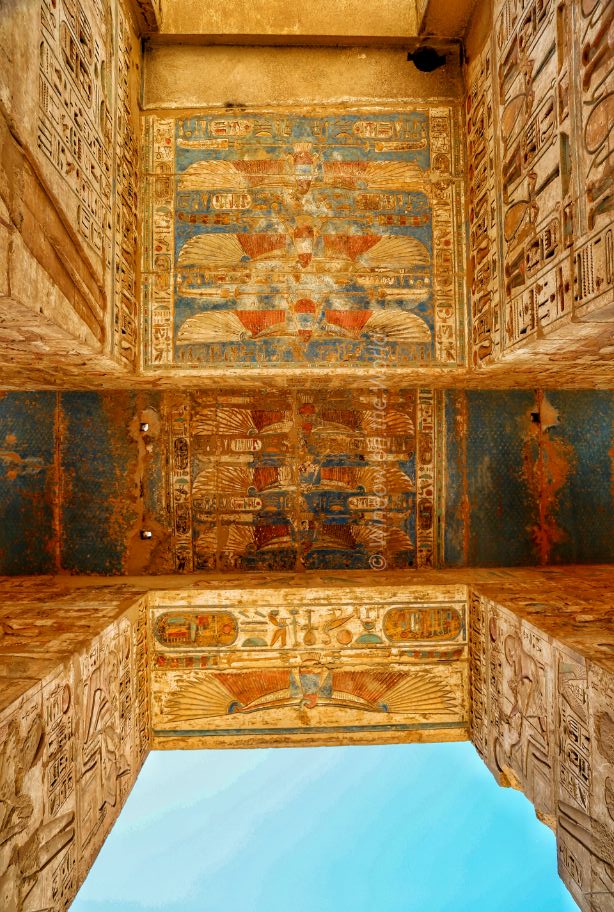
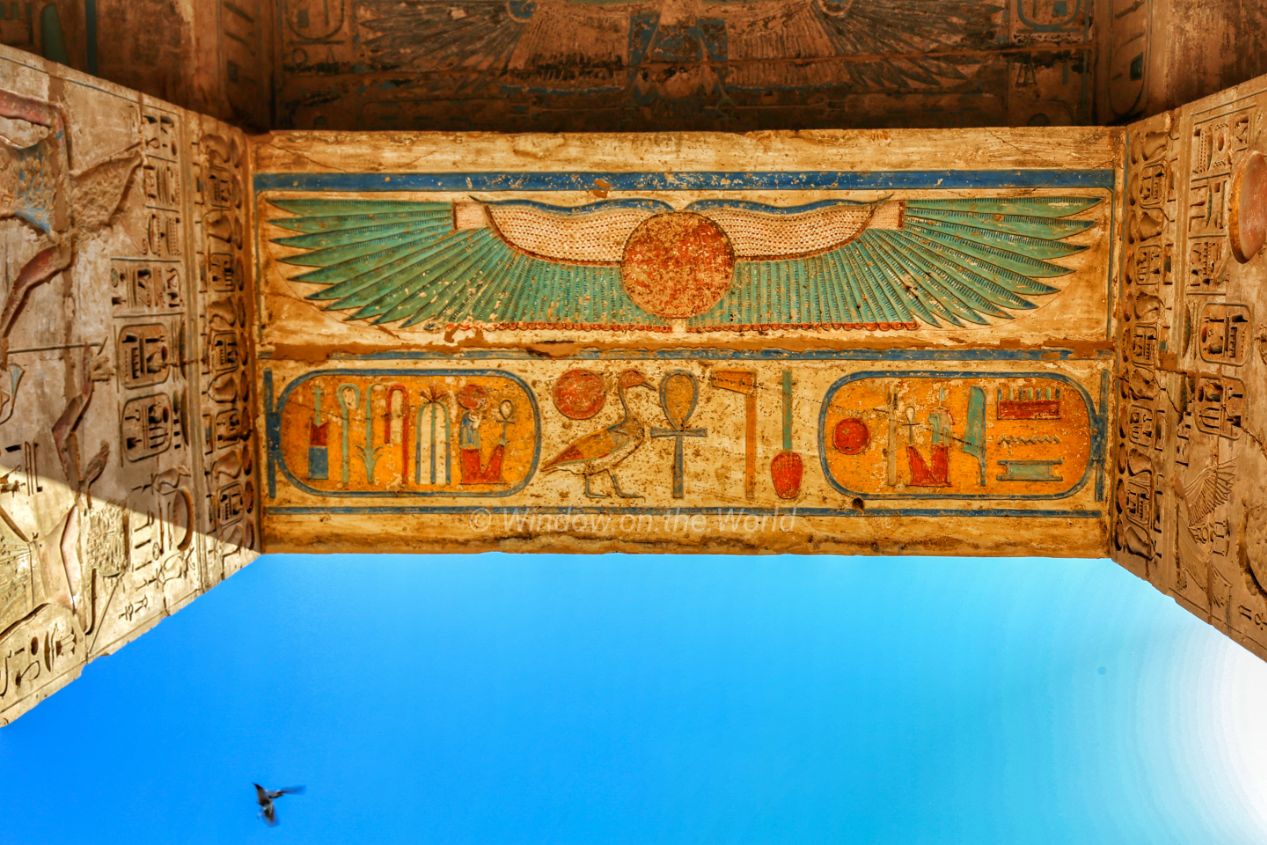
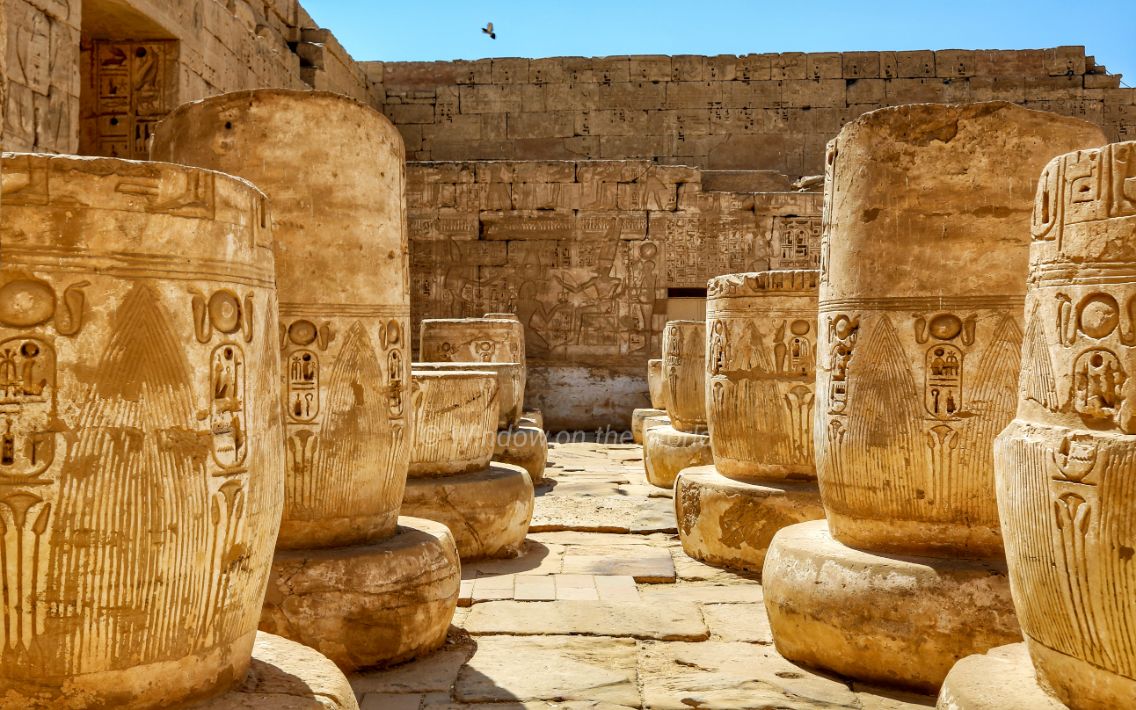
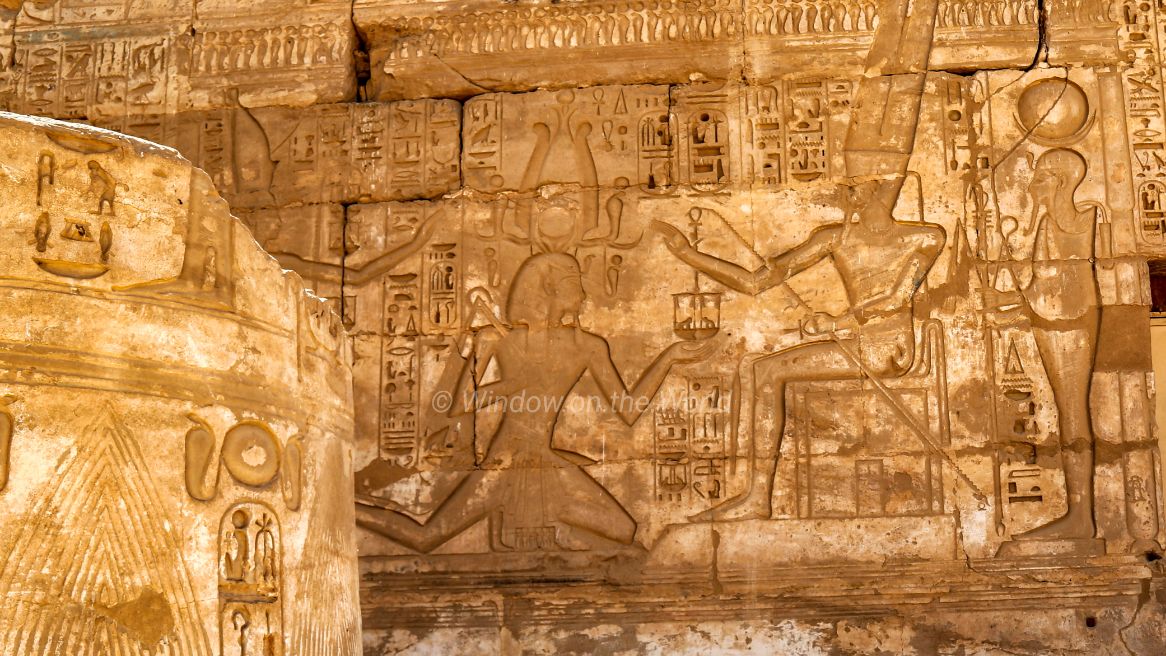
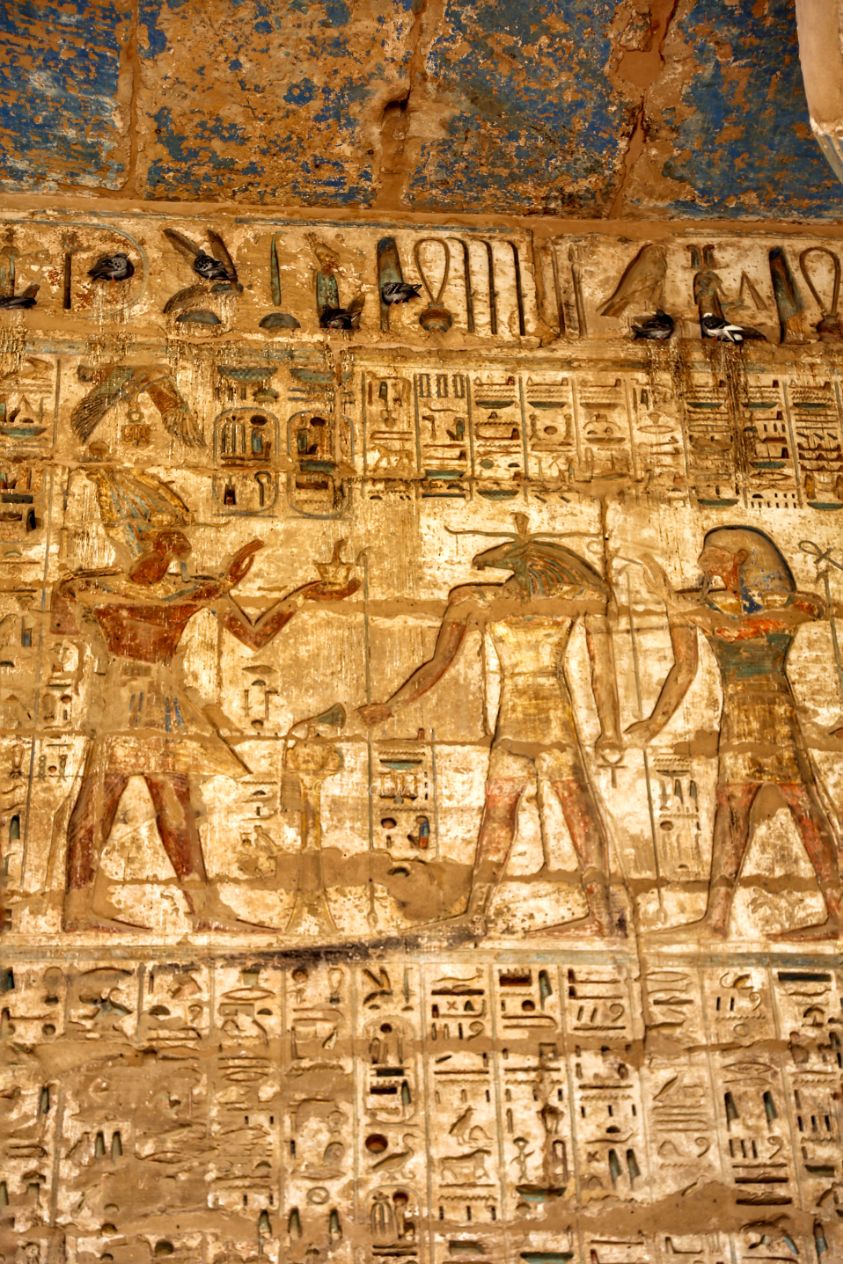
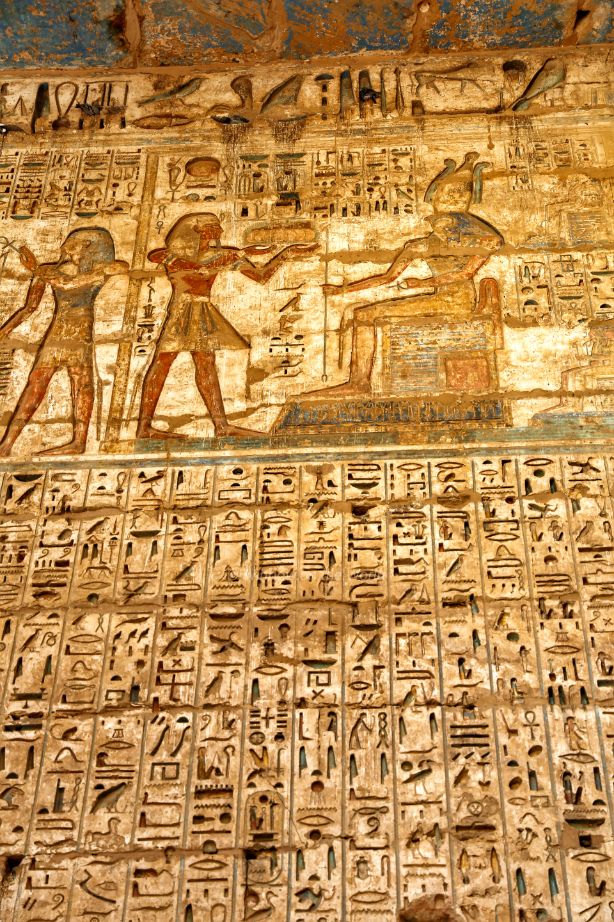
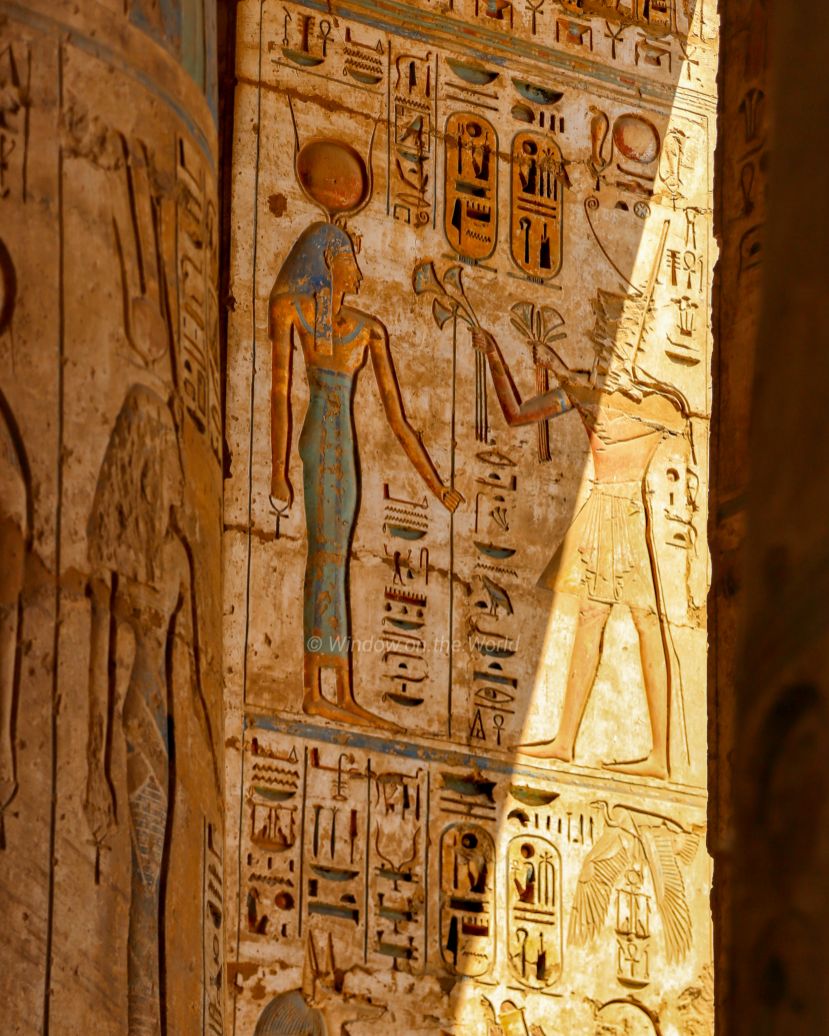
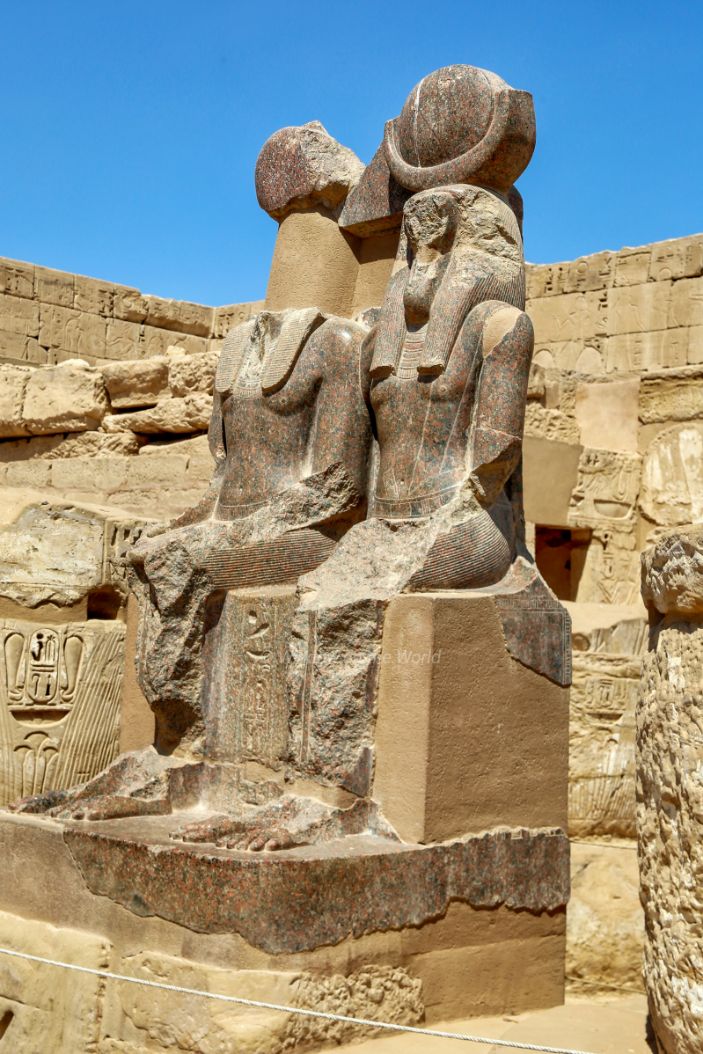
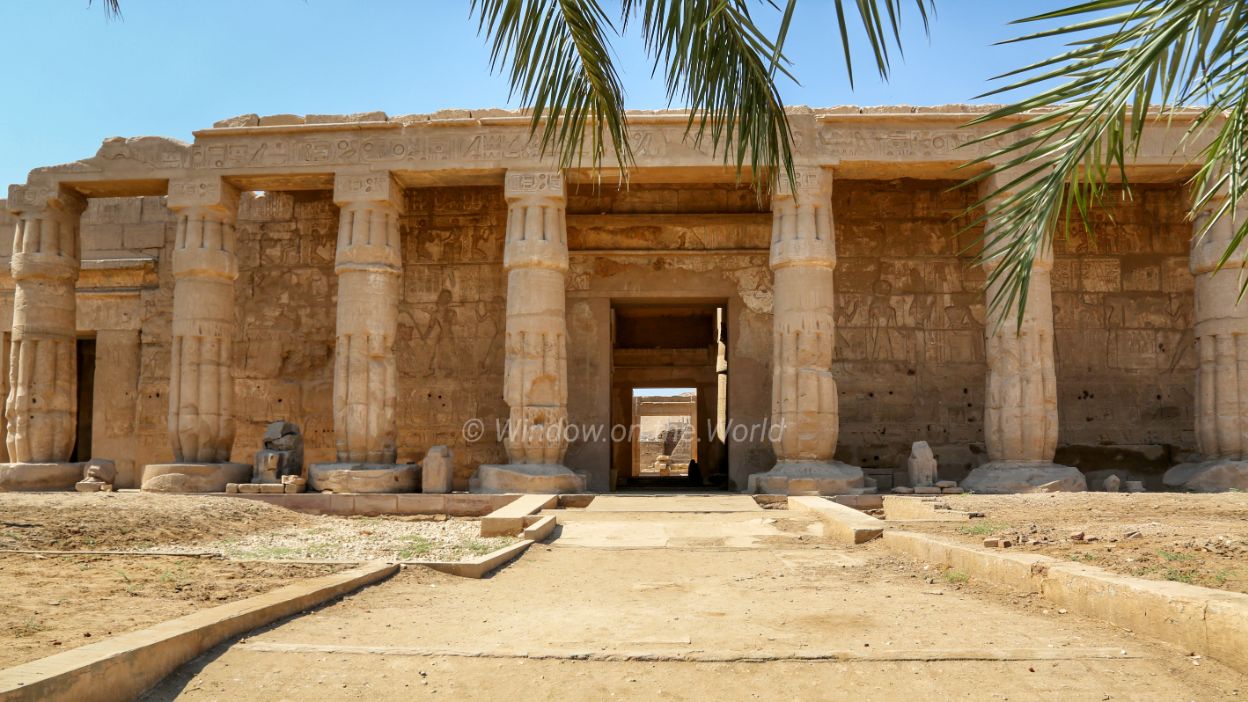
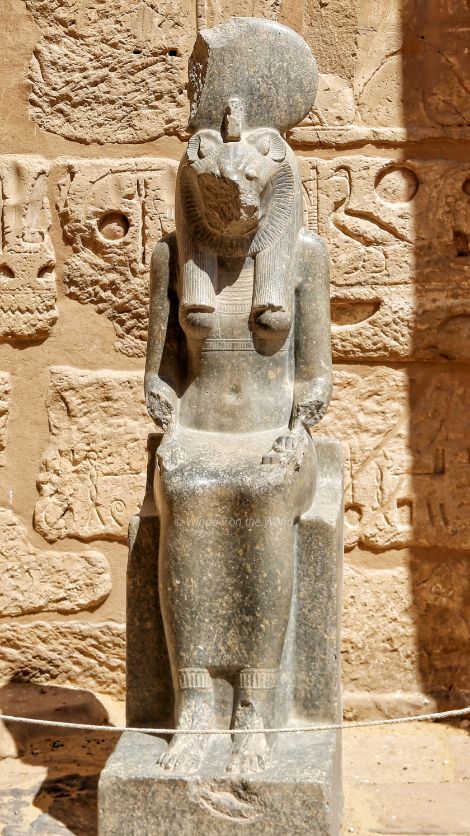
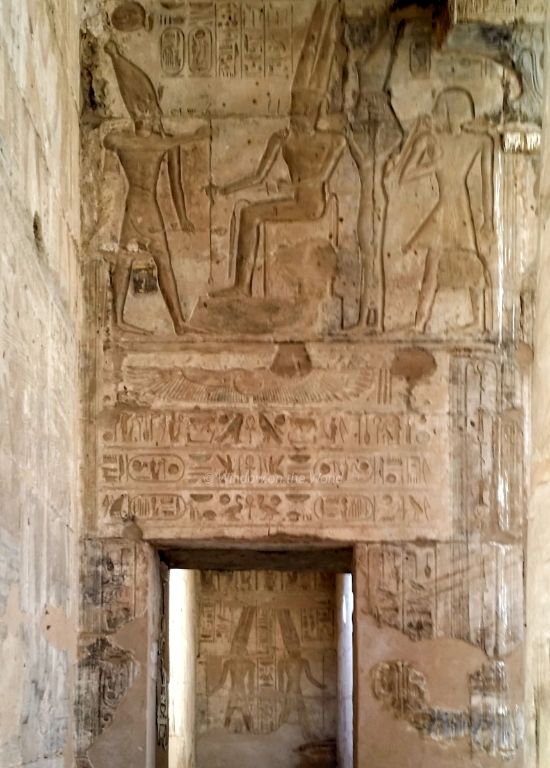
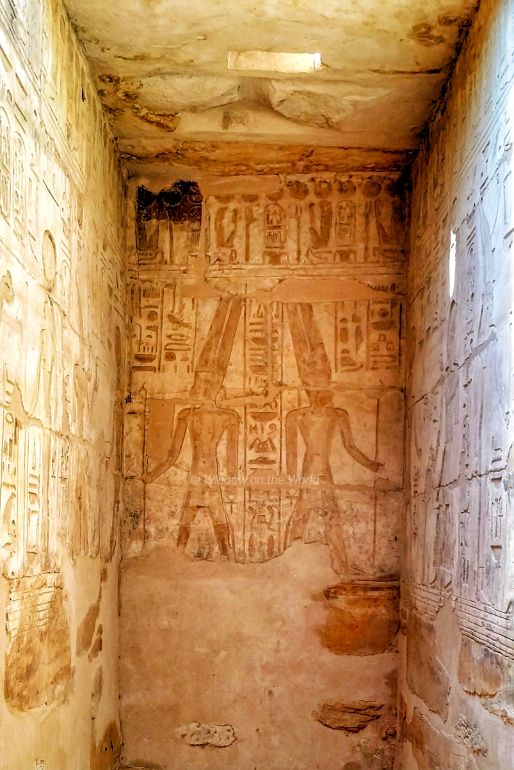
The Mortuary Temple of Seti I is the memorial temple of the New Kingdom Pharaoh Seti I (1290–1279 BC). The temple seems to have been constructed toward the end of the reign of Seti, and may have been completed by his son Ramesses the Great after his death. The entire court and any pylons associated with the site are now in ruins.
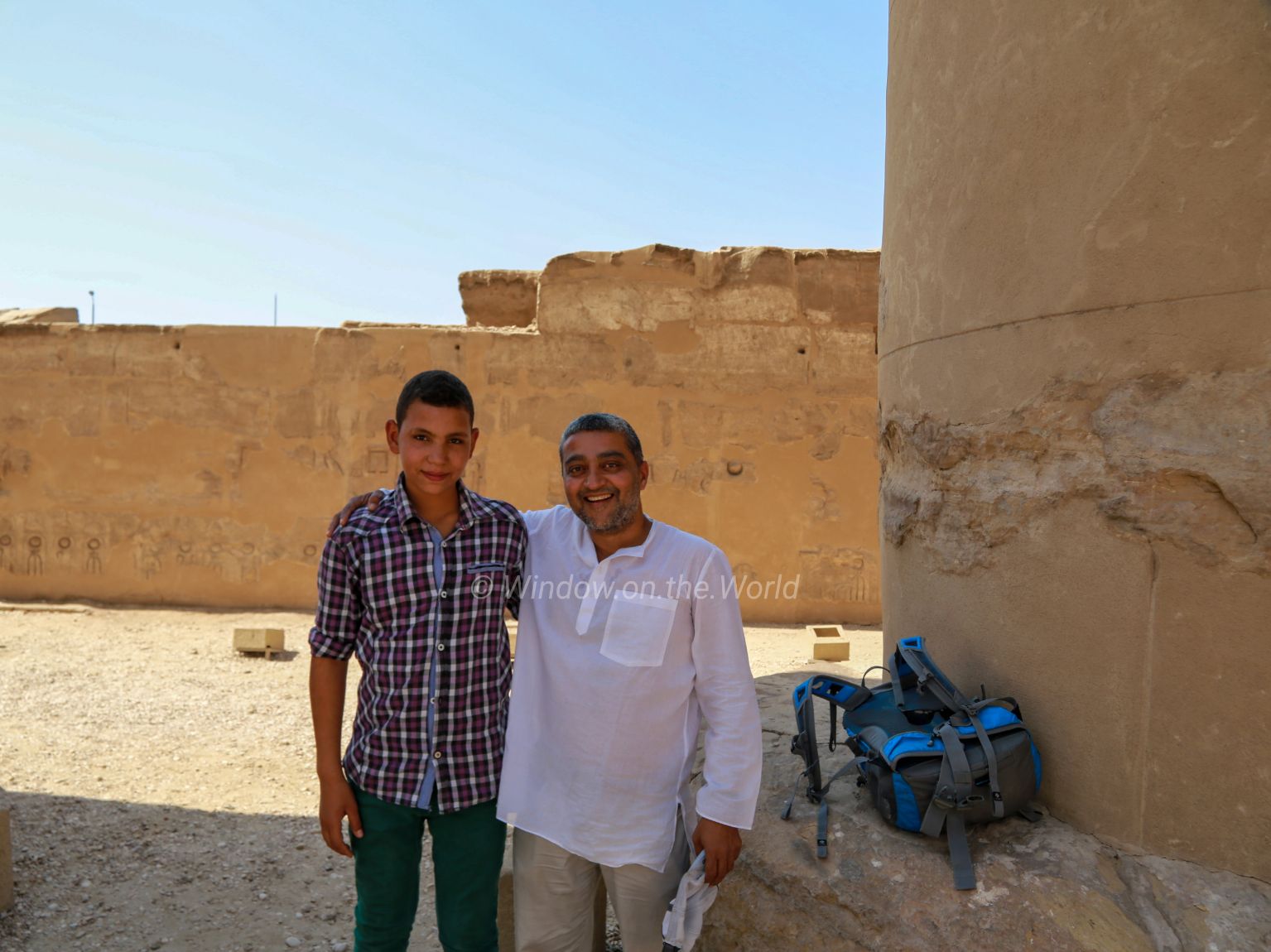
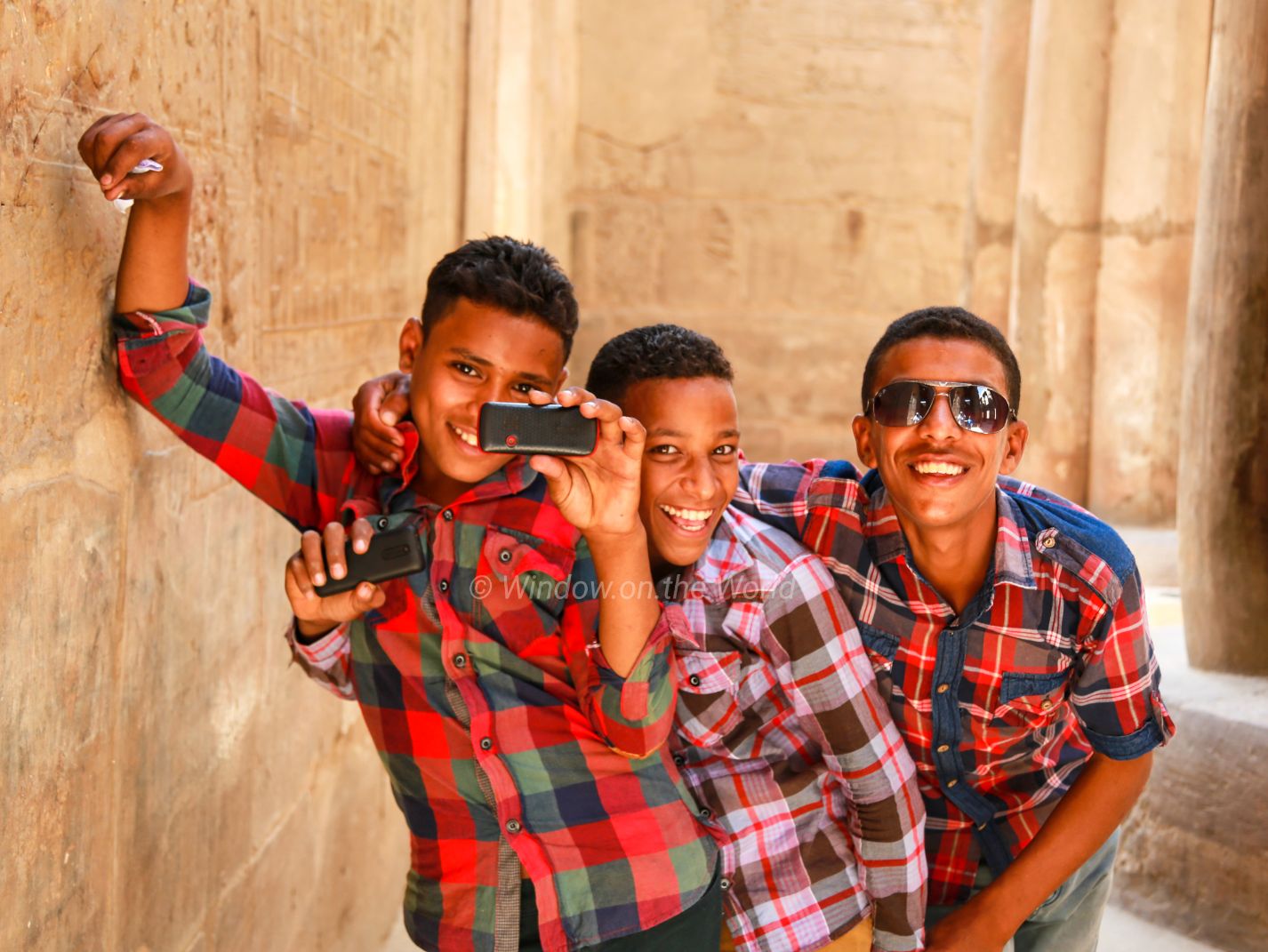
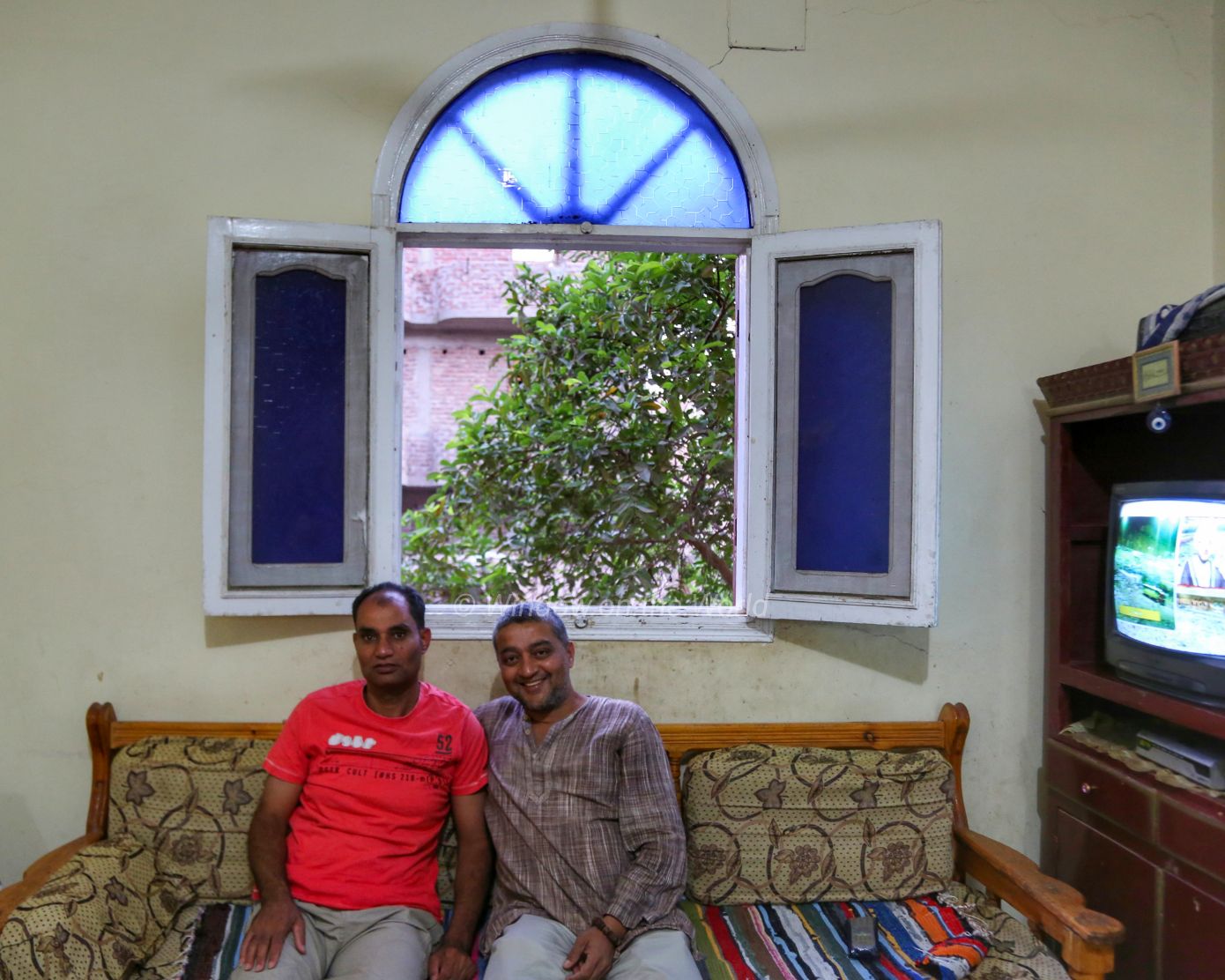
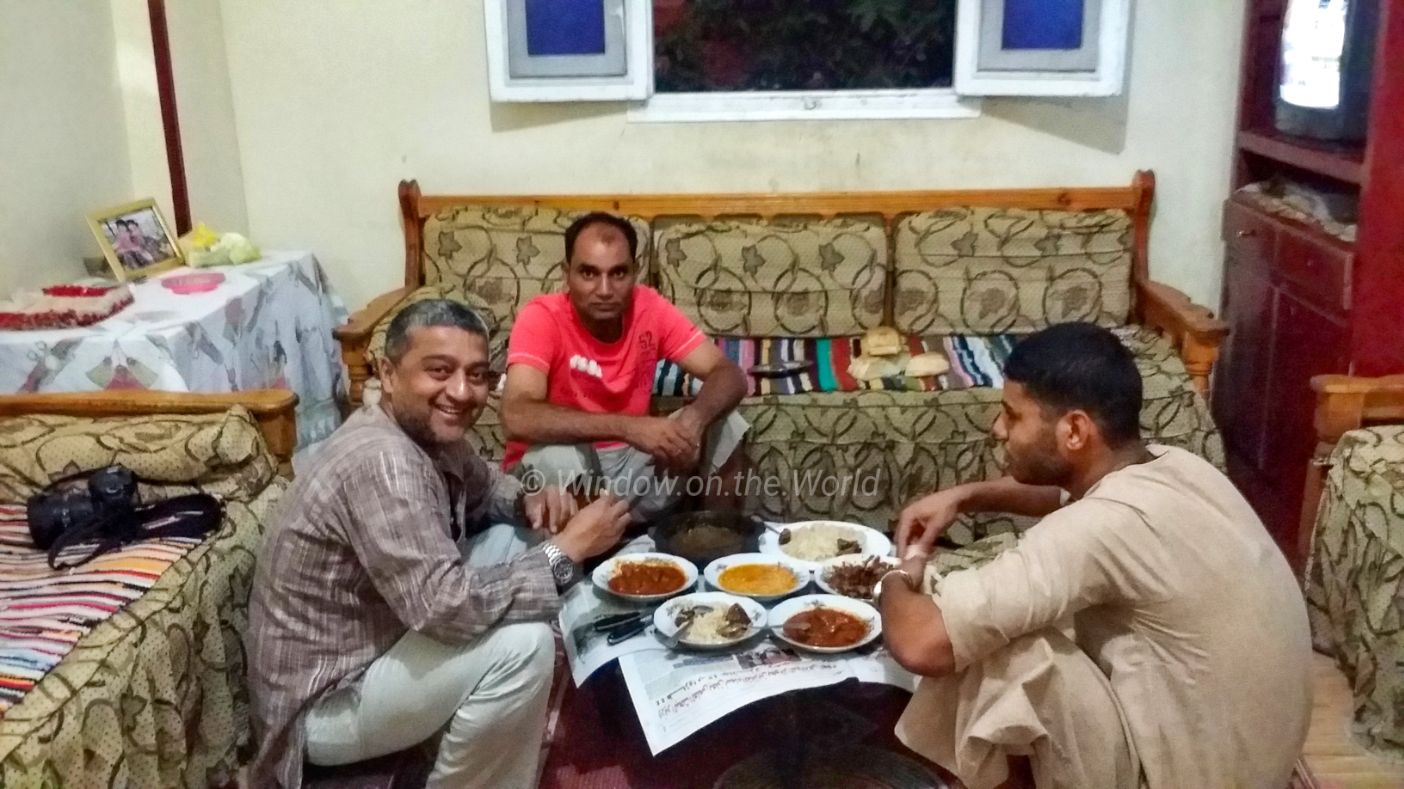
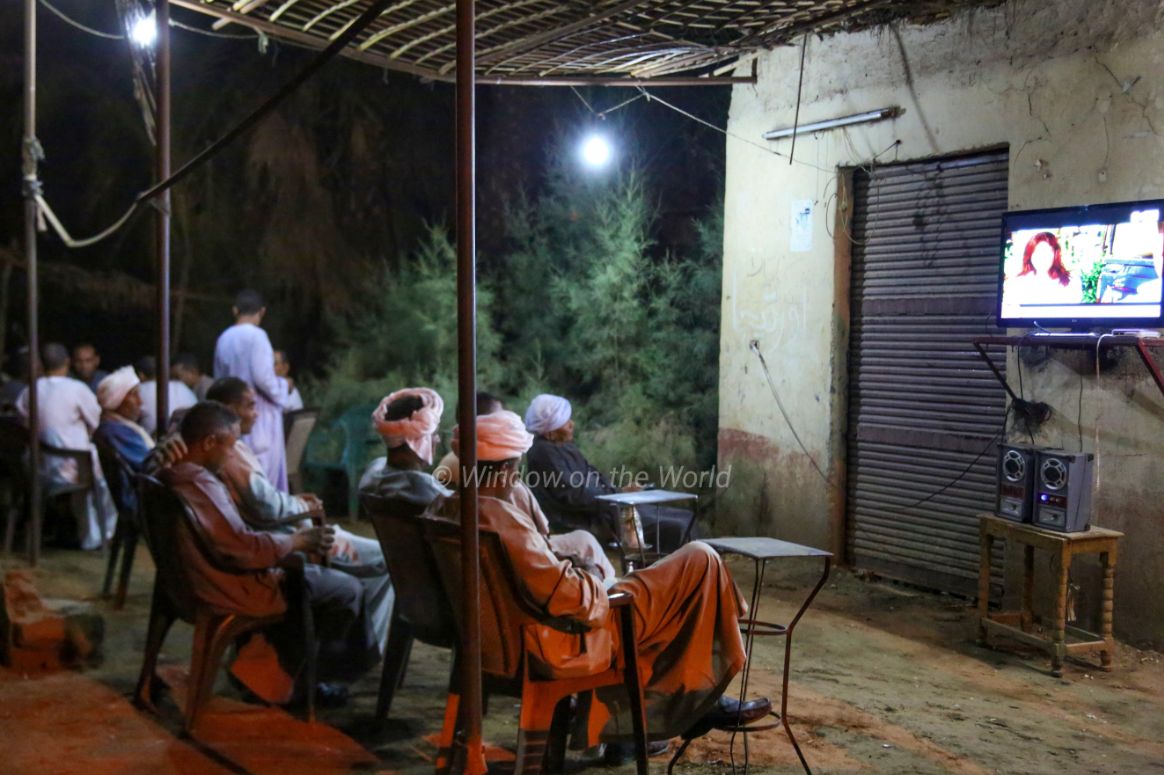
The day after I arrived in Luxor, the city was celebrating Eid, one of the biggest Muslim festival. Kids, mostly young boys are out having a blast. I also got invited for Iftar (breaking the fast) dinner at my hotel manager’s home.
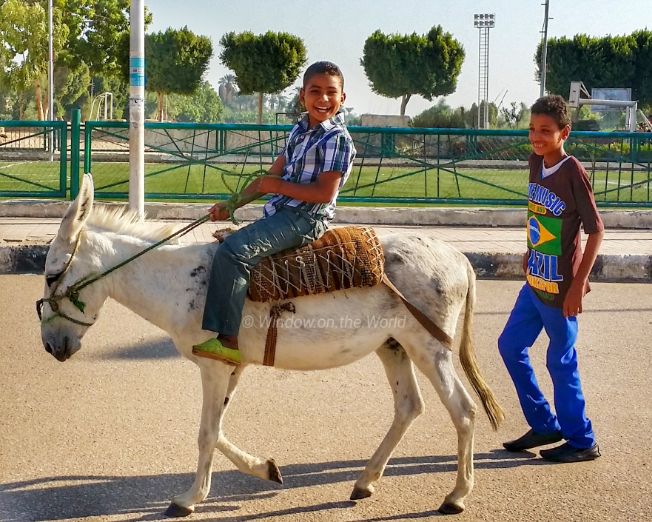
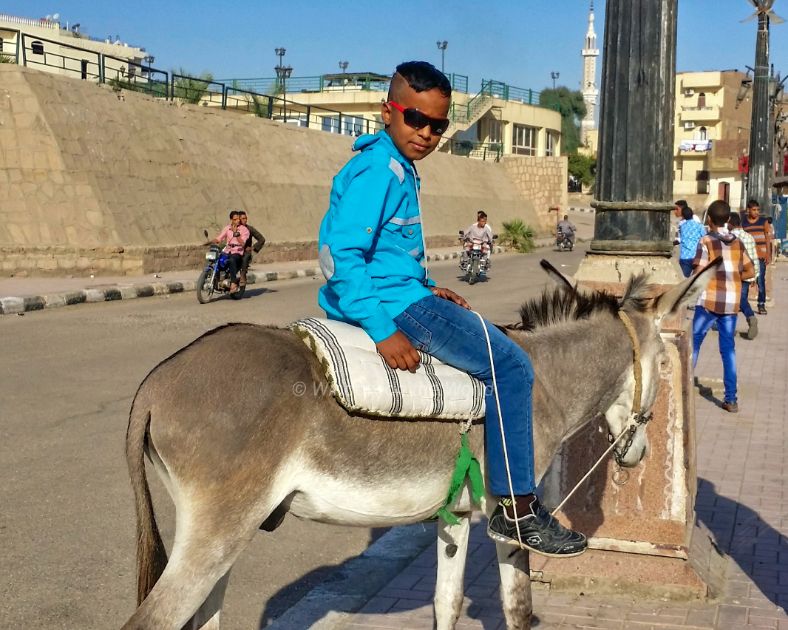
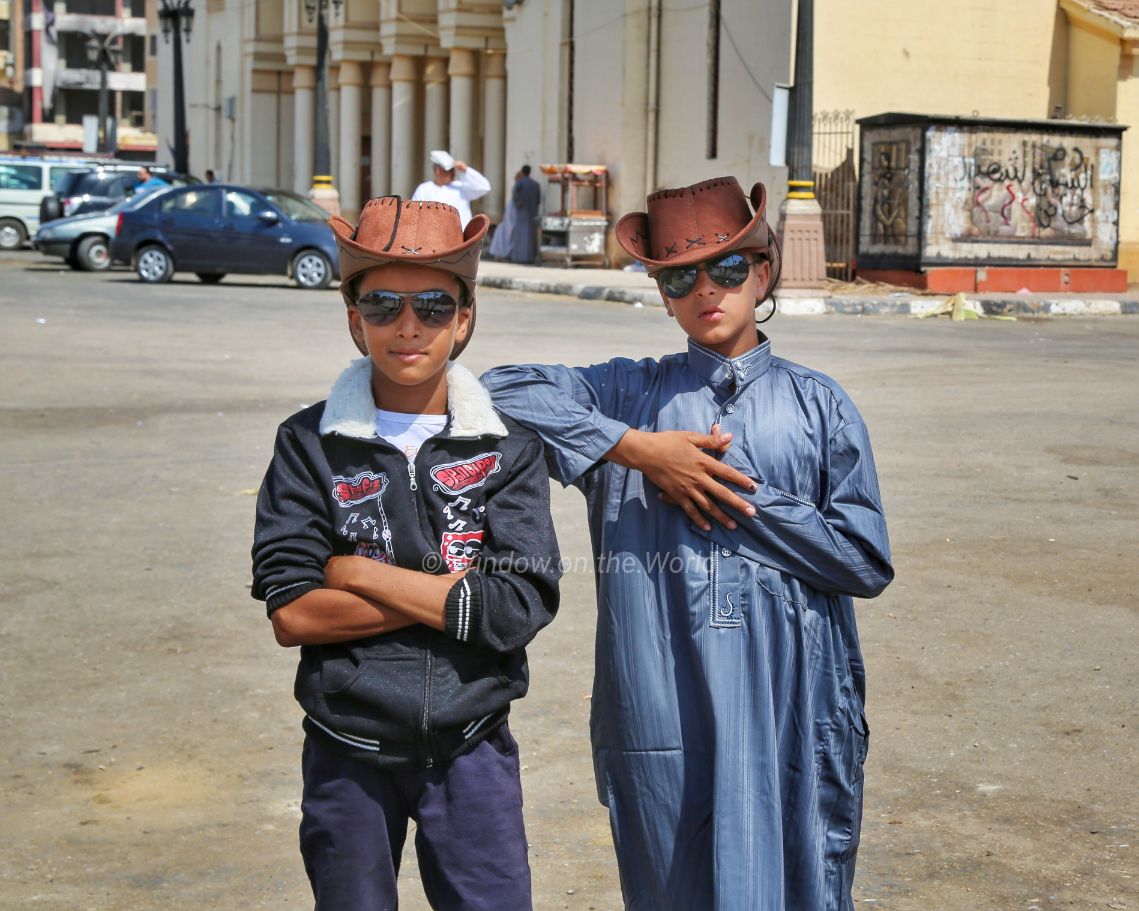
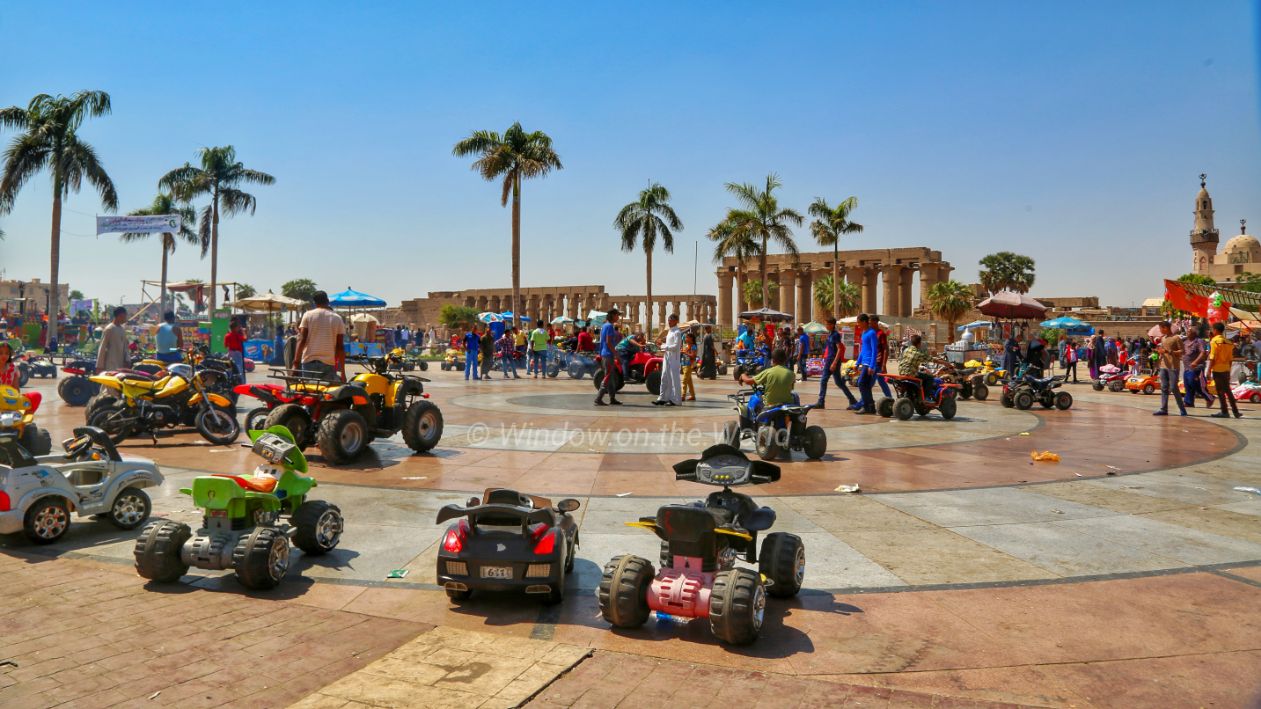
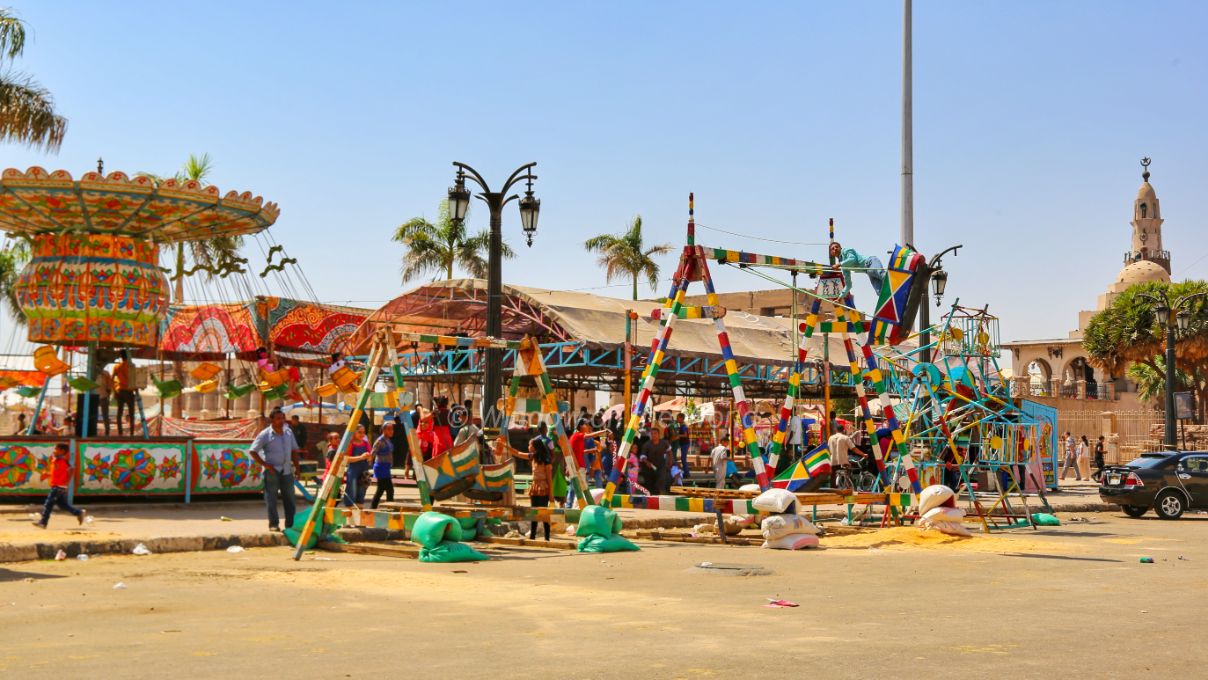
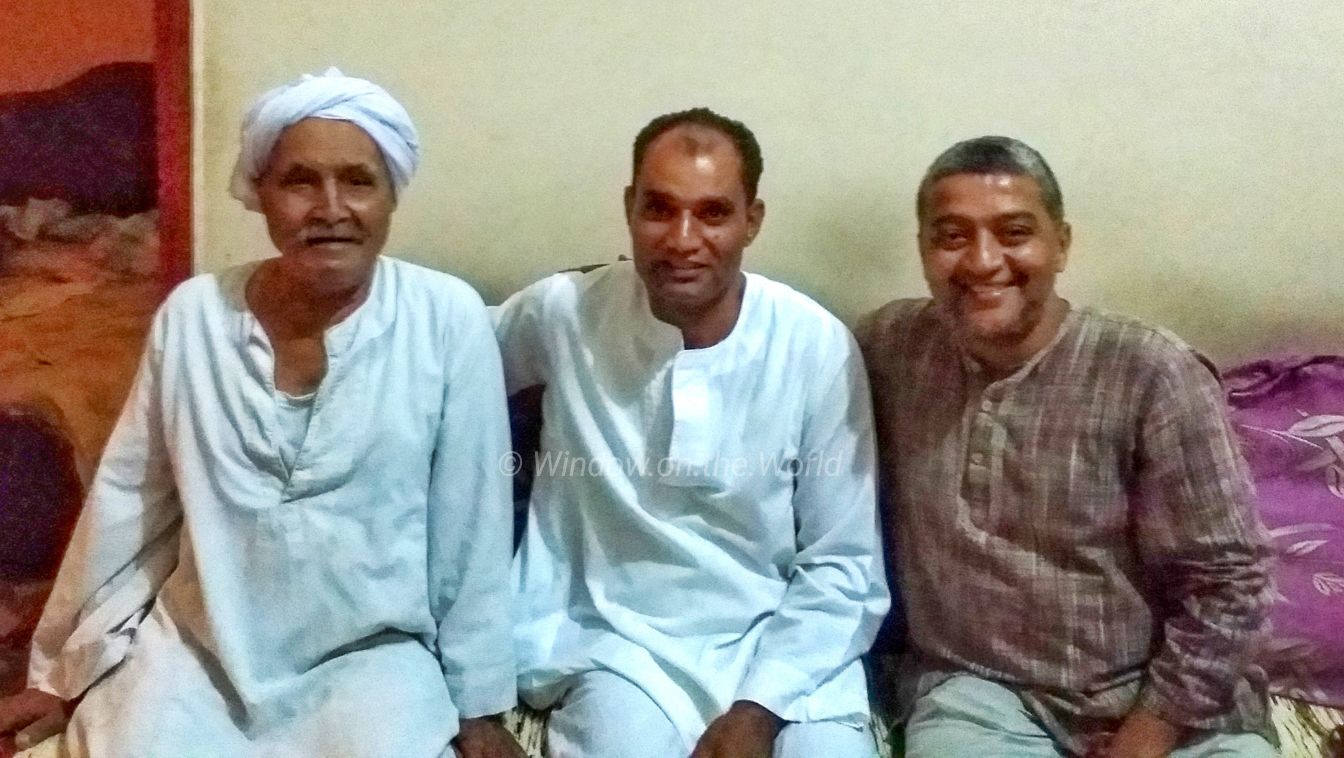
The manager of the hotel I was staying, invited me to his home for Iftar (breaking of fast) dinner as it was an Eid Celebration and I was the only guest in the hotel.
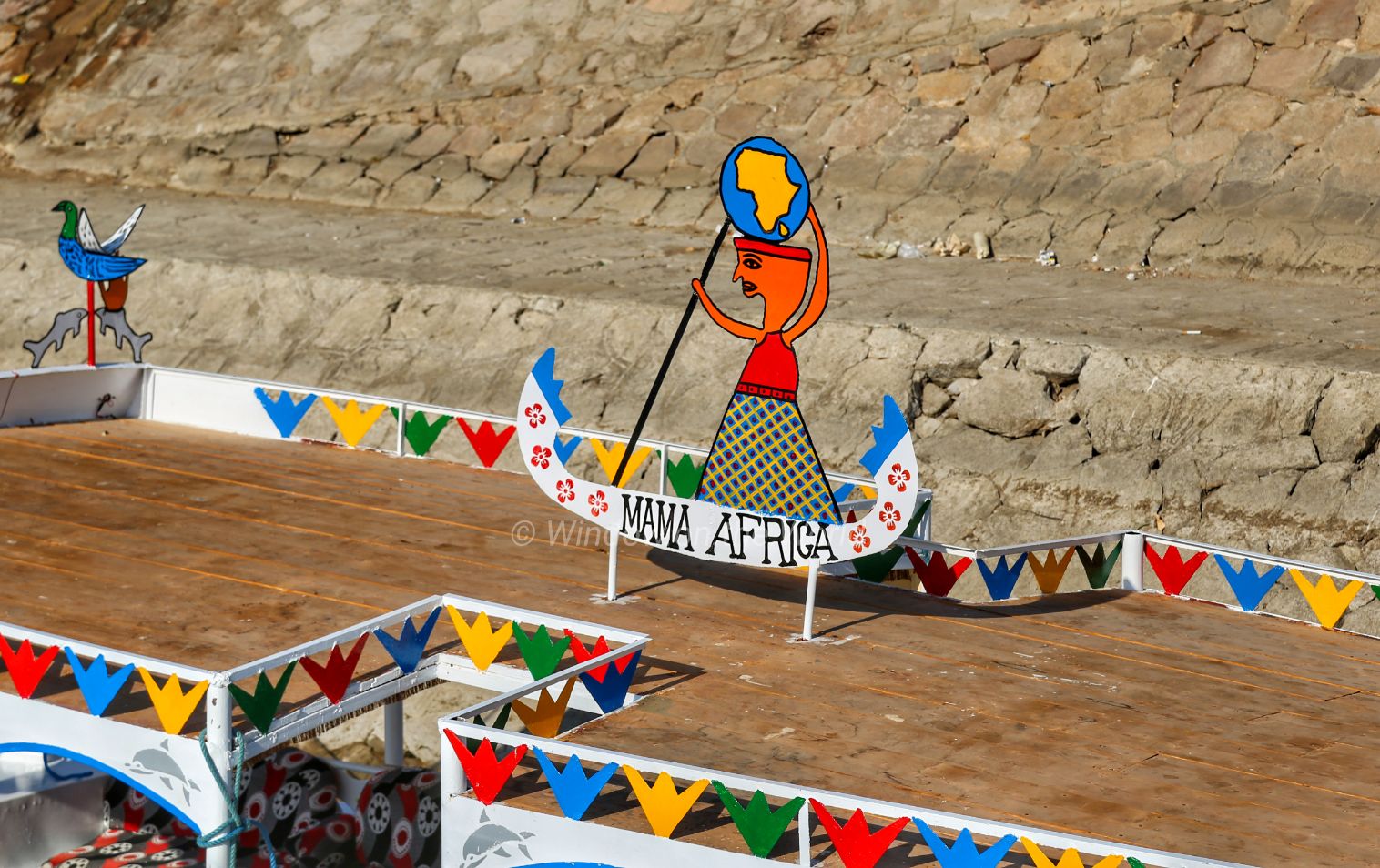
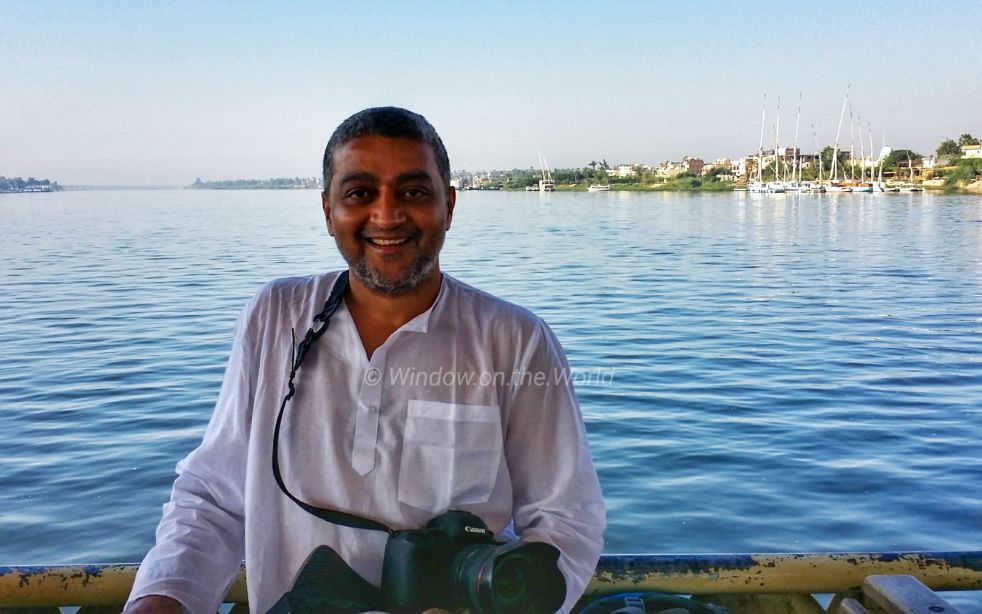
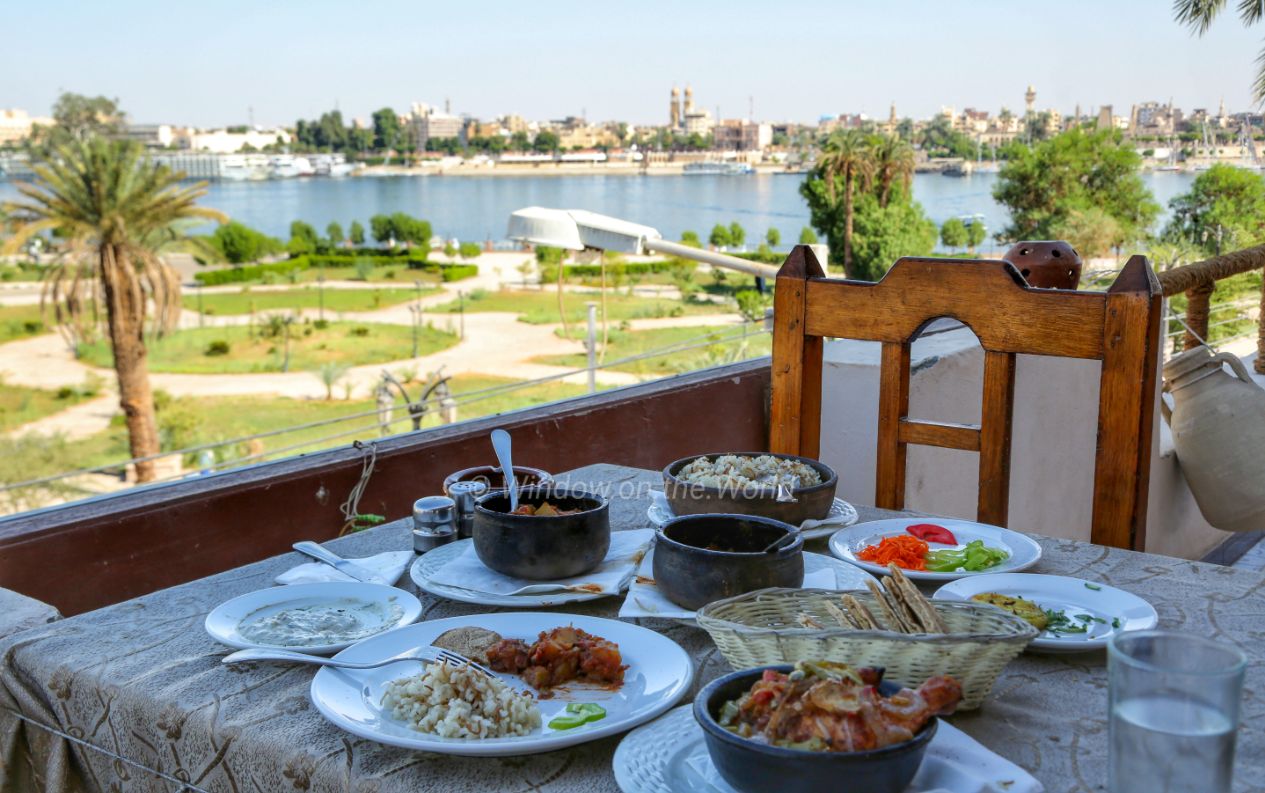
The River Nile, a lifeline for Egyptians, is the longest river in the world. It has a length of about 4,132 miles (6,650 kilometres) and its basin includes parts of Tanzania, Burundi, Rwanda, the Democratic Republic of the Congo, Kenya, Uganda, South Sudan, Ethiopia, Sudan, and the cultivated part of Egypt.
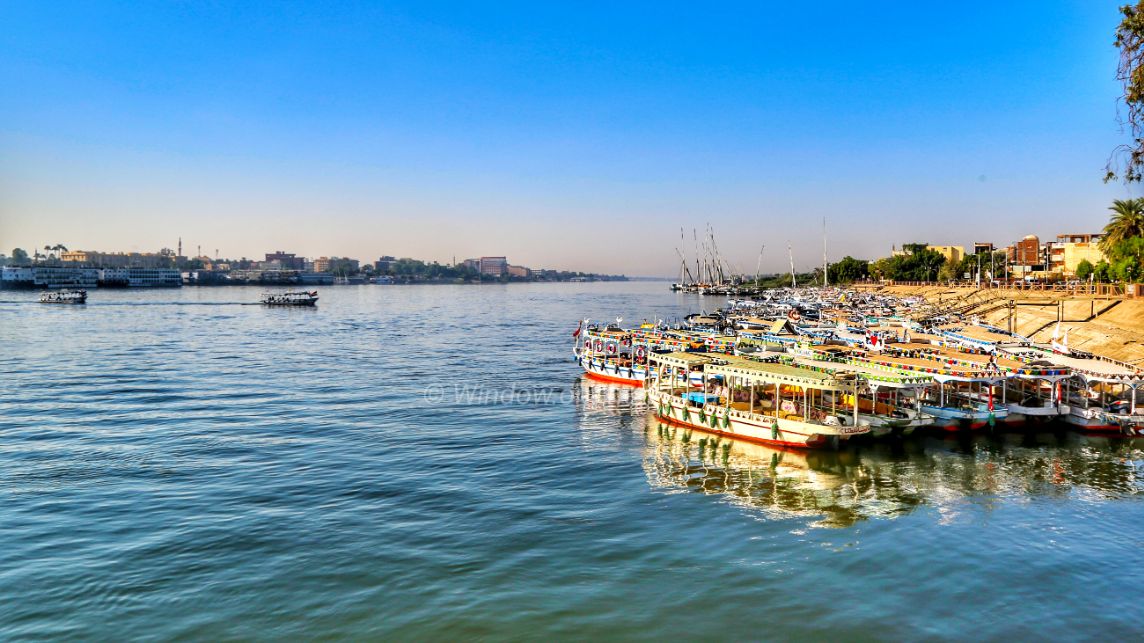
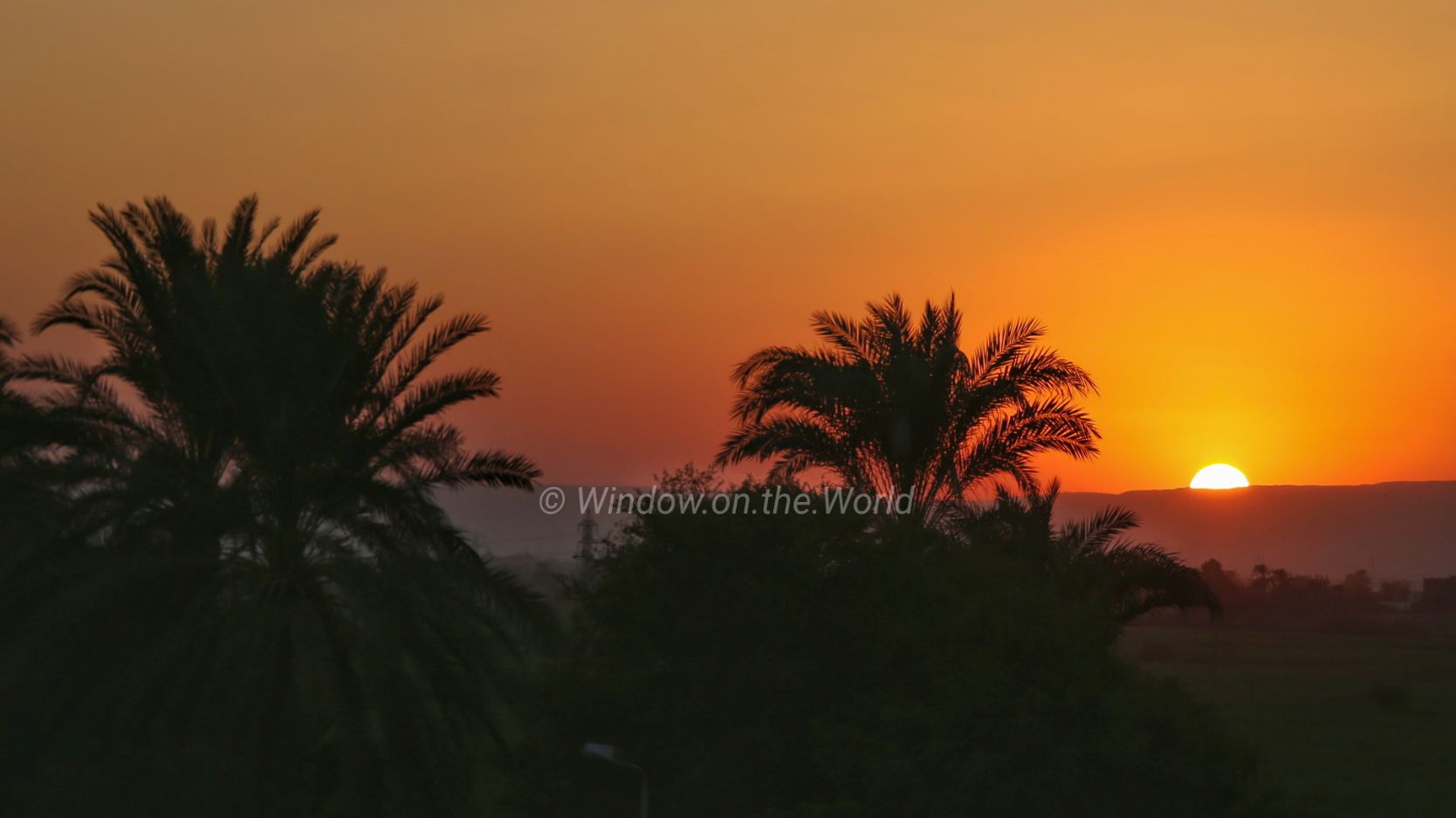
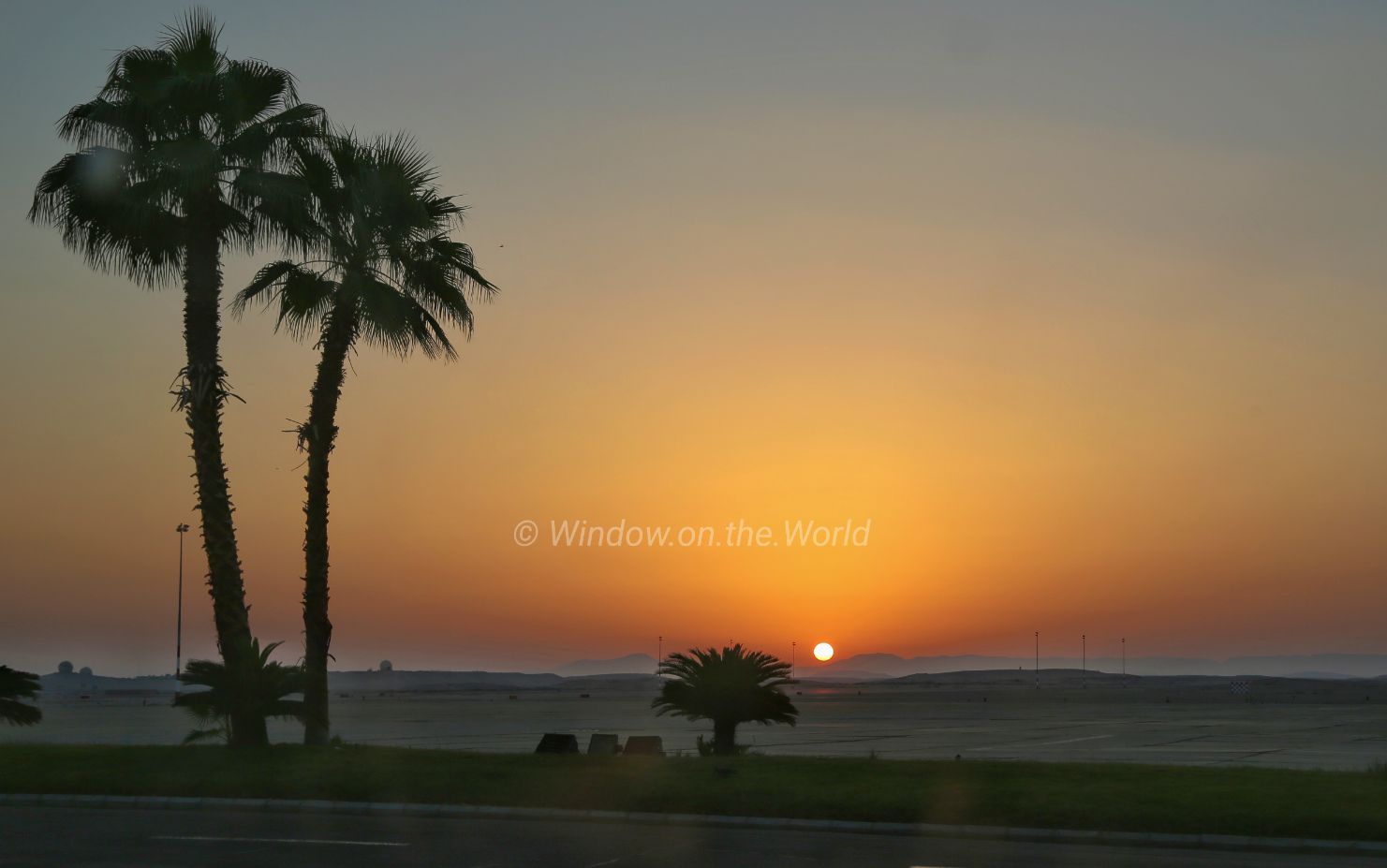
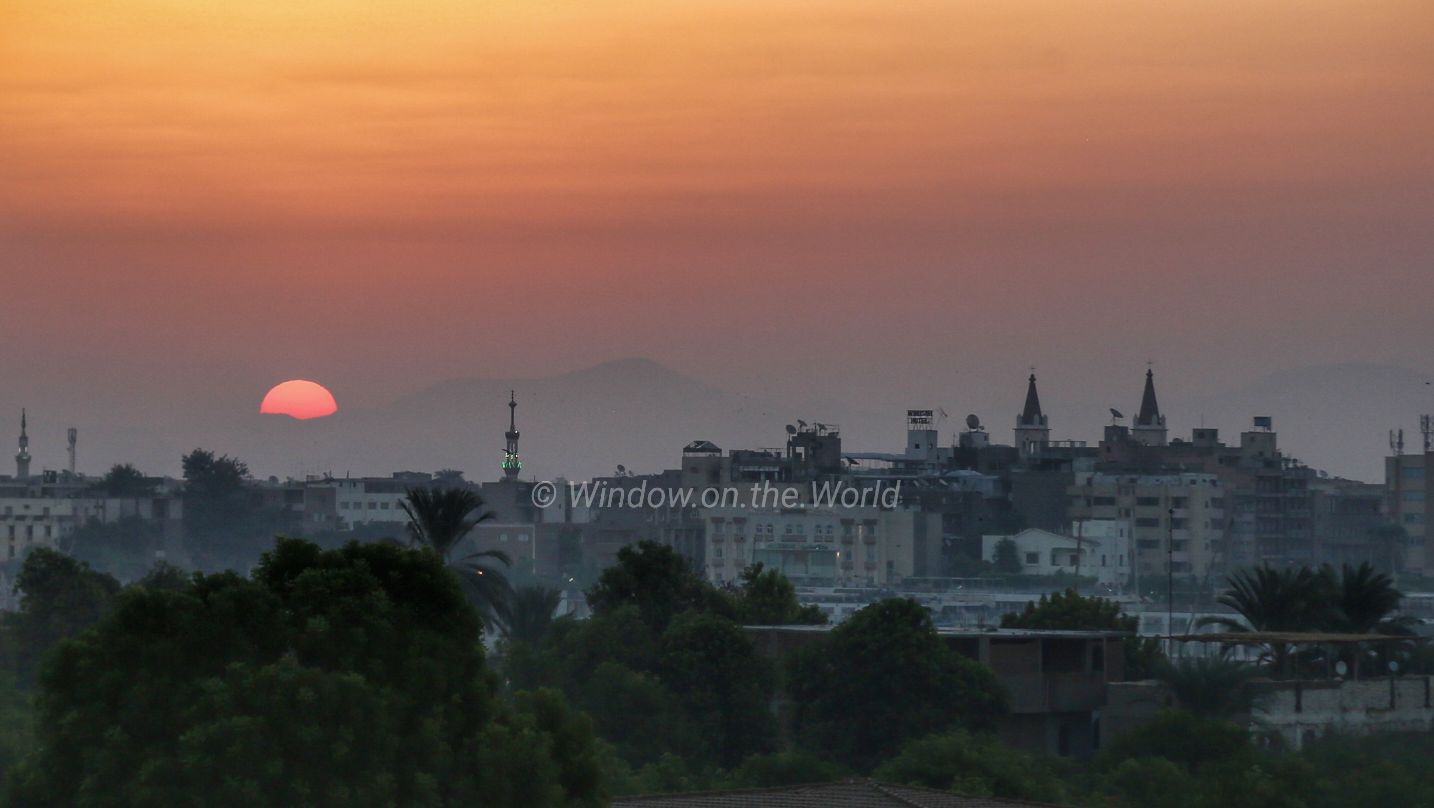
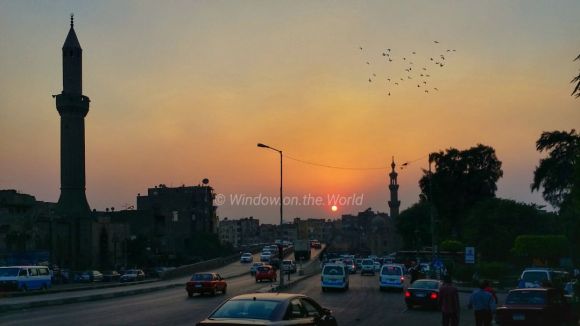
Beautiful Sunset and Sunrises over Luxor.
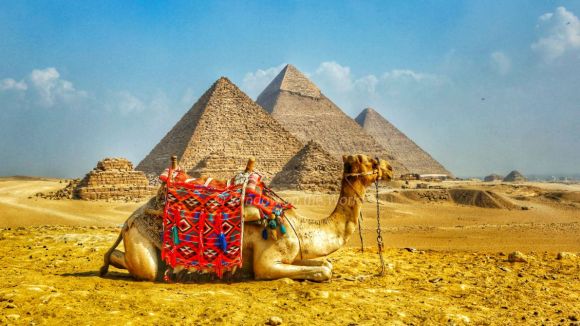
During my visit to Egypt, I also visited Historic Cairo and The Pyramids. Please click below to read my travel stories and view my photos.

 Window on the World